
Newsletter Subscribe
Enter your email address below and subscribe to our newsletter
Enter your email address below and subscribe to our newsletter


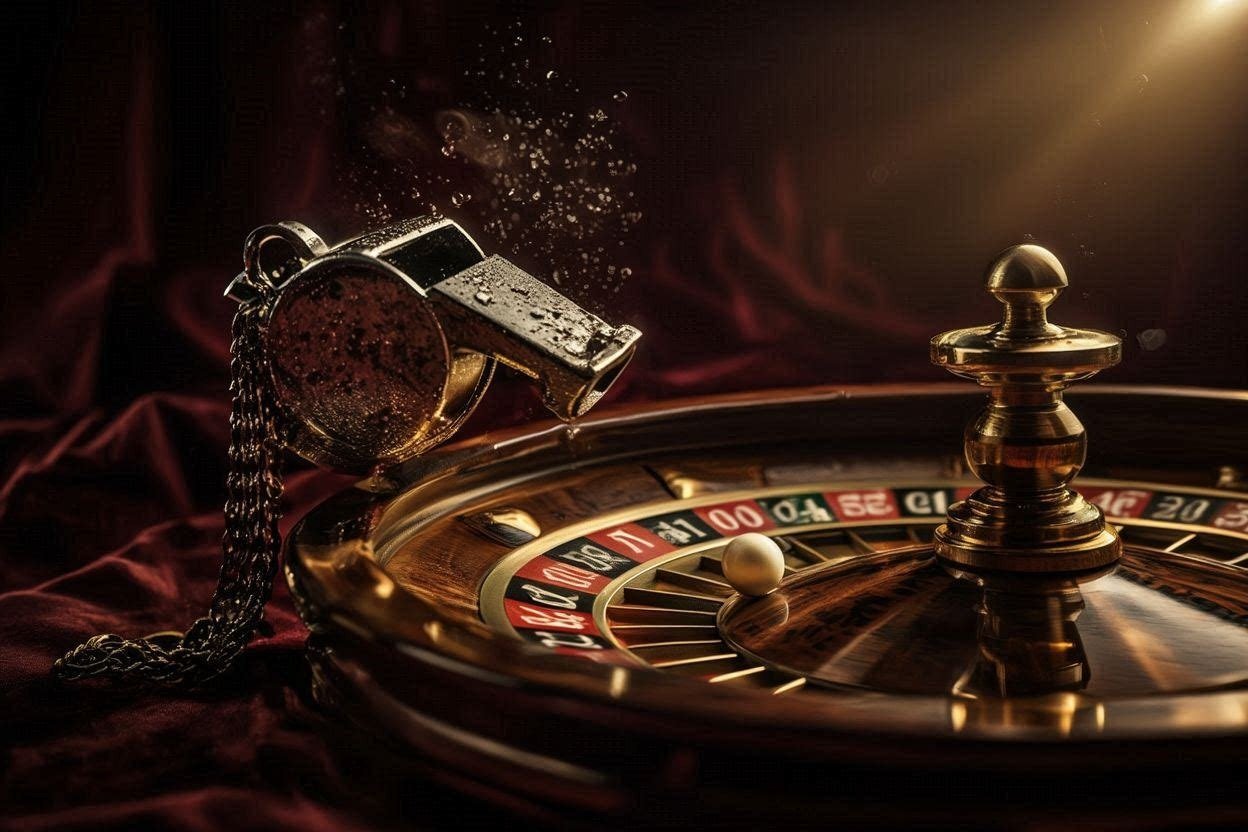
The match is almost over. The prediction looks correct, the favorite has dominated, the analysis felt sound from the opening minutes. Then a penalty arrives in the 92nd minute, and the entire shape of the night changes in a few seconds. On a casino table, the same feeling appears in a different costume — a roulette wheel that stops one slot off the chosen number, a card that lands a fraction away from a winning hand. Two very different formats, one shared sensation. The space between logic and impulse is where most betting decisions are actually made.
The human mind does not weigh a ninety-minute match evenly. The closing minutes are absorbed with disproportionate intensity, and several factors stack on top of each other:
The result is that bettors often judge the quality of an entire prediction by its closing scene. But a good analysis can still lose. That does not always mean the reading was poor — it often means football is what it is: a probability sport played in a finite time.
Football carries a narrative arc. There is form to read, tactics to interpret, injuries to weigh, motivation to factor in, momentum that builds across phases, and the late pressure of a result on the line. Each element gives the audience something to hold onto.
Casino games strip the narrative away entirely. What replaces it is rhythm: short rounds that resolve in seconds, rapid repetition, near-miss moments that feel like they “almost” succeeded, winning or losing streaks that suggest a pattern where there is none, the pull of “one more try,” and the illusion of control delivered through every interaction with the screen.
Football builds tension through story. Casino games build tension through rhythm. The emotional outcome is similar; the path there is not.
On paper, odds are clean rational numbers. In practice, they are read through human filters, and that changes their meaning. A low coefficient on a heavy favorite reads like a near-guarantee, even though it represents a probability that still leaves real room for the opposite result. A long price on an underdog looks like a “huge opportunity,” when the math behind it actually describes a small chance.
A last-minute loss often triggers the urge to recover what just slipped away. A quick casino win produces overconfidence that has nothing to do with any change in the underlying game. A near miss — close, but not quite — pushes toward another attempt, fueled by the feeling that the next round must surely be different. None of those emotional translations changes the math. Odds describe probability, not the future.
In the digital betting world, users search for information in many languages: some look for football predictions, others compare live odds, while some use phrases such as تحميل برنامج 1xbet للاندرويد. But the most important factor is not the search term itself — it is understanding probability, risk, and emotional control. Across global users and international markets, the vocabulary of search varies, but the underlying concepts do not. Bankroll discipline, the meaning of house edge, and the line between analysis and guarantee stay the same regardless of how someone arrived at the screen.
The pressure points are predictable, which means they can be planned for. A few practical habits reduce the risk of letting one moment write the whole story:
These rules guarantee nothing. What they do is prevent a single dramatic minute from defining a far longer decision history.
Football and casino games apply pressure through different mechanics, but they pull players toward the same place: a fast, emotional decision made in the seconds after a result. The strongest move is rarely the quickest. Discipline, awareness of risk, and emotional control carry more weight than reacting to one whistle, one spin, or one short-term swing. Probability does not promise outcomes — it only describes them.