Subscribe to Newsletter
Enter your email address below and subscribe to our newsletter
Enter your email address below and subscribe to our newsletter


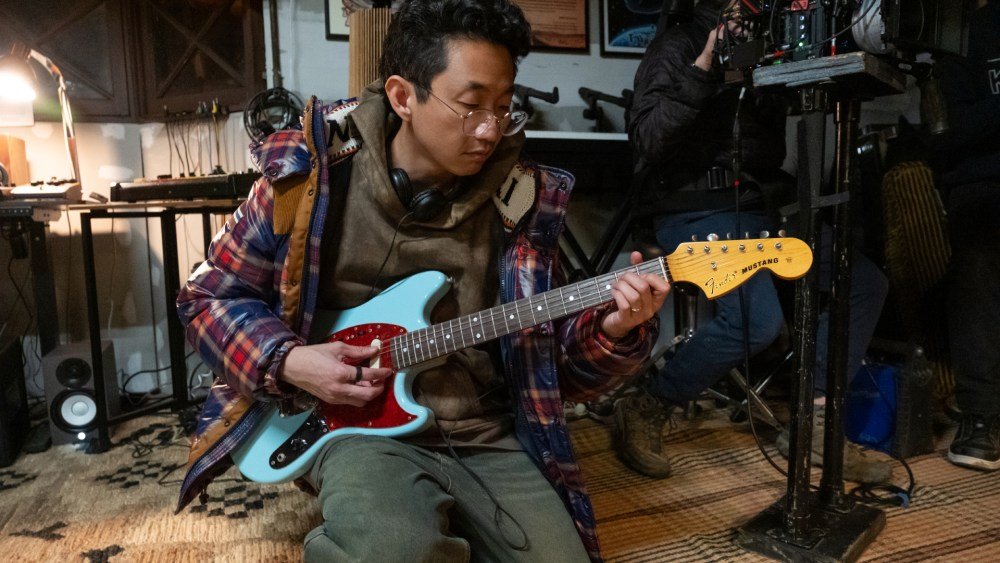
Lee Sung Jin learned about “Beef’s” latest Emmy haul all at once. The second season of Netflix’s genre-bending anthology earned 16 nominations, the most of any limited or anthology series this year. The major recognition also made Lee the first Asian television creator to receive multiple nominations in writing, directing and producing for the same series — twice.
However, his initial reaction wasn’t celebration. It was doing the math.
“On one hand, I was overjoyed and thrilled,” Lee tells Variety. “To build upon last season’s nominations is a testament to the cast and crew and how hard everyone worked. But at the same time, I was counting in my head and realizing Cailee [Spaeny] and Finneas didn’t get nominated.”
Lee said his first calls after the announcement were to his artists who were left out.
“It never feels good to put in that kind of work and not be recognized,” he recalls.
That mix of gratitude and grievance mirrors the tone of “Beef’s” second season, which introduced a new cast, a new emotional palette and the unenviable challenge of following a breakout hit. For Lee, the toughest part was resisting the urge to repeat what already worked.
Netflix
“There were nights where I thought, ‘Season 1 just works — two people, a customer service interaction; they hate each other, and the same dominoes fall,’” he says.
But he pushed himself away from the familiar by remembering the artists he admired growing up, and how rarely their sophomore efforts resembled their debuts.
The most talked-about episode of the season, the 33-minute “The Inexpressible Comfort,” takes place entirely in an emergency room waiting area. It’s also the episode that landed him two of his three Emmy noms.
Lee wrote and directed the installment after spending 10 and a half hours in a Los Angeles hospital, jotting observations into his phone.
“Every extra you see in the episode was a real human I saw in real life,” he reveals.

Beef. (L to R) Executive Producer/Writer Lee Sung Jin, Cailee Spaeny as Ashley Miller, Carey Mulligan as Lindsay Crane-Martin in episode 206 of Beef. Cr. Andrew Cooper/Netflix © 2026
ANDREW COOPER/NETFLIX
The vending machine exchange happened, as did the VIP concierge’s appearance long after the crisis had passed. Lee shot wide and lingered at the ends of hallways to capture what he described as a Kafkaesque quality unique to American healthcare — a system he believes is “uniquely broken.”
Lee was clear-eyed about the broader industry context surrounding this year’s nominations. He cited a statistic he saw the morning of the announcement — networks produced 46 fewer shows in 2026 — and noted the quiet rollback of DEI initiatives across Hollywood.
Naturally, he points to the decision to move the limited series supporting acting categories off the main telecast, in addition to the directing and writing, which has sidelined many first-time nominees.
“You always have to prove yourself tenfold more than your peers to be noticed, to be given another chance,” Lee says of working as a creative of color. “Until larger things change about the system, all I can do is try to make honest work that resonates.”
After Season 1, he found himself chasing ideas for their cleverness alone, including one about a New York Giants family plotting to rob Tom Brady. He shelved that one.
“I’d have to be in a head space where something is rumbling on a spiritual level that needs to come out,” he explains. “At the moment, there isn’t. But that doesn’t mean there won’t be in the future.”
For Lee, a win doesn’t require a trophy. He mostly wants the cast and crew together again. But one thing he is hoping for, and that he admits, is seeing a rival walk away happily.
“Netflix is going to hate me for saying this but seeing ‘Widow’s Bay’ and Hiro Murai win would be awesome.”
Many agree.
Fonte do Artigo
See more: The Global Track