Broncos’ Jonah Coleman could be steal of 2026 NFL Draft

Broncos' Jonah Coleman could be steal of 2026 NFL Draft

Sean Payton should drive Jonah Coleman like he stole him. Because, by golly, did he ever.

Fourth round? $885,000 base salary? $1.19 millon cap hit? For the guy who’s been arguably the Broncos’ best runnner in camp since they put pads on?

Bargain of the draft.

With soft-tissue injuries mounting, it’s not a stretch to call Coleman Broncos Country’s most important rookie.

Especially with J.K. Dobbins, Payton’s RB1, limping off the field during Monday’s drills.

When the Broncos visit Atlanta on Friday night in their preseason opener, it’s not all about the scoreboard. It’s about narratives. Bo Nix’s ankle. Davis Webb, Payton and the play-calling operation. Sam Ehlinger’s ascent. The rise of Pat Bryant III. Somebody, anybody, flashing from the tight end room.

But I want to see if Coleman can do to the Dirty Birds, or least Atlanta’s first or second team stoppers, what he’s been doing in Dove Valley since the start of the month.

I want to see if Coleman is the J.K. comp this team missed last December and January. The bruiser. The grinder. The workhorse.

The eye test says Dobbins’ strengths are Coleman’s. So do the numbers.

First downs? Last fall, when everybody who lined up against the Washington Huskies knew what was coming, Coleman averaged 5 yards per carry with 11 of 83 carries piling up at least 10 yards. The season before that, he rattled off 5.8 yards per tote on first down, with 19 of 110 attempts going for at least 10 yards a pop.

Short-yardage? On third-down-and-3-yards-or-less last fall, Coleman notched a first down on 11 of 15 attempts. The year prior, he was 7-for-11.

Among running backs drafted in 2026, Coleman ranked second in broken tackles forced by the wonks at Pro Football Focus. No. 1 in his class? The only cat ahead of him? Jeremiyah Love, the No. 3 overall pick by Arizona, whom the Cardinals just gave $53 million guaranteed on his rookie deal — the most for a tailback in NFL history.

Since 2014, only two FBS backs with at least 500 collegiate carries have averaged more opponent missed tackles per rush than Coleman: Bijan Robinson, Ashton Jeanty and David Montgomery. Let’s see. That’s the best runner in the NFL now; a former No. 6 pick who piled up 975 yards on the ground for a laughable Raiders offense last fall; and a veteran who’s currently on a streak of seven straight seasons of at least 700 rushing yards.

Darn good company, I’d say.

There’s more. Blocking? What Coleman lacks in size (5-foot-8, 220 pounds), he makes up in sheer rage. PFF graded him out with a 70-plus (out of a 100) or better in pass-blocking with Washington each of the last two seasons. Also per PFF: three sacks allowed in four seasons as a collegiate blocker.

The book says Coleman committed just one fumble in 639 collegiate touches as a runner or receiver with Washington and Arizona. And only one drop over more than 120 targets as a receiver.

In other words, safer than a steel deadbolt. Trustworthy. The kind of guy Payton craves, and will inevitably need, given that Dobbins joined the soft-tissue injury club Monday — a table that’s already got Jaylen Waddle and Marvin Mims Jr.

“I think he’s going to be fine,” Payton said of Dobbins. “We’re just being smart with it.”

It wasn’t just smart to draft Coleman out of the University of Washington. It was borderline genius. Dobbins is 27. He’s coming off the best two back-to-back seasons of his NFL career, a high-stepping, high-volume hammer who’s averaging 4.8 yards per touch since 2024. You need a tone-setting run on first down, he’s your man. You need a tough couple yards on third-and-short, No. 27 knows how to move those chains north.

It’s just that, over these last two seasons, he’s also averaged only 12 appearances and 10 starts. At his peak.

Dobbins has become the Broncos’ version of Aaron Gordon: Physical, essential, a good teammate and a fan favorite … whose body also has a habit of repeatedly failing on him.

The Broncos were 8-2 (.800) last fall when Dobbins started and 6-0 when he touched the rock 16 times or more. The Nuggets went 27-9 (.750) during the ’25-26 regular season when AG played and 26-7 (.788) when he started.

The parallels are more than a little uncanny, aren’t they? When both are healthy, their teams feel whole, their systems make sense. And if they weren’t there, neither franchise had truly found a comparable replacement in case of an injury.


Until now.

Coleman has spent the last 11 days or so looking like the Broncos’ most complete runner after Dobbins himself. Willing blocker? Yep. Weapon out of the backfield? That, too. Angry runner inside? Check. Secure with the football? Absolutely. Home-run speed? Sure, although maybe not to the degree of an RJ Harvey, Tyler Badie or Jaleel McLaughlin.

Harvey’s strengths are his second and third gears. You just rarely saw them between the tackles. And that’s fine. If Harvey becomes the Broncos’ version of James White, it’s not necessarily a wasted draft pick. As a speedster who’s better in space, beating defenders around the perimeter, Harvey’s more of a compliment/caddy to Dobbins, more lightning to his thunder, than a like-for-like substitute.

“I think (as a) young runner,” Payton noted last week, “you don’t feel like a rookie with Jonah.”

Thank goodness for that. You’ll say it this weekend. You’ll say it Week 5. And Week 10. And in the AFC Championship game, if the fates are kind.

Want more Broncos news? Sign up for the Broncos Insider to get all our NFL analysis.

Mais Notícias

Home Page – Início

Source link
More: The Global Track

Corinthia Mes

Coco Gauff’s brother is blazing his own path to glory as MLB Draft nears

Coco Gauff’s brother is blazing his own path to glory as MLB Draft nears

PHOENIX — There are many recognizable last names at the annual MLB Draft Combine. Most, however, belong to the brothers, sons or nephews of current or former big-league stars.

One look around Chase Field last week, where the combine took place, and you saw Pettitte, Kemp, Sabathia, Thome and Bonds, among others, on the backs of the participants’ grey shirseys.

Then there was Codey Gauff — a relative of a different variety. One that surprises people enough to ask him in near perpetuity if he is, in fact, a family member of the 22-year-old tennis phenom, and two-time Grand Slam champion, Coco Gauff.

Many of the players asked him. So did the scouts he talked to, and the teams that interviewed him. You can’t talk to or about Codey, without mentioning Coco, who is, in fact, Codey’s older sister.

“At the end of the day, I’m myself,” Codey, a catching prospect from Elite Squad Baseball Academy in Delray, Fla., told The Athletic. “I want to keep doing my name for myself. She’s worldwide, so obviously people are going to ask. I’m not ashamed of it or anything. If anything, it’s just, being the next up in the family.”

Codey, four years his sister’s junior, has been on this ride, proudly supporting Coco during her late childhood rise, which has only continued into early adulthood — shining an intense spotlight on the Gauff family.

Though Codey has a famous last name, he wants to forge his own path in baseball, where he is considered a legit prospect. Receiving an invitation to the combine, where most of the top draft prospects go to meet with and work out for teams, was one of his biggest baseball moments and was serendipitous timing. It came just a week before his sister’s return to the grass courts at Wimbledon, the tournament that turned her into a star seven years ago.

“She wants me to go as far as I can,” Codey said. “It’s a blessing to have siblings playing at the next level and striving for the same dreams. A lot of guys don’t have the same opportunity as their siblings. We’re both striving to be something great.”

Codey, an athletic switch-hitter with a strong throwing arm, is committed to the University of Missouri. His attendance at the combine leaves open the possibility that Gauff will forgo college if taken at a good spot in the draft and turn pro this summer. 

“I want to play in the big leagues, whichever route that takes me,” he said. 

He’s largely played travel and academy baseball, rather than having the traditional high school baseball experience. He posted a near .500 on-base percentage for the ESB Academy this season, and was named their league’s MVP.

“I get it, but I don’t want him to be known as Coco Gauff’s brother,” said Missouri head coach Kerrick Jackson. “I want him to be known as Codey Gauff, the catcher that is coming to Missouri as a freshman. … It’s something that he’s dealt with his entire life.”

Jackson, who first recruited Codey at a showcase two years ago, said he’s never brought up Codey’s sister with him. He knows the immense respect Codey has for her, admires that, and said he’s planning to ask his new catcher how he deals with balancing it all when Codey arrives on campus later this fall.

While Coco may be the more well-known of the siblings right now, Coco has openly discussed how she has leaned on Codey for support over the years. When Coco was on the verge of her first Grand Slam championship at the 2023 U.S. Open, one match away from finishing off her lifelong dream, her brother was there to give her a mental reset.

She was feeling the pressure of needing just two more sets, one more match. The thought of it being so close was working against her.

“He told me, ‘Pretend that you have to win three sets instead of two. If you put your mindset into the extra mile, then it seems easier, I guess, in a way,’” Coco said at the 2024 Australian Open.

“‘If you want to win the Grand Slam, say you have to win eight matches instead of seven. It’s like changing your mindset so it feels further.’”

She’s given advice to him, as well, about not putting his opponents on a pedestal, and reminding him of how important it is for a catcher to take on a leadership role. The support has gone both ways, and when Codey announced his commitment to Mizzou, Coco called him “My GOAT, my inspiration, my reason, my best friend,” on Instagram.

Codey watches every one of his sister’s matches, no matter what time of day they take place. He was surely watching as Coco was nearly upset at Wimbledon in the second round on Wednesday. She needed to come back from a break down late in the third set, and then again from a deep hole in the final set tiebreak.

It was in 2019 that the then-15-year-old phenom came out of nowhere to win six matches at Wimbledon. Three in qualifying, three more in the main draw, including her breakout victory over her idol, Venus Williams.

“She upset the world there,” Codey said, smiling as he reflected on the run.

Now, all these years later, the siblings that were there supporting her are growing up, and making a name for themselves. Their parents — Corey and Candi — are pulled every which way, with their father in Phoenix last week with Codey, and mother with their younger brother, Cameron. Coco, at least for a little bit, was on her own in England.

Codey hopes he is next to bring glory to the family name. But, he said, neither he, nor his sister, will ultimately be the most successful athlete in the family.

“I think my brother will be the best athlete out of all of us,” Codey said of the 13-year-old Cameron, who plays football.

“He has no other choice, really.”

Mais Notícias

Home Page – Início

Source link
See more: The Global Track

Corinthia Mes

Wizards tab AJ Dybantsa with No. 1 overall pick in 2026 NBA Draft

2026 NBA Draft Results: Picks 1-60

The Washington Wizards select AJ Dybantsa (BYU) as the No. 1 overall pick in the 2026 NBA Draft at Barclays Center.

NEW YORK — The Washington Wizards selected AJ Dybantsa with the No. 1 pick in the 2026 NBA Draft. This was one of the most anticipated draft classes in recent memory as the Wizards went with Dybantsa over Kansas guard Darryn Peterson and Duke forward Cameron Boozer, who followed at No. 2 (Utah) and No. 3 (Memphis), respectively. 

“Making the NBA has been a dream of mine since I was a young kid so I can’t wait to get to work and start the journey,” Dybantsa told NBA.com. 

Dybantsa was the No. 1-ranked player coming out of high school and chose to play his one year of college ball at Brigham Young. He picked the Cougars over North Carolina, Kansas, USC and Auburn. Dybantsa made history Tuesday night when he became the first player out of BYU to be the No. 1 overall pick in the NBA Draft. 

BYU coach Kevin Young has ties to the NBA, which was the deciding factor for Dybantsa and his family. Young spent 10 years coaching in the NBA and was the associate head coach for the Suns from 2021-24 before becoming BYU’s coach in April 2024.

“After they hired [coach] Kevin Young, they hired a strength coach from the Milwaukee Bucks, a dietitian from the Suns, analytics from the Suns,” Dybantsa said. “(Young) just started stacking prototypes around us and I wanted to learn in the best environment to prepare for the league and I think I got that from BYU.”

The 6-foot-9 wing led the county in scoring during the college basketball season, averaging 25.5 points per game. He posted 40-plus points twice during the season, the first time in a rivalry home game against Utah. He finished with 43 points and then, in the Big 12 Tournament, scored 40 in a win against Kansas State.

Dybantsa entered the postseason with something to prove. During the Big 12 Tournament, his competitive edge came through. Over the course of three days and three games, he scored 93 points, breaking Kevin Durant’s conference scoring record, and performed at a high level in front of several NBA executives.

AJ Dybantsa sits down with Lauren Green after being selected No. 10 overall in the 2026 NBA Draft.

BYU ultimately lost to Houston in the Big 12 quarterfinals, but that three-game stretch solidified Dybantsa as one of the top players in the class.  

“I thought his game really matured over the season,” Young said. “The game slowed down for him. He figured out how to attack all different kinds of defensive coverages. He would survey how teams were guarding him, make the right read and just carve teams up and pick teams apart and that’s what he did in the Big 12 tournament.” 

Dybantsa only met with two teams during the pre-Draft process: the Wizards and the Utah Jazz (who held the No. 2 pick). The last time the Wizards had the No. 1 pick in the draft was 2010 when they selected John Wall. Wall was the franchise representative during the Draft Lottery in May and brought the team some luck in landing the No. 1 pick in this monster draft. 

Dybantsa will be joining Trae Young, now established as a presence in the Wizards’ backcourt. Young, the No. 5 overall pick in 2018, reportedly plans to sign a four-year, $212 million contract to return to Washington and will be the cornerstone to the franchise alongside Dybantsa. 

“I feel like I could play with Trae (Young) in the backcourt really well,” Dybantsa said. “He’s a great facilitator and great point guard and we could play off each other for sure.” 

The Wizards finished last season with a 17-65 record and believe this is their chance to really make a mark in the Eastern Conference. They selected Tre Johnson and Will Riley in last year’s Draft and have a handful of young talent on the roster. 

Washington hasn’t made the playoffs since the 2020-21 season and hasn’t had a winning record since the 2017-18 season (when it finished 43-39). Adding Dybantsa to their roster gives the Wizards the spark they need to rebuild and compete in the East. 

Dybantsa’s real first test of NBA action will be during the NBA Summer League in Las Vegas July 9-19, where he’ll face off against other top players such as Peterson, Boozer, Caleb Wilson and Darius Acuff Jr.

Fonte do Artigo
See more: The Global Track

Corinthia Mes

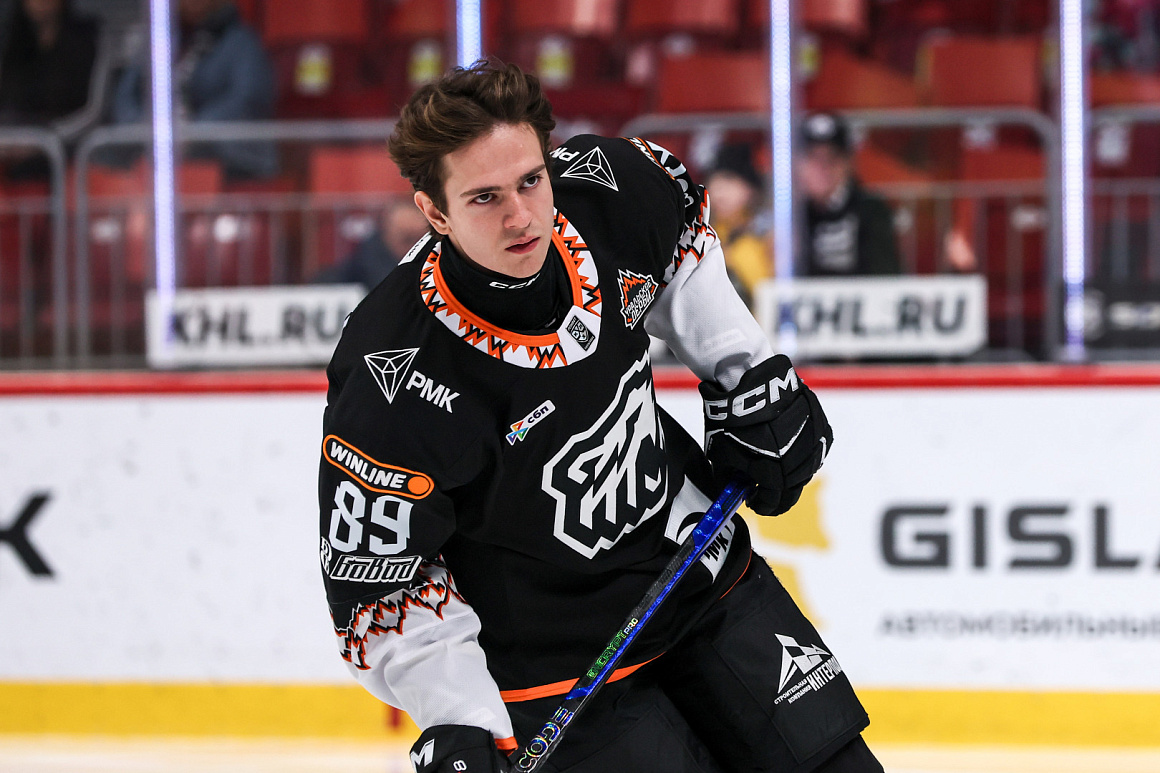
Yaroslav Fedoseyev – 2026 NHL Draft Prospect Profile – The Hockey Writers –

Yaroslav Fedoseyev HC Traktor Chelyabinsk

Yaroslav Fedoseyev

2025-26 Team: Chelmet Chelyabinsk (Russian high league)
Date of Birth: November 05, 2007
Place of Birth: Chelyabinsk, Russia
Ht: 6-foot-2 Wt: 187 pounds
Shoots: Right
Position: Defenseman
NHL Draft Eligibility: 2026 first-year eligible

Rankings

Yaroslav Fedoseyev had a busy season, playing in three different leagues within Traktor Chelyabinsk’s system. He spent most of his season in the first league and junior levels, appearing in nine games for Traktor of the Kontinental Hockey League (KHL). He also dressed for three postseason games during Chelyabinsk’s disappointing showing. While the team suffered a first-round exit, Fedoseyev showed promise in a limited role.

Yaroslav Fedoseyev, HC Traktor Chelyabinsk (Photo credit: HC Traktor Chelyabinsk)

He had a promising first stint with the big boys, netting his first pro goal and earning an encouraging plus-7 differential across nine games. He didn’t play much in the postseason, but in the regular season, he showed continued improvement.

This season, his production didn’t increase as expected, though. He scored 13 points in 24 games in the junior league – not a big improvement over 17 points in 33 games last season. Fedoseyev’s size, skating abilities, and puck skills will catch the attention of scouts, but he needs to show more if he wants to make the move to North America. With Traktor, he played under Canadian coach Ben Groulx.

Yaroslav Fedoseyev – NHL Draft Projection

Fedoseyev projects to be a sixth or seventh-round pick. He has some strengths to his game, like his size, edge work, and puck control, but nothing stands out. He has a long road ahead to develop further in all parts of his game. However, some teams might see him as a worthwhile long-term project.

Instant success isn’t to be expected, but Fedoseyev has the foundation to make him worthy of a selection. He can also play a physical game, which should interest a few teams.

Quotables

“Fedoseyev ripped up the MHL in the first 11 games of the year and earned the promotion to the VHL, where he has fit in nicely. He has not produced offensively at as high of a rate as before, but he is still a positive impact player. He is a good skater and is able to create time and space with his legs. He is also composed and poised with the puck, usually opting for the safe breakout option to his teammate, rather than a risky play.” – Nick Orr, Dobber Prospects

Strengths

  • Solid edge work and good skating abilities
  • Good size and a potential above-average frame
  • Can be dangerous with the puck when he has time…

Under Construction/Improvements to Make

  • …but he needs to learn how to create time for himself
  • Didn’t show through-the-roof potential, especially in the offensive zone

NHL Potential

Fedoseyev is an interesting late-round option with bottom-four potential. He is a defensive project who can grow into a sixth or seventh defenseman, but needs to work on improving his game, starting with winning a full-time spot in the KHL next season.

Risk- Reward Analysis

Risk: 2/5 Reward: 3/5

Fantasy Hockey Potential

Offense: 4/10 Defense: 6/10

Awards/Achievements

  • Skated in the MHL All-Star Game in 2026
  • Debuted in the KHL in 2025-26, netting his first goal
  • Played for three teams in the same organization this season
  • Under contract with Traktor in the KHL through next season

Yaroslav Fedoseyev Stats

Free Newsletter

Get NHL Entry Draft coverage delivered to your inbox

In-depth analysis, breaking news, and insider takes – free.


Subscribe Free →

Fonte do Artigo
See more: https://theglobaltrack.com/
https://corinthiames.com.br/

Matt Able To Withdraw From NBA Draft And Enroll at UNC

Apple Store Logo

Matt Able will, in fact, withdraw from the NBA Draft and suit up for North Carolina next season, the rising sophomore’s family confirmed to Inside Carolina on Tuesday.

“I’ve decided to withdraw my name from the 2026 NBA Draft and continue my development at the University of North Carolina at Chapel Hill,” Able said in an quote first provided to Marc Spears at ESPN. “Grateful for the feedback I received throughout this process and excited to be part of the Tar Heel family.”

Per an Inside Carolina source close to the situation, Able is expected to arrive in Chapel Hill on Tuesday.

Able’s announcement puts to rest any speculation that he would remain in next month’s NBA Draft and forgo his enrollment in Chapel Hill. The deadline for the decision was this Wednesday, May 27.

The decision comes after a strong performance by the NC State transfer in this month’s NBA Draft Combine, climbing as high as No. 33 in ESPN’s most recent mock draft.

At the combine, Able finished 11th among all prospects at the combine in spot-up shooting, going 17-for-25, while also finishing 25th in the three-point star drill after knocking down 13-of-25 attempts.

In his first five-on-five scrimmage, Able finished second on his team in scoring with 15 points on 5-of-9 shooting from the field, and 3-of-5 from beyond the arc. In his second scrimmage, Able led his team in scoring with 17 points, shooting 6-for-16 from the field and 4-for-9 from three while adding four rebounds and an assist.

Last week, Able competed at the Life Sports Agency pro day in California, further showcasing his talents in front of NBA personnel. 

“College is awesome,” Able said after the workout. “There’s nothing to not like about college — the environment, the students, the fans, it’s awesome. N.C. State was amazing, the fans are awesome, and if I do come back, I’m sure UNC will be amazing as well.”

The 6-foot-6 wing entered the transfer portal while simultaneously testing the draft waters on April 6 before committing to the Tar Heels on April 21, ranked as the No. 31 overall player in the transfer portal by On3.

“My goal has been — since a kid — to make it to the NBA and stay in the NBA,” Able said of his decision to leave NC State and commit to UNC at the NBA Draft Combine’s media day. “So I feel like, for me, I was going with what I thought was the best destination, best situation to make me a pro, if I don’t go this year.

“And for me, it was Coach (Michael) Malone, and I had a lot of other really good options, but for me it was Coach Malone. Being an NBA champion, coaching greats like Nikola Jokic and Jamal Murray, being able to just be around those guys is just amazing. And I feel like he runs an NBA system and it’ll help me take my game to the next level if I don’t go this year.”

Across his freshman season with the Wolfpack, Able averaged 8.8 points and 3.4 rebounds in 21.8 minutes per game coming off the bench. In NC State’s win over UNC on Feb. 17, Able poured in a season-high 19 points, knocking down 5-of-7 attempts from beyond the arc while also grabbing six rebounds.

On the season, Able shot 41.6 percent from the field, 35.5 percent from three-point range, and finished in double figures 14 times.

Malone envisions an expanded role for the Raleigh transplant once he arrives in Chapel Hill, and to build off his promising freshman campaign. 

“They want him to be a shooting guard, a secondary ball handler, someone who can guard the ‘1’ through the ‘3’, and someone who should be on the floor quite a bit,” Able’s father, Doug, told Inside Carolina.

>>> Inside the Commitment: Matt Able’s Path to Chapel Hill

Coming out of Sagemont Prep (Fla.), Able was ranked as the No. 26 overall prospect in the 2025 recruiting class according to the Rivals Industry Ranking, signing with the Wolfpack over offers from Alabama, Baylor, Stanford, Tennessee and Texas.

Able will join a North Carolina backcourt next season that includes returners Jaydon Young and Isaiah Denis, along with Utah transfer Terrence Brown, Virginia Tech transfer Neoklis Avdalas, and incoming freshman Malloy Smith. As with Able, Avdalas and Brown are officially listed by the NCAA as signed, while the program officially announced the addition of Avdalas on May 18.

Source link
See more: https://theglobaltrack.com/
https://corinthiames.com.br/

Kyrie Irving, Kawhi Leonard, NBA Draft, Lakers, 76ers, Hawks, Bulls, Blazers, Pelicans, Kings, Jazz

Kyrie Irving, Kawhi Leonard, NBA Draft, Lakers, 76ers, Hawks, Bulls, Blazers, Pelicans, Kings, Jazz

Following the NBA Draft Combine and through the Conference Finals, HoopsHype has gathered the latest intel on the futures of stars Kyrie Irving and Kawhi Leonard, where some top draft prospects are projected to land for the Clippers, Hawks, and Kings, front office updates on the Lakers, 76ers, and Jazz, and coaching updates on the Bulls, Blazers, and Pelicans. 

How long can Kyrie Irving fit alongside Cooper Flagg?

When Masai Ujiri was hired as Mavericks president and alternate governor, he joined Utah’s Danny Ainge, Brooklyn’s Sean Marks, and Denver’s Josh Kroenke as current team executives with an additional alternate governor title or higher ranking. 

Since the hiring of Ujiri, his message has been clear – everything going forward is about Rookie of the Year Cooper Flagg’s development and building around the 19-year-old phenom. In multiple media availabilities since being hired, Ujiri has publicly said that pairing Kyrie Irving is part of that endeavor. 

“Kevin Durant once told me that there’s only one Kyrie walking around in the world,” Ujiri said most recently. “Yeah, I think we have to figure out a way how Kyrie fits with our program. I’ve had those conversations with Kyrie. I think Kyrie will fit. There’s a huge curiosity in our minds to see how Kyrie fits playing with Cooper Flagg. He’s just that kind of like an incredible talent and player. I think we owe this organization that.”

Yet, Ujiri’s adjoining stance that Flagg and Irving can form an effective duo has left rival executives around the league wondering how long Irving, a nine-time All-Star who’s coming off a torn left ACL and just turned 34, can co-exist with Flagg when the two players are on different career timelines? 

It’s also worth noting that Irving had immense respect for former Mavericks coach Jason Kidd, who was his idol growing up as a New Jersey Nets fan. Now, while owed $39.49 million for the 2026-27 season and has a $42.42 million player option for the 2027-28 season, how will Irving respond to a new head coach and coming back from a torn ACL?

Notwithstanding, new Mavericks general manager Mike Schmitz echoed Ujiri’s sentiment and lauded the pairing of Flagg and Irving on paper when looking ahead to the upcoming season. “That’s something you dream of,” Schmitz said. “Having a magician with the ball like that who can pass, dribble, shoot, and someone with the connective qualities of Cooper. It’s a match made in Heaven.” 

As the Mavericks and Irving find out the answers to these questions, executives around the league will monitor Irving’s return to play and fit alongside Flagg. 

Meanwhile, the Mavericks will have a top-10 pick in the draft in consecutive years for the first time since 2017 and 2018, which gave Schmitz confidence that Dallas can get a “rotation-level player” with their pick. 

While Schmitz will be tasked with helping Ujiri identify the right young talent to add to the Mavericks, more help may be on the way. 

According to league sources, the Mavericks have expressed interest in adding Philadelphia’s Prosper Karangwa to their front office, and Toronto’s director of global scouting, Patrick Englebrecht, is also a candidate to reunite with Ujiri in Dallas after they worked together since the 2013-14 season.

What’s next for Kawhi Leonard and the No. 5 pick?

Within league circles, there are three questions surrounding the Los Angeles Clippers: 

1. When and what will be the result of the league’s Aspiration investigation involving Kawhi Leonard, president Lawrence Frank, Clippers owner Steve Ballmer, etc.? 

2. Following one of the best seasons of Leonard’s career, will the Clippers get an extension done with him, or gauge his value on the trade market? 

3. What will the Clippers do with their No. 5 overall draft pick? 

Only the league knows when and what will be the conclusion of their Aspiration investigation. Yet, during the Play-In Tournament, Leonard proclaimed, “I think that we’re going to be in the clear, like I’ve told you before, so I’m not stressing it.”

Nonetheless, amid the investigation, the Clippers got younger by trading James Harden for Darius Garland and also accumulated valuable draft assets by trading Ivica Zubac for what turned out to be the fifth pick in this year’s draft, a 2029 unprotected Pacers first rounder, and a 2028 Mavericks second rounder, with Bennedict Mathurin and Isaiah Jackson. 

With the Clippers trending towards a youth movement in their recent blockbuster transactions, rival executives are monitoring Leonard’s future closely as the seven-time All-Star turns 35 in June. 

In fact, several executives have put Leonard and Giannis Antetokounmpo neck-and-neck for the best player to try to acquire on the trade market if Leonard indeed becomes available.   

Conversely, if Leonard signs an extension, would the Clippers flip the fifth pick as part of a larger package to acquire a star who’s ready to contribute more readily? 

Should the Clippers utilize the fifth pick, the predominant belief among rival executives at the NBA Draft Combine and since is that Keaton Wagler is the top candidate to be selected. 

More intel will unfold in the coming weeks. Stay tuned. 

Hawks draft and coaching intel

Following the NBA Draft Lottery, the Atlanta Hawks landed the eighth pick in the draft via the New Orleans Pelicans from the Derik Queen trade. Since then, rival executives who’ve spoken with HoopsHype project the Hawks to select either a point guard, with one of Keaton Wagler, Mikel Brown Jr., Darius Acuff, and Kingston Flemings expected to be available, or Michigan 7-foot-3 center Aday Mara. 

While Atlanta wants to re-sign veteran guard CJ McCollum in free agency, according to league sources, the 13-year veteran turns 35 in September, and the Hawks could use depth at point guard. 

Hawks coach Quin Snyder had success with Rudy Gobert, who has a similar physique to Mara and won three of his four Defensive Player of the Year awards while under Snyder’s guidance with the Utah Jazz. The Hawks could also use an infusion of size and rim protection to their frontcourt, which Mara would certainly bring. 

Speaking of Snyder, he and the Hawks are expected to have extension discussions, as first reported by HoopsHype on April 12. Snyder is entering the final year of his contract, going into the 2026-27 season. Hawks executive Onsi Saleh and Snyder have developed a notably strong synergy while working together. 

Meanwhile, Snyder’s assistant coaching staff will have some holes to fill with Butler plucking Ronald Nored to be their head coach and also adding former Hawks coaching associate Conner Varney, as previously reported by HoopsHype. 

One potential candidate to monitor for Atlanta’s assistant coaching staff is the team’s College Park Skyhawks G League head coach, Steve Klei. 

In addition, it’s worth noting that Hawks assistant coach Bryan Bailey interviewed for the head coaching position with the Portland Trail Blazers, league sources told HoopsHype. Bailey has been an assistant coach for Snyder with the Hawks and the Utah Jazz. He was also an assistant coach for Jazz coach Will Hardy. 

Sacramento Kings draft target emerging?

The Sacramento Kings are enamored with Arkansas star guard Darius Acuff Jr., according to league sources, but will he still be on the board by the seventh overall pick?

Acuff, who’s considered a gifted offensive playmaker and scorer, measured well at the combine with a nearly 6-foot-7 wingspan after executives questioned his defensive potential, looking ahead to the NBA level. The SEC Player of the Year led the conference in points per game (23.5), assists (6.4), and minutes (35.1). He also shot a blistering 44 percent beyond the arc for good measure. 

It’s worth noting Sacramento’s general manager, Scott Perry, coached Darius Acuff Sr. at Eastern Kentucky, as Sacramento is in search of a long-term floor general for the future. Should Acuff Jr. be off the board, other guards such as Keaton Wagler, Mikel Brown Jr., and Kingston Flemings could be available. 

Bulls coaching search update 

As the Chicago Bulls begin their coaching search under new EVP of basketball operations, Bryson Graham, several highly regarded lead assistant coaches hoping to become first-time NBA head coaches across the league have emerged as candidates, including San Antonio’s Sean Sweeney, Minnesota’s Micah Nori, Oklahoma City’s Dave Bliss, and Charlotte’s Lamar Skeeter. 

In addition, the Bulls will interview Miami Heat assistant coach Chris Quinn as part of their head coaching search, league sources told HoopsHype. Quinn has a strong background in player development and has worked as an assistant coach on Erik Spoelstra’s staff since 2014. 

Furthermore, Cleveland Cavaliers associate head coach Johnnie Bryant is a potential candidate being considered for Chicago’s head coaching position, league sources told HoopsHype. Bryant was a finalist for Phoenix’s head coaching job before Jordan Ott was ultimately hired. 

Others with NBA head coaching experience, such as Wes Unseld Jr. and James Borrego, have been linked to the Chicago Bulls due to the team’s organizational ties. Unseld Jr. has been an assistant coach for Billy Donovan in Chicago for the past two seasons after a three-year stint as Washington’s head coach. Borrego spent two different stints with Graham in New Orleans. 

Trail Blazers interim head coach Tiago Splitter is also in the mix for Chicago. However, Splitter has remained in contact with Portland throughout the team’s head coaching search and is among Portland’s finalists to be the team’s permanent head coach, league sources told HoopsHype. 

Overall, given the current pool of candidates, there’s a strong chance Chicago will hire a first-time head coach who will be tasked with an emphasis on player development as the organization begins to rebuild.

Where things stand with Portland’s coaching search 

New Portland Trail Blazers owner Tom Dundon has cut costs since arriving and is projected to have the lowest-paying head coach in the league by the end of the team’s search. These circumstances have led some of the NBA’s top assistant coaches and some college head coaches to decline Portland’s interest in them for the job. Yet, others have valued the opportunity to interview and compete for one of the 30 NBA head coaching jobs available. 

Trail Blazers interim head coach Tiago Splitter has remained in contact with Portland throughout the team’s head coaching search and is expected to be among Portland’s finalists for the job, league sources told HoopsHype. Meanwhile, the Chicago Bulls also have interest in Splitter for their head coaching vacancy. 

Numerous candidates have been in the mix for Portland’s head coaching job, along with Splitter. HoopsHype previously reported Portland interviewed Denver’s Jared Dudley and Houston’s Ben Sullivan as part of their coaching search. 

Quietly, the Trail Blazers also interviewed Hawks assistant coach Bryan Bailey for Portland’s head coaching position, league sources told HoopsHype. Bailey has been an assistant coach for Quin Snyder with the Hawks and the Utah Jazz. He was also an assistant coach for Jazz coach Will Hardy. 

Portland also called the Cleveland Cavaliers for permission to speak with assistant coach Omar Cook early in the process, which was believed to be for a possible assistant coaching position, league sources told HoopsHype. 

Other reported candidates, including Terry Stotts, Jeff Van Gundy, Micah Nori, Mike Williams, Greg St. Jean, Jerry Stackhouse, and Tyler Lashbrook, have also been a part of the process.  

It’s worth noting that former Dallas Mavericks head coach Jason Kidd has quietly been connected to Portland within league circles. Yet, will that chatter lead to anything more substantive now or in the future? 

One bookmark worth recalling is the last time Portland had a coaching search in 2021, Damian Lillard told Yahoo Sports, “Jason Kidd is the guy I want.”

Now, Portland’s current price range for a head coach is well below Kidd’s remaining contract with the Mavericks, which is for four years and $40 million, according to ESPN. Kidd also expressed a desire to make front office personnel decisions before Dallas hired Masai Ujiri and Portland general manager Joe Cronin signed a multi-year contract extension in April of 2025. 

Thus, while the stars may not align on paper for a pairing with Kidd at this juncture, there’s been enough scuttlebutt leaguewide worth keeping tabs on looking ahead. 

Overall, it’s hard to pinpoint a leading candidate for Portland’s head coaching position heading into Memorial Day Weekend, as talk of varying finalists and candidates spread like wildfire during the day on Friday. 

What’s next for the Pelicans after hiring Jamahl Mosley?

Now that New Orleans head coach Jamahl Mosley is officially in the fold, he’s begun working on his assistant coaching staff for the Pelicans. 

Mosley’s coaching staff is expected to include Pelicans holdovers Greg Monroe, Jodie Meeks, Mike Hopkins, and Will Bynum, league sources told HoopsHype. 

Additionally, Dale Osbourne and Bret Brielmaier, who were both a part of Mosley’s assistant coaching staff with the Orlando Magic, are strong candidates to join Mosley in New Orleans, league sources told HoopsHype. 

Osbourne was in charge of Orlando’s defense and also worked as an assistant coach on Terry Stotts’ staff in Portland. In addition to working on Mosley’s staff in Orlando, Brielmaier was Long Island Nets G League head coach, worked as an assistant coach with Brooklyn for Kenny Atkinson and Jacque Vaughn, and with Cleveland for Mike Brown, David Blatt, and Ty Lue. 

What’s next for Philadelphia’s front office? 

After the Philadelphia 76ers and Daryl Morey parted ways, managing partner Josh Harris tasked HBSE president Bob Myers with finding a new leader of basketball operations. 

Thus far, external candidates, including Cleveland’s Mike Gansey, Minnesota’s Matt Lloyd, and Phoenix Mercury general manager Nick U’Ren, have emerged. Internally, 76ers assistant general manager Jameer Nelson has also positioned himself well to remain with the organization and be in the mix for a possible promotion, league sources told HoopsHype. 

While Nelson appears to be the safest of any current 76ers executive on staff, it’s unclear what’s next for others on the staff. For example, Prosper Karangwa has drawn interest from the Lakers and Mavericks, league sources told HoopsHype. 

Elsewhere, other plausible candidates could’ve been a part of the search, but ultimately are not. Despite strong ties to Myers from their time together in Golden State, Atlanta’s Onsi Saleh won’t be a part of the search. Saleh finished second in the league’s executive of the year voting, and after losing Bryson Graham to the Bulls, the Hawks declined to let the 76ers interview Saleh. Andre Iguodala, who won four NBA championships and has a close relationship with Myers, also didn’t end up being a part of the process when many around the league speculated he’d be a potential candidate. 

Ultimately, whoever is hired will have to work with head coach Nick Nurse, who was retained. Nurse has two years left on his contract, league sources told HoopsHype. In addition, Myers is expected to be involved in all major transactional decisions for the 76ers moving forward, even after a new basketball operations leader is hired. 

The search for a new basketball operations leader is expected to continue to the next stage sometime next week. 

Lakers front office candidates 

The Los Angeles Lakers have expressed interest in several candidates for their front office openings, including Timberwolves assistant general manager Steve Senior, 76ers assistant general manager Prosper Karangwa, Heat vice president of player personnel Eric Amsler, Jazz vice president of player personnel Bart Taylor, and others, league sources told HoopsHype.

Senior passed on an offer from the Lakers and decided to remain with the Timberwolves. With the 76ers and Daryl Morey parting ways, Karangwa has received interest from the Lakers and Mavericks, HoopsHype has learned. Amsler has been with the Heat for 22 years, including winning three NBA championships in seven appearances. Taylor was previously the G League Executive of the Year with Utah’s Salt Lake City Stars.

Utah Jazz G League executive change  

The Utah Jazz will name Shane Fenske as general manager of their G League affiliate, the Salt Lake City Stars, league sources told HoopsHype. Fenske is also Utah’s assistant general manager. Previously, the Yale graduate worked for the Boston Celtics and Portland Trail Blazers. 

You can follow Michael Scotto (@MikeAScotto) on X, formerly known as Twitter, and Blue Sky (@MikeAScotto). 

This content may be blocked in parts of Europe due to GDPR. To use it, connect your VPN to a non-EU country and try again.

We highly recommend you add HoopsHype as a preferred source on Google. You just have to click here.

Source link
See more: https://theglobaltrack.com/
https://corinthiames.com.br/

LeBron James calls Spurs ‘lucky’ for landing generational talents in draft

LeBron James calls Spurs 'lucky' for landing generational talents in draft

NEWYou can now listen to Fox News articles!

The San Antonio Spurs have landed the No. 1 overall pick in the NBA Draft three times, and they landed a generational talent all three times. That is not lost on LeBron James.

The Spurs drafted David Robinson, Tim Duncan and Victor Wembanyama with those picks. Robinson and Duncan are in the Basketball Hall of Fame, and Wembanyama has done things not seen before on a basketball court in his three seasons.

“San Antonio continues to get lucky as f— with these generational, talented, IQ, smart, but like, listen, ‘Keep the main thing the main thing.’ David Robinson, Tim Duncan, and Wemby,” James said during a recent episode of “Mind the Game.”

CLICK HERE FOR MORE SPORTS COVERAGE ON FOXNEWS.COM

Lakers forward LeBron James stands on the court in the closing minutes of Game 4 in the playoffs against the Oklahoma City Thunder in Los Angeles on May 11, 2026. (Mark J. Terrill/AP)

“Guys who have this dead-serious mentality. They have these horse blinders on, and they’re like, ‘The mission is the mission.’ It’s all that matters, and it’s pretty remarkable to see.”

Wembanyama’s Spurs are tied 1-1 with the Oklahoma City Thunder in the Western Conference Finals, and his performance in Game 1 was astounding. The 22-year-old recorded 41 points and 24 rebounds in the team’s Game 1 win.

ZERO BS. JUST DAKICH. TAKE THE DON’T @ ME PODCAST ON THE ROAD. DOWNLOAD NOW!

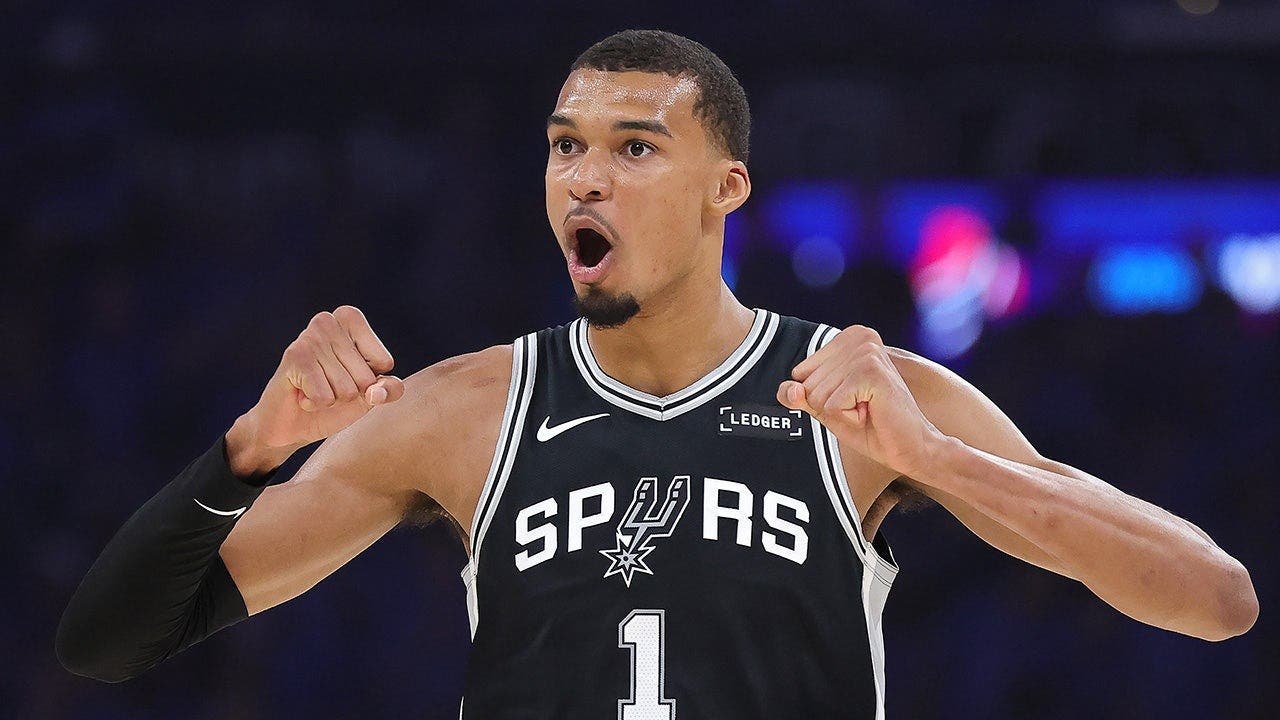
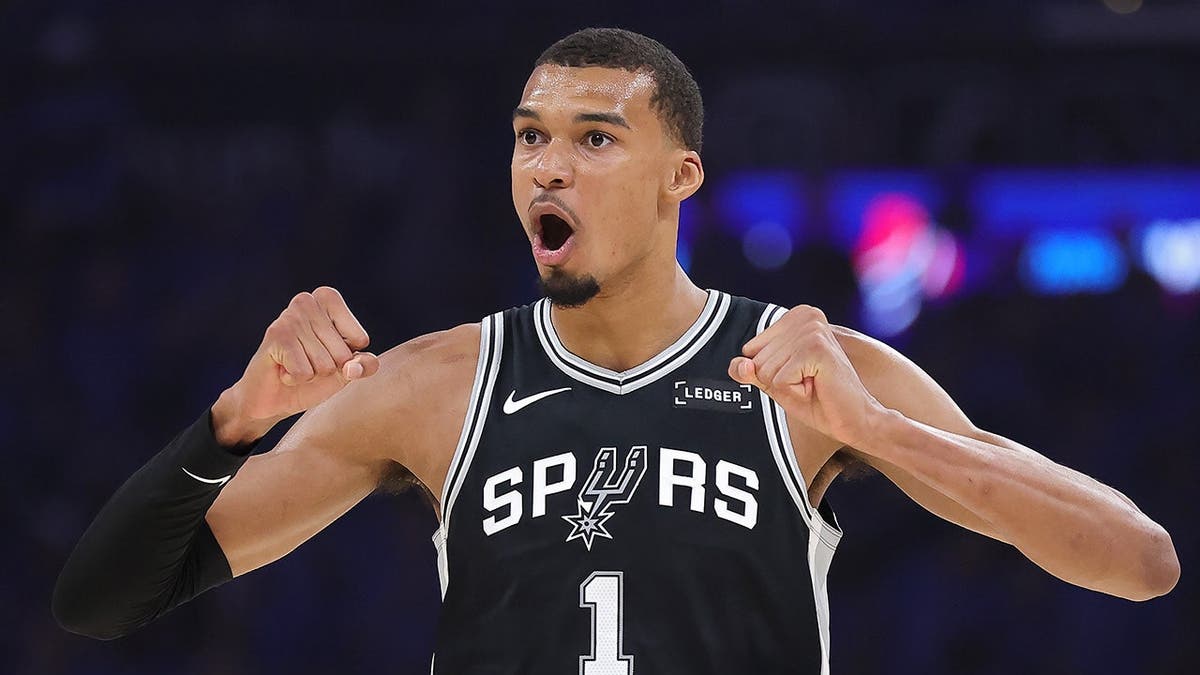
Victor Wembanyama of the San Antonio Spurs reacts during NBA Western Conference Finals game

Victor Wembanyama of the San Antonio Spurs reacts during the second quarter against the Oklahoma City Thunder in Game 1 of the Western Conference Finals at Paycom Center in Oklahoma City on May 18, 2026. (Alex Slitz/Getty Images)

He joined Wilt Chamberlain as the only players to record more than 40 points and more than 20 rebounds in their conference finals debut. He also joined David Robinson as the only players in Spurs history to record more than 40 points and 20 rebounds in a playoff game.

“He has the ability to do things that we haven’t seen in our league ever. His IQ, like you can tell by the way he talks, you can tell by his demeanor he knows the game. He was taught the game the right way,” James said of Wembanyama.

CLICK HERE TO DOWNLOAD THE FOX NEWS APP

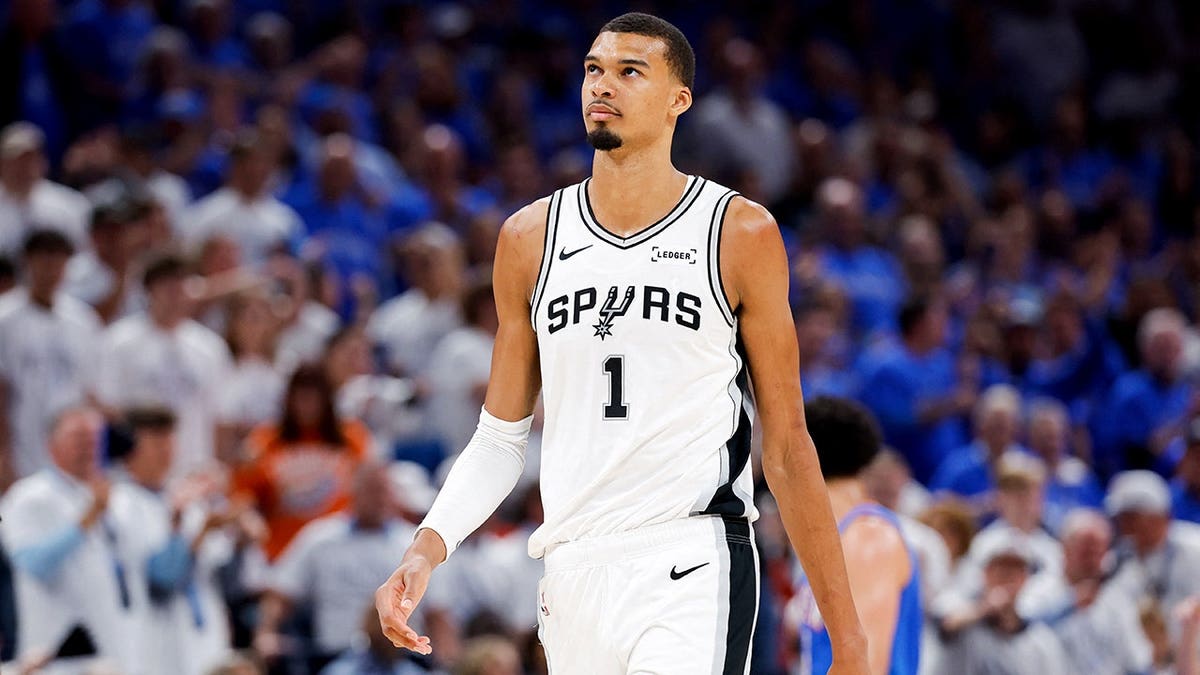
San Antonio Spurs forward Victor Wembanyama looking on during NBA game at Paycom Center

San Antonio Spurs forward Victor Wembanyama looks on during the fourth quarter against the Oklahoma City Thunder in Game 2 of the Western Conference finals at Paycom Center in Oklahoma City on May 20, 2026. (Alonzo Adams/Imagn Images)

In the Spurs’ Game 2 loss to the Thunder on Wednesday night, he played well, but it wasn’t enough to propel San Antonio to another win. He had 21 points with 17 rebounds, six assists and four blocks.

Robinson won two NBA championships with the Spurs, while Duncan won five championships. The Spurs hope can they turn their luck from landing Wembanyama in the draft lottery three years ago into more titles in Texas.

Wembanyama and the Spurs will play the Thunder in Game 3 of the Western Conference Finals on Friday at 8:30 p.m. ET. Game 3 will be the first home game of the series for the Spurs.

Follow Fox News Digital’s sports coverage on X, and subscribe to the Fox News Sports Huddle newsletter.

Source link
See more: https://theglobaltrack.com/
https://corinthiames.com.br/

AJ Dybantsa is making his case to be the No. 1 pick in the NBA Draft: ‘I fill seats’

AJ Dybantsa is making his case to be the No. 1 pick in the NBA Draft: ‘I fill seats’

CHICAGO — AJ Dybantsa may be the presumptive No. 1 pick in next month’s NBA Draft, but he’s taking nothing for granted.

He is treating the week-long NBA Draft Combine — which is jam-packed with measurements, on-court drills, introductory interviews with teams and interviews with the media — like an extended audition.

He arrived at his conversations with teams — the Washington Wizards, Utah Jazz, Memphis Grizzlies, Chicago Bulls, LA Clippers, Atlanta Hawks and Dallas Mavericks as of noon Wednesday, he said — in a suit and tie.

On Wednesday, he even showed up for his 20-minute question-and-answer session with reporters and broadcasters dressed in a gray plaid suit, dark blue dress shirt and a tie with notes of blue. Year after year, prospects typically show up wearing comfy sweats to their media interviews. But not him.

“I had interviews this morning with different teams, and I mean, I never had a job before,” Dybantsa said. “I was 13 (when I) started taking basketball serious. But this is like my first job interview. So my dad’s kind of like, ‘You know, this is your job interview. So come professional, come in a suit.’”

Dybantsa, an explosive wing from BYU who said he wants to be picked No. 1, has reason to view this week as a tryout. He faces competition for the top spot from Kansas guard Darryn Peterson, Duke big Cameron Boozer and North Carolina forward Caleb Wilson.

The Wizards won the draft lottery and own the top pick, followed by the Jazz at No. 2, the Grizzlies at No. 3 and the Bulls at No. 4.

All four players continued to make their draft cases Wednesday. Each prospect was asked by the assembled media some variation of why he should be the top pick or what he will bring to an NBA team.

“I’m super versatile as a player,” Dybantsa said. “I think I can guard one through four, play one through four. I think that I can play a little bit of combo guard if you need me to. I can be that jumbo wing if you need me to. I play the game the right way. So I try to play to win, try to make my teammates better. But I’m super exciting as a player, super explosive. I fill seats.”

Boozer was asked to name the skill he possesses that will transfer immediately to the NBA.

“I think my mind, for sure,” Boozer answered.

“I just think my feel for the game is elite. My competitiveness, my will to win, I think those are the biggest things that are going to translate.”

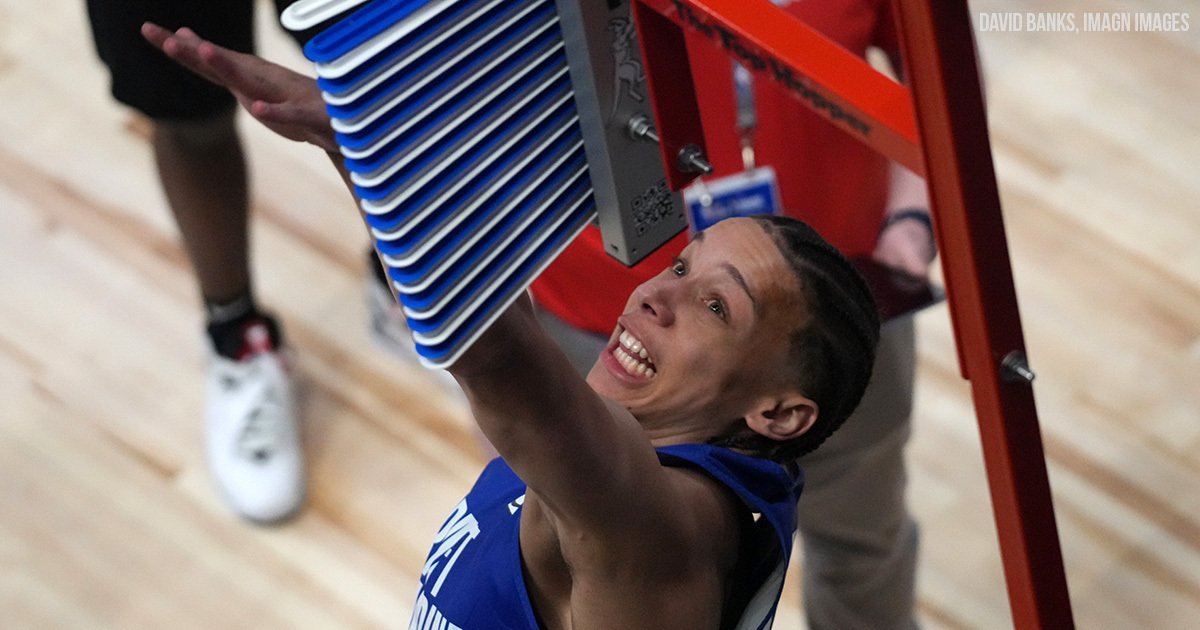
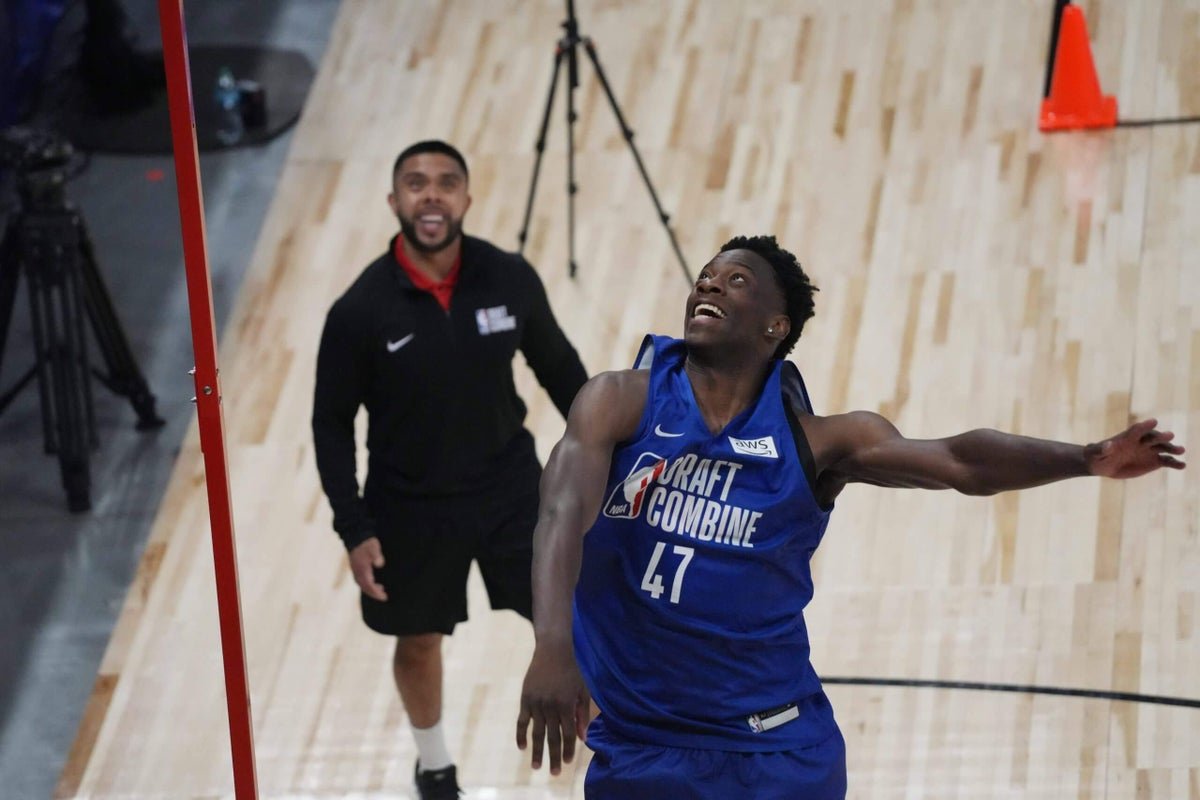
Cameron Boozer, shown here during a drill at the 2026 NBA Draft Combine, starred at Duke during his one-and-done season there. (David Banks / Imagn Images)

Peterson said he had interviewed with approximately 10 teams as of midday Wednesday, including the Wizards, Jazz and Grizzlies.

“I think I can fit with any team just because I think I can play both off and on the ball and help my team wherever I go,” Peterson told reporters.

There has been speculation that Peterson only wants to go to a team that views him as a point guard, stemming in part from comments he made to Andscape that he’s at his best as a point guard. On Wednesday, however, when he was asked directly whether he would cross a team off his list if it considers him solely as a two-guard, he answered, “Nah, no, sir. I mean, at the end of the day, whoever wants to pick you is probably going to pick you. So if they come in and say I’m a two-guard, I’m familiar with it now (from playing at Kansas), so I’ll just make a way.”

A pair of hand injuries limited Wilson to only 24 games at North Carolina. On Feb. 10, he broke a bone in his left hand when he attempted to block a shot and fell to the ground. On March 5, he fractured his right thumb when he struck the rim during a practice drill.

Wilson said the Jazz, Bulls, Clippers, Brooklyn Nets and Charlotte Hornets are among the teams that have interviewed him. He has an interview scheduled Thursday with the Wizards, and he likely has an interview upcoming with the Grizzlies, too.

Asked what he will bring to a team, Wilson answered, “Leadership and focus, honestly. Of course, I can score. Of course, I can rebound and do all those things. But I feel like being a leader and really being able to kind of impact winning and impact the culture of the team is going to be something I really bring from day one.

“I never really felt like my hand injury was a setback,” Wilson added. “Of course, I was heartbroken when it happened. But my hand’s perfectly fine now, and I feel like it offered me a different perspective on basketball in general, just because once I injured my hand, now I’m way more grateful to play. Every day I wake up and I get the opportunity to play and just be able to shoot and dribble and stuff like that. I just feel grateful for the opportunity, and I wasn’t as grateful as I am now.”

Wilson said he would be happy to go to any team that believes in him.

In the moments immediately after the Wizards won the lottery, Dybantsa appeared stone-faced, prompting at least some observers to speculate that he does not want to play for the team and prefers to go somewhere else.

He said he would be happy to go to any team.

“I literally had no reaction at all, and people find ways to say that I didn’t want it. I did want it,” Dybantsa said. “But it all comes with social media. People are going to make narratives. I just tried not to react at all, just keep a straight face, try to stay even-keeled.”

It’s an extension of his businesslike approach to the week.

A week with no guarantees he’ll be selected No. 1.

Source link

Redrafting the 2025 NBA Draft: Where does playoff star Dylan Harper go? Second-round pick enters the lottery

Redrafting the 2025 NBA Draft: Where does playoff star Dylan Harper go? Second-round pick enters the lottery


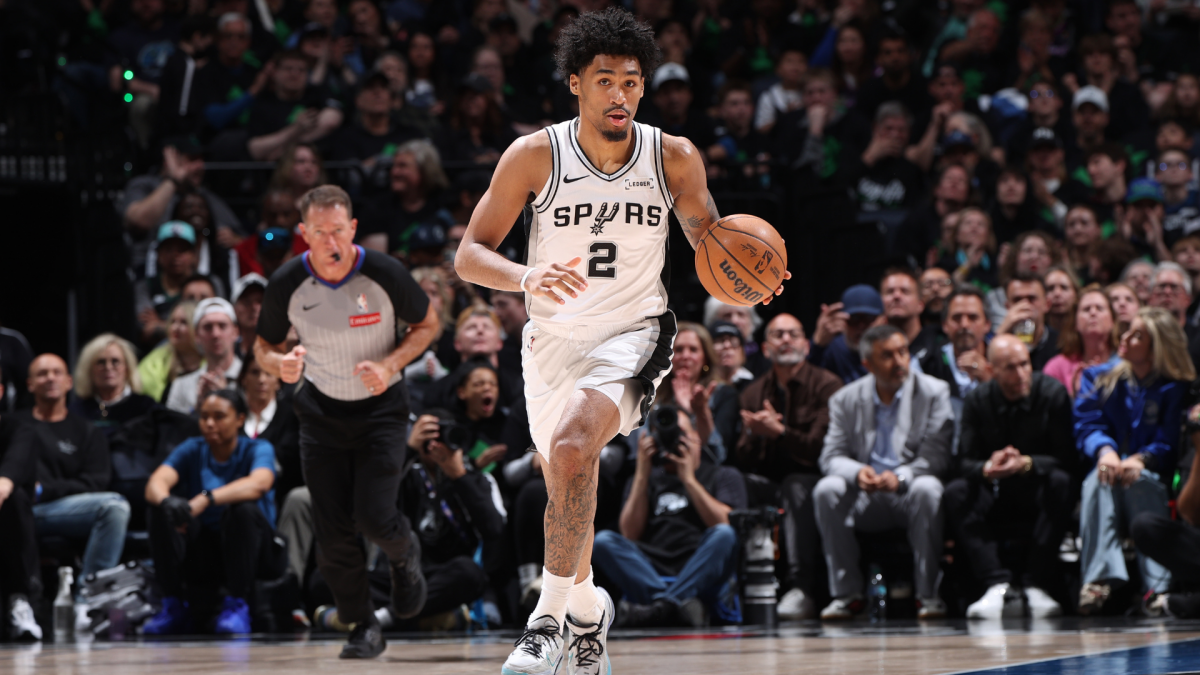
One of the biggest storylines of the 2026 NBA Playoffs has been the play of Spurs rookie guard Dylan Harper. The No. 2 overall pick from the 2025 NBA Draft became the first Spurs rookie with multiple playoff double-doubles since Tim Duncan in 1998, after finishing with 12 points and 10 assists in San Antonio’s 126-97 win over the Minnesota Timberwolves in Game 5 of the series.

Harper entered last summer as one of the best guard prospects of this decade and the consensus second-best prospect in the class behind former No. 1 overall pick Cooper Flagg. San Antonio made Harper the pick despite already having former NBA Rookie of the Year Stephon Castle and De’Aaron Fox on the roster.

The Spurs made the right decision by prioritizing talent over fit. San Antonio has had its fair share of lottery luck over the last three years. The Spurs have built a foundation that’s one win away from the Western Conference finals because of the core of Victor Wembanyama, Harper and Castle. Those three will be cornerstone assets for years to come.

The Spurs aren’t the only team happy with the decision the franchise made. Flagg won rookie of the year honors. Kon Knueppel, Flagg’s former college teammate at Duke, also looked like a star for the Charlotte Hornets and could’ve very well won the award. VJ Edgecombe and Harper became the fifth pair of top-three picks to appear in the conference semifinals or later as rookies.

Even the Jazz are happy with how draft night shaped out. Despite Ace Bailey trying to influence his way to the Washington Wizards with the No. 6 pick, Utah called the bluff from his camp and picked him at No. 5. Bailey was the most polarizing prospect from last year’s class and has a bright future with Utah.

With Harper’s rise, and to give everyone a break from looking at dozens of 2026 mock drafts, it’s time to look back on the 2025 class and assess what the lottery might’ve looked like if it happened today.


1. Dallas Mavericks: Cooper Flagg

Original pick: Cooper Flagg

Before last year’s draft lottery, the outlook of Dallas’ franchise looked bleak. Luka Dončić was out the door, and Dallas was stuck with Anthony Davis on the roster. Then, everything changed. Flagg would be the pick 100 out of 100 times, no matter what team was selecting. He is on the trajectory to be an All-NBA player in the very near future. With Dallas having the No. 9 pick in this year’s draft and Davis no longer on the roster, the organization can build its franchise around Flagg. The hires of Masai Ujiri and Mike Schmitz should inspire confidence that the Mavericks are on the right track to build the roster around Flagg.


2. San Antonio Spurs: Dylan Harper

Original pick: Dylan Harper

I think you could’ve made an argument a few months ago for Knueppel in this spot because of how good he was throughout the season. Still, if this pick were being made today, it would be Harper. If San Antonio had a crystal ball and knew it was getting the No. 2 pick — and the right to select Harper — I wonder if they still trade for De’Aaron Fox. Maybe they still do because the Spurs gave Fox a huge contract a few months after drafting Harper. Not sure how hot a take this is, but it wouldn’t be surprising if by next year, around this time, Harper was the Spurs’ second-best player behind Wembanyama. He’s already entering those conversations as a rookie. He looks like a 10-year veteran when he plays.


3. Philadelphia 76ers: VJ Edgecombe

Original pick: VJ Edgecombe

Edgecombe was one of my favorite prospects in last year’s cycle. I believe in the long-term fit with Tyrese Maxey and Edgecombe in the backcourt. Again, this is a spot where you could consider Knueppel here, but I think the 76ers would still pick Edgecombe if they had the chance to do it all over again.


4. Charlotte Hornets: Kon Knueppel

Original pick: Kon Knueppel

The Hornets made the best pick in the draft possible at No. 4. Despite struggling in the play-in game, Knueppel had an incredible rookie season. It looked like he was on track to win ROTY until Flagg had a late surge. Knueppel shattered the rookie record for the most 3-pointers made after shooting 42.5% on nearly eight attempts per game. He is already one of the best shooters in the league. Knueppel is a foundational pillar for Charlotte moving forward.


5. Utah Jazz: Ace Bailey

Original pick: Ace Bailey

Bailey was the most polarizing prospect in last year’s class. After declining to work out for the 76ers, Bailey “fell” to pick No. 5. He averaged 13.8 points and 4.2 rebounds in 72 games. The biggest concern for Bailey coming out of Rutgers was his shot diet. He shot 44.3% from the floor and 34.4% from beyond the arc in his rookie campaign. Still, Bailey has one of the highest ceilings in this class. Utah would still make Bailey the pick if they could do it all over again.


6. Washington Wizards: Cedric Coward

Original pick: Tre Johnson

This is the first change from how last year’s draft actually went. I still believe in Johnson, but Coward was a stud during his rookie season for Memphis. After committing to Duke out of the transfer portal last offseason, Coward elected to stay in the draft and was one of the biggest risers of any prospect. He was selected at pick No. 11 by the Grizzlies, and he would go much higher in a redraft after averaging 13.6 points, 5.9 rebounds and 2.8 assists as a rookie.


7. New Orleans Pelicans: Collin Murray-Boyles

Original pick: Jeremiah Fears

I had Murray-Boyles as my No. 8-ranked prospect on my personal board last summer. In a redraft, there’s a chance he goes higher than No. 9. Murray-Boyles was terrific in the NBA Playoffs and showcased his versatility on the defensive end of the floor. He’s in for a big Year 2 jump next season.


8. Brooklyn Nets: Jeremiah Fears

Original pick: Egor Dёmin

The most shocking pick of last year’s lottery was Brooklyn taking Dёmin at No. 8. The Nets made five first-round picks last summer. Dёmin was by far their best rookie of the bunch. If Brooklyn had to do it all over again, Dёmin would definitely be in consideration. However, during the pre-draft process, Brooklyn was linked to Fears, who had a really solid rookie year with the Pelicans. You can make the case that Fears should’ve gone as high as pick No. 6.


9. Toronto Raptors: Derik Queen

Original pick: Collin Murray-Boyles

With Murray-Boyles not an option at this spot, the next best thing would be Queen. It’s somewhat unfair to Queen that he was part of one of the wildest draft night trades in recent memory that saw the Pelicans trade an unprotected 2026 first-round pick to move up to draft Queen. He is a good player. Luckily for New Orleans, its pick fell to No. 8 in this year’s draft. Queen had some bright moments during his rookie season, but the long-term fit is still somewhat concerning.


10. Phoenix Suns: Tre Johnson

Original pick: Khaman Maluach

You can argue that Johnson would go higher than this in a potential redraft. I loved his tape coming out of Texas. Johnson started 42 games for the Wizards this season and averaged 12.2 points. Washington can go in several different directions with the No. 1 pick this offseason. If Washington takes AJ Dybantsa, Johnson could be a starter next to Trae Young in the backcourt.


11. Memphis Grizzlies: Maxime Raynaud

Original pick: Cedric Coward

The Sacramento Kings didn’t have many bright spots this season, but one of them was certainly Raynaud, who was drafted in the second round (No. 42 overall). With Domantas Sabonis missing most of the season due to injury, Raynaud was inserted into the starting lineup, where he showcased why he was the steal of the second round. Raynaud played in 74 games and averaged 26.5 minutes per game, while Maluach appeared in only 46 games.


12. Chicago Bulls: Khaman Maluach

Original pick: Noa Essengue

Essengue appeared in just two NBA games during his rookie season after undergoing season-ending shoulder surgery. Essengue was one of the rawest prospects in the 2025 draft and still needs time to develop. He doesn’t turn 20 until December. If the Bulls can do it over again, they might stick with the upside swing in Essengue or take another upside swing in Maluach, who appeared in just 46 games for Phoenix.


13. New Orleans Pelicans: Egor Dёmin

Original pick: Derik Queen

Coming out of BYU, there were question marks about how Dёmin would shoot the 3 ball at the NBA level. Ironically, that ended up being the biggest bright spot of his rookie season. He shot 38.5% from the 3-point line on over six attempts per game. However, he shot under 40% from the field. I still like Dёmin’s potential with Brooklyn and think he would be a lottery pick in a redraft.


14. San Antonio Spurs: Carter Bryant

Original pick: Carter Bryant

Bryant is a work in progress. He is buried in San Antonio’s rotation because of how many wings it already has on the roster. Bryant appeared in 71 games for the Spurs but averaged 11.5 minutes per game. Bryant’s 3-and-D potential is worth waiting on. One option San Antonio could consider in a redraft is Wizards guard Will Riley, who looked like one of the best picks in the 20s.


Source link

Kevin O’Connell’s Other QB Draft Pick Announces Retirement

Kevin O’Connell’s Other QB Draft Pick Announces Retirement


In 2024, the Vikings spent the tenth overall pick to acquire rookie passer J.J. McCarthy. He was supposed to be Kevin O’Connell’s big project, his first shot at finding a true franchise quarterback. So far, the results have been disappointing.

A year earlier, O’Connell had already drafted his first quarterback since joining the Vikings in 2022. Day 3 pick Jaren Hall was never expected to take over from Kirk Cousins, but at one point, he was actually asked to do just that.

Aug 24, 2024; Philadelphia, Pennsylvania, USA; Minnesota Vikings quarterback Jaren Hall (16) calls out before the snap against the Philadelphia Eagles during the second quarter at Lincoln Financial Field. Mandatory Credit: Caean Couto-USA TODAY Sports

Hall has now announced his retirement on Instagram.

Advertisement

“There’s a lot I could say, but mostly I just feel grateful. Sports have been woven into nearly every part of my life — they’ve challenged me, humbled me, shaped my faith, introduced me to lifelong friendships, and given me experiences I never could have imagined.”

With Cousins entering the final year of his contract (and getting up there in age), the Vikings took a shot late in the 2023 draft. Though not the greatest odds, there was still a chance he could be a massive hit and suddenly start for the franchise. They are rare, but Brock Purdys still exist. Even the normal outcome of him becoming a backup for years to come was an intriguing thought.

Hall’s first preseason was a little shaky and it was clear that he wouldn’t immediately unseat QB2 Nick Mullens for the backup job. Patience was required. Things changed a few weeks later when Cousins suffered his torn Achilles tendon. Mullens was on IR with a back injury at the time and Hall was suddenly asked to play meaningful NFL snaps.

cut candidate
Nov 5, 2023; Atlanta, Georgia, USA; Minnesota Vikings quarterback Jaren Hall (16) passes the ball against the Atlanta Falcons during the first quarter at Mercedes-Benz Stadium. Mandatory Credit: Dale Zanine-USA TODAY Sports

A week after the Cousins disaster, Hall was the starter. Unfortunately, he lasted only two drives before suffering a concussion, as he attempted to find the endzone on a scramble. Joshua Dobbs entered the game, kicking off the Dobbs-mania storyline.

Advertisement

The Vikings then rotated through Dobbs and the recovered backup Mullens, but later in the season, ahead of a must-win contest against the Packers, O’Connell once again turned to Hall. Both Mullens and Dobbs had massive turnover problems; perhaps Hall could limit that, the idea went.

That day, Hall looked like a fifth-round rookie, struggling to see the field and crumbling under the pressure of the situation, but also the pressure Green Bay’s defense provided. Mullens replaced him to start the second half.

After the season, Cousins and Dobbs dipped, while McCarthy and Sam Darnold arrived. With Mullens still in the mix, the sophomore out of BYU dropped to fourth on the depth chart and was eventually released despite McCarthy’s season-ending injury in favor of new signing Brett Rypien.

6 items
Aug 10, 2023; Seattle, Washington, USA; Minnesota Vikings quarterback Jaren Hall (16) passes the ball over Seattle Seahawks offensive tackle Abraham Lucas (72) during the second half at Lumen Field. Mandatory Credit: Steven Bisig-USA TODAY Sports.

Hall then headed to Seattle’s practice squad and provided depth behind Geno Smith and Sam Howell, but never saw the field again. Last year, the Seahawks fired him in the offseason and he hasn’t been with a team since. A few try-outs didn’t lead to anything and neither did a move to the UFL earlier this year.

Advertisement

Hall added in his farewell post, “From growing up in this community, to representing my hometown, to having the opportunity to play in the NFL, it has all been a blessing. What I’ll carry most isn’t the milestones, but the people — teammates, coaches, family, and a community that supported me every step of the way. My heart is full as I close this chapter and finish my football career. I’m thankful to everyone who’s been part of the journey. The game has given me more than I could ever give back.”

In three NFL years, Hall played in three games, completing 13 of 20 passes for 168 yards, zero touchdowns and one interception. Hall just turned 28.

Editor’s Note: Information from PFF, Over The Cap, and Sports Reference helped with this article.


Source link

Why Duke’s Cameron Boozer leads my list of Top 15 NBA Draft prospects

Why Duke’s Cameron Boozer leads my list of Top 15 NBA Draft prospects


Congratulations, tankers. You’ve made it.

A loaded NBA Draft awaits the league’s worst teams from 2025-26, and the good news for them is that it may not matter much what happens in the actual lottery. While teams would of course rather pick first than, say, eighth, this is as “flat” a talent distribution at the top of the draft as I can remember. The six teams that tanked most brazenly at the end of the season are all basically assured of getting a high-upside one-and-done.

While the depth of the group is loaded, there isn’t a singular LeBron or Wemby at the top. In fact, my No. 1 choice deviates from consensus, and four players can make a credible claim to warrant being the top selection. Beyond those four, an almost overwhelming class of point guards makes for a difficult game of splitting hairs.

Before we get into the fun part, let me note a couple of ways I’ve changed this board from how I did it the past few years.

First of all, longtime readers will note that I usually try to do a Top 20 heading into the draft lottery, with maybe a couple of sleepers at the end. That no longer seems realistic given the uncertainty of so many players remaining in the draft. Virtually every player I had in consideration for spots No. 16 through No. 20 is still a threat to return to school for a name, image and likeness bag. As recently as two years ago, anybody with a first-round projection was gonzo.

I’ve limited myself to 15 players this year, but don’t let that be a reflection on the draft’s quality. If every player who submitted his name for the draft ends up staying, I’m going to have a board of 30 first-rounders whom I really like.

That’s the case even though NIL has once again given us a “U-shaped” draft by age; if you do a bar chart, you’ll get a lot of freshmen, a lot of seniors and virtually nobody in between. With top sophomores and juniors such as Florida’s Thomas Haugh and Alex Condon, Arizona’s Motiejus Krivas, Wake Forest’s Juke Harris and Duke’s Patrick Ngongba pulling out, I count only 12 draftable players from the sophomore and junior classes. Twelve! And even of that small set, several more seem likely to bail before draft day. These guys used to be half the draft, and their absence has cratered the depth of the second round.

Finally, one area where I’ve had to change my philosophy is on centers. A review of my past hits and misses reveals that I’ve been entirely too pessimistic on the idea of drafting centers; the league has also recently shifted back toward lineups that feature multiple bigs at the same time, so the position isn’t facing a minutes crunch and may even have some genuine scarcity at the moment. Big wings remain the most valuable draft commodity, but I’ve realized I need to be much higher on drafting centers. My ratings this year reflect that shift.

Now, get your popcorn. Here’s my Top 15 board:

Tier 1

1. Cameron Boozer, freshman, 6-9, PF/C, Duke

Yes, Boozer.

Similar to Cooper Flagg a year earlier, Boozer both destroyed college basketball and, at 18 years old, is the youngest college prospect in the draft. That he isn’t obviously the No. 1 pick at this point is a tell on the strength of this class, but I also wonder if everyone is overthinking things a bit.

Yes, some weaknesses jump out when you watch Boozer. He struggles to elevate and finish against length around the rim, something that stood out when Virginia’s Ugonna Onyenso repeatedly blocked his shot in the ACC championship game. Yes, Boozer’s ability as a rim protector is suspect, to say the least, with a minuscule 0.9 percent block rate in conference games. Finally, at 6 feet 9 and 250 pounds, he’s undersized for a center but may not have the mobility to play power forward.

The reason you take him No. 1 anyway is that Boozer was basically “college basketball Nikola Jokić” last season. He’s a huge, wide big man who nonetheless can handle on the perimeter and shoot 3s (39.1 percent from distance, 78.9 percent from the line). Duke ran inverted pick-and-rolls for him last season, where he was picking out 3-point shooters on the weak side and flicking one-handed crosscourt passes. As a rule, teenage centers do not do this, and when they do, they turn out to be pretty special.

That, basically, is my elevator pitch for Boozer as the top pick: Don’t worry about the defense, because the offense is going to be ridiculous. Pairing him with a mobile shot-blocker will be important, but Boozer’s resume is overwhelming.

I’ll throw in a few other Boozer nuggets while I’m here. First of all, his feel at the defensive end is pretty strong too; he averaged 2.8 steals per 100 possessions in conference play, which a lot of first-round guards didn’t do.

But let’s get back to that passing, because that to me is the ultimate reason to take him. I have a basic draft theory that I call the Marc Gasol Rule: Bigs who can pass, figure it out. Gasol was thought to be so vulnerable on defense that the Grizzlies drafted Hasheem Thabeet to play next to him. Gasol ended up winning a Defensive Player of the Year trophy. So much of big-man defense is reading what’s happening and figuring out position and angles. That’s why a lot of “feel” bigs like Gasol (or Jokić!) end up being solid-to-good defenders even with meh tools.

Boozer is only 6-9, so he’s operating with a different ceiling, and ultimately, he may play a lot at power forward. But he showed enough mobility that I don’t think he’d be a disaster at that spot defensively, and he’d have massive advantages at the other end if matched up that way.

In the end, it’s hard not to see a Kevin Love-type impact as a median outcome for Boozer, but he was so dominant at such a young age that there may be upside for more.

2. AJ Dybantsa, freshman, 6-9, PF/SF, BYU

Dybantsa is obviously a phenomenal scorer, averaging a jaw-dropping 39.4 points per 100 possessions in Big 12 games, mostly on self-created shots. He shot 56.8 percent on 2s, even though a lot of them were contested pull-ups, and while he only shot 33.1 percent from 3, I trust his shot a lot more than that.

Watching him shoot before games, you see an easy, clean release, and he gets great elevation on it; the NBA level should likely afford him some easier catch-and-shoots to improve that percentage.

In particular, Dybantsa is hell on wheels in transition, pushing his own rebounds upcourt and then taking giant strides into his finishes. He’s never passing once he gets a head of steam, but if you were an automatic bucket like this, you wouldn’t either.

If you’re looking for warts, he has a high handle that can get away from him a little bit, and you worry about NBA defenders picking his dribble when it’s out that high and away from him. Additionally, Dybantsa had trouble reading defenders and picking out open teammates and relied a bit too much on tough 2s, although this got better as the season went on.

I went back and looked historically at the production of other similarly highly drafted big forwards, and Dybantsa’s freshman year is a similar story: A lot of these guys don’t actually have overwhelming stats as far as impressing draft models and have somewhat high turnover rates and underwhelming 2-point shooting stats, but they score at a high rate and have at least halfway-decent assist rates. If you look at Dybantsa’s offensive stats from his one-and-done year, they basically fit right in next to the likes of Jayson Tatum, Brandon Ingram, RJ Barrett, Paolo Banchero, Jaylen Brown and Cade Cunningham. I’d say that’s good company.

Where I worry more about Dybantsa is actually at the other end. His rates of rebounds, steals and blocks are all unusually low for a prospect of his type; of the players I listed above, Dybantsa would be a distant last in rebounds and blocks and near the bottom in steals.

Defensively, he was pretty good one-on-one because he weaponizes his length, keeping his hands high and using them to deter shooters while allowing enough cushion to cut off a drive. Sometimes this resulted in him letting guys walk into a jumper, but more often than not, it was effective.

The dearth of rebounds and defensive events relates more to his awareness and instincts off the ball and in the run of play; his feel for the game still has a ways to go. That is likely somewhat a result of the game being so easy for him to date; he can just jump over everybody and score. When NBA defenses make it harder for him to do that, he’ll need to develop those other faculties or risk turning into an empty-calorie scorer.

Nevertheless, this history of huge forwards who can score like this is extremely positive, and Dybantsa has a solid case to be the first pick. Even in the worst-case scenario, it’s hard to imagine him not scoring 20 a game for years.

AJ Dybantsa is surely No. 1 on a lot of pre-draft boards. (Ben Queen / Imagn Images)

3. Caleb Wilson, freshman, 6-10, PF, North Carolina

A fair amount of projection has to go into this pick. Wilson has a very thin frame, can’t shoot from distance and has sequences on defense that will make you shake your head.

Even with that, his production as a freshman was phenomenal. Let’s start here: He constantly gets to the rim, whether as the initiator or rolling to the cup as a screener. Wilson took 19.3 2-point baskets per 100 possessions in ACC play and made 64.5 percent of them. In other words, he was shooting inside the arc nearly as often as Dybantsa or Kingston Flemings (below), but he was converting at an awesome rate.

Included in those were mouth-watering transition sequences where he dunked on people’s heads. He loves to push rebounds and start trouble himself, although his dribble can get away from him. As a passer, he was pretty effective as a 6-10 forward, even though he wasn’t wowing you with his reads. It’s just an easy game for him at his size and with the advantages he creates.

The other half of that 2-point percentage is Wilson’s surprising lower-body strength. Despite his thin frame, he’s comfortable powering up in the paint and taking a hit and expertly spins off contact and takes long strides to finish, in a way that is slightly reminiscent of Giannis Antetokounmpo.

Now, for the bad news: Defensively, Wilson has great tools and made disruptive plays at a high rate (5.4 “stocks” per 100 possessions, 2.8 of which were steals — an amazing rate for a player of this size). However, he was often too casual at that end and was beaten on the perimeter more than you’d expect or want.

And then there’s the shooting. Wilson only made seven 3-pointers all season and shot 71.3 percent from the line. While Wilson is talented enough to survive in the NBA without a jump shot, selecting him this highly prices in the idea that his 3 will eventually get to a respectable level. Given that his form doesn’t seem broken, I don’t think that’s a crazy bet.

“Huge forward who can handle the ball and move” is a pretty difficult archetype to find, and players like that can hit big even without being knockdown shooters (witness Scottie Barnes, Franz Wagner and Pascal Siakam, for example). Wilson’s game can go a lot of directions from here, and while the shooting gives him a lower floor than perhaps anyone in the top eight, he also has a crazy-high ceiling.

4. Darryn Peterson, freshman, 6-6, SG, Kansas

Peterson came into the year as the No. 1 player on most draft boards, but his injury-riddled season at Kansas left a lot of questions. In particular, the minutes he played didn’t really showcase him as a lead creator despite a high scoring rate. His stat line is more of an elite 3-and-D guy, which obviously still has value, but that would be a slightly disappointing outcome this high in the draft.

The most notable stat for Peterson is 9.9 field goal attempts for every assist in Big 12 Conference play, which isn’t quite in Cam Thomas territory but definitely isn’t good for a guard prospect. You can only blame him playing off-ball for some of that; most of the other elite wing prospects from recent years averaged between 4.0 and 7.0 shots per assist. Even Dybantsa, who wasn’t exactly nicknamed the Human Assist, was at 5.0.

Peterson’s injuries and limited minutes somewhat obscured how much he was scoring, though; in conference games, he averaged 40.2 points per 100 possessions, more even than Dybantsa. That’s partly because when he went to the rim in the half court, he was shooting every time; in transition, oddly, he threw some tremendous alley-oops. Peterson, alas, wasn’t quite as efficient as he could have been on those shots; he lacked explosion at the rim, and his left hand frequently let him down as a finisher.

Peterson’s defense grades out as a major plus, especially off the ball. He zips into passing lanes for steals (2.8 swipes per 100 in Big 12 play), blocked 3-pointers and generally was a pest.

I’ve also buried the lede a bit: Peterson shot 38.2 percent from 3 on huge volume and 82.6 percent from the line. Given that 3-point volume and free-throw shooting are the two best predictors of pro 3-point success, he has as good a shooting projection as any player in this draft.

Peterson will have to prove he’s a go-to offensive option as opposed to a second-side finisher; if not, he still has a ton of value, but it would take his ceiling to a different place than a top-three guy. Still, somebody who shapes up as “a more athletic Keaton Wagler” is still a heck of a player to have.

Tier 2

5. Kingston Flemings, freshman, 6-3, PG, Houston

We have a great group of point guards this year; I will have a first-round grade on at least eight of them. Beyond that, splitting hairs among them is tough.

However, I like Flemings the best of the group because of his turbo-boosted quickness and athleticism, which he uses to impact the game at both ends of the floor. Flemings is especially potent with the ball in his right hand, getting into pick-and-rolls with pace and zipping one-handed crosscourt passes while going full speed. He also gets great elevation on his pull-ups, although he probably relies on that shot too much.

One reason Flemings is so pull-up heavy is that he’s a poor finisher at the cup; he’ll need to refine his steps and craft around the rim as a pro. That’s a big reason he shot only 47.3 percent on 2s in Big 12 play and didn’t draw fouls at a high rate.

The other swing skill for him, however, is his shooting. Flemings’ form is not ideal – it comes out a bit flat and has some sidespin – and he didn’t shoot many 3s. On the other hand, he also shot 84.5 percent from the line in his one season.

Defensively, I like Flemings better off the ball than on it. He rockets from nowhere on the weak side to get steals and is great at turning mistakes into quick transitions. In isolation, however, he just wasn’t all that special.

Still, the open spaces of the NBA should help him leverage his explosiveness and perhaps simplify some of his finishing challenges. Flemings profiles as a Day 1 starting point guard with All-Star upside.

6. Keaton Wagler, freshman, 6-6, PG, Illinois

Wagler has a skinny frame, near-zero explosiveness and ran maybe two fast breaks the entire season. Yet he tormented college defenses in the half court with his deep shooting range, ability to get into his shot off the dribble and craft in beating switches with crossovers and decel Euro steps at the cup. He’s unflappable on the ball, rarely getting sped up, and won’t take a bad shot.

While he has deep shooting range, he wasn’t quite as elite overall as highlights make it seem, hitting 39.7 percent from 3 and 79.6 percent from the line. Wagler partly offset that by drawing fouls at a shocking rate for somebody with his build.

The system at Illinois definitely benefited Wagler, with a surfeit of pick-and-pop bigs surrounding him, and I am particularly interested to see him play at NBA speed after walking the ball up the court every play for the Illini. Forget getting sped up by opponents; he’s going to be sped up by the eight-second rule.

Wagler also only shot 47.1 percent on 2s in Big Ten play and didn’t have the sterling assist rate of Flemings or Darius Acuff Jr. (below), and his low steal rate stands out (in a bad way) for a guard prospect, although he did use his length to block jump shots on several occasions.

One other thing I like about Wagler is that he has multiple pathways to success; he is such a good shooter that he can fill an off-ball role pretty easily if being the main engine is too much for him. In that sense, he has a high degree of safety.

7. Darius Acuff Jr., freshman, 6-2, PG, Arkansas

Offensively, Acuff showed more than the other two point guards in his lone college season, burning defenses with deep shooting range and a strong pull-up game while also proving himself a deft passer. (He led the SEC in both points and assists.) In addition to his half-court pick-and-roll game, he’s great at throwing alley-oops in transition.

However, questions remain as to how that scales to the NBA game. Acuff needs to be a high-usage, high-volume offensive engine because his defense is awful. Both his steal and rebound rates are in red-flag territory for a guard prospect, although he did at least block shots with some frequency. He’s not as small as, say, Trae Young, but the defensive projection might not be a whole lot better. Additionally, I’ll note that steals are usually a “feel” indicator for offensive development; even Young had a much higher steal rate as a collegian than Acuff.

Offensively, Acuff was a magician in Arkansas’ SEC tournament run, but the full-season tape had a few warts if you look close enough – he’s very right-handed in the open court and got his dribble picked in transition more than you’d expect.

Still, Acuff grades out as an offensive engine with Damian Lillard-esque upside. If he’s merely “good” offensively, though, his defense may limit his overall value case.

Darius Acuff Jr. has the potential to be a high-usage offensive engine in the right situation. (Troy Wayrynen / Imagn Images)

8. Brayden Burries, freshman, 6-4, SG, Arizona

When a freshman guard shoots 57.1 percent on 2s in the Big 12, you take notice. When he does it while shooting 39.1 percent from 3, rebounding like a power forward and playing solid defense for one of the best teams in the country … yeah, that’s elite stuff. Burries would be a top-five pick on my board in a lot of years, but the strength of this year’s class pushes him to eighth.

Burries doesn’t quite profile as a lead guard, but he can shoot and get to the cup, especially in transition. He loves taking his own rebounds and pushing them down the court, and he loves shooting pull-up 3s at the end of those forays. His finishing can be very right-handed, but he attacks from either side on his push.

Oddly, Burries’ overall 3-point volume was pretty low in an Arizona system that was basically allergic to 3-pointers (Arizona was 363rd out of 365 Division I schools in 3-point attempt frequency). However, he shot 80.5 percent from the line, and his stroke looked pure when I watched him pregame the two times I saw Arizona in person.

Defensively, Burries was solid on the ball but nothing special; his impact was felt more as a pest who nabbed 2.8 steals per 100 in Big 12 play. He also has a very solid frame that should insulate him against NBA physicality and, as noted above, punches above his height on the glass.

Tier 3

9. Yaxel Lendeborg, senior, 6-9, SF/PF, Michigan

An athletic forward whose career trajectory likely will land somewhere between James Johnson and Jalen Johnson, Lendeborg is a draft anomaly as an ancient 23-year-old who nonetheless was so good that he should be a top-10 pick.

Lendeborg was arguably the best player in college basketball while leading Michigan to a national title, and a lot of what he did best should translate right away. He is a Day 1 defensive stopper who likely will be assigned to guard some of the best players in the league immediately. He can defend one through five and, when he’s not starting, might have a lot of use as a junk-ball center with second units.

Lendeborg is a fantastic rebounder who pushes his own rebounds in transition and creates havoc at the other end because of it. He makes good passes on the move and can handle the ball, and if you don’t stop him, he’s going to put you on a poster. Just check out his annihilation dunk against Saint Louis in the second round of the NCAA Tournament if you don’t believe me; he should get drafted on that play alone.

Lendeborg’s biggest weakness is an iffy 3-point shot and a limited one-on-one game in the half court, but he is so good in so many other areas that he will help a team even if he shoots 30 percent from 3. He might be quite a bit better, actually; he improved to 37.2 percent from 3 last season on fairly significant volume and made 80.5 percent from the line.

His age limits his upside somewhat, but Lendeborg is a late bloomer who is still coming into his game. Finding a bigger player who can dribble, pass and defend in space is one of the most challenging areas of team-building; Lendeborg checks every box.

10. Aday Mara, junior, 7-3, C, Michigan

Mara came to UCLA as a freshman in 2023 with a lot of buzz but failed to gain much immediate traction, with his first name accurately reflecting how long it took him to change ends.

He’s come a long way since then, literally playing a huge role in Michigan’s run to the national title. Mara’s size makes him a useful rim-runner, but he also maximizes his offensive impact with great short-range touch on hook shots and floaters. He has a nice feel for passing out of the block as well and knows how to feel pressure on his back and spin away from it to get to this shot.

Mara is pretty slow on the perimeter and likely will be much more comfortable in drop coverage but commands the lane and posted a 12.0 percent block rate without being particularly foul-prone.

His other big issue is shooting; he has touch, but his form from the perimeter is still a work in progress. Mara shot 56.4 percent from the line last season and 58.5 percent for his college career.

Mara is the best “true” center in this draft, by a mile (as opposed to smaller, hybrid bigs like Boozer or Mara’s Michigan teammate Morez Johnson). If a team has a need for a center that it wants to fill on a controlled salary for the next four years, its options are pretty much Mara and Mara.

Tier 4

11. Nate Ament, freshman, 6-10, SF, Tennessee

A true wing at 6-10 who can handle the ball and shoot, Ament fits the most desired skill archetype, which pushes his status ahead of a few other one-and-dones who arguably had better college seasons. He also didn’t get to show his best at the scout-packed conference tournaments and NCAA rounds, because he was gutting his way through a late-season ankle sprain.

The biggest impact of Ament’s size was on the heaps of fouls he drew. Despite a thin frame and limited explosion he averaged 14.3 free-throw attempts per 100 possessions in conference games, the most of any prospect in this year’s draft cycle. He likes to get into slow Euro steps around the basket, and if he doesn’t draw a foul, he struggles to finish (just 44.9 percent on 2s in SEC games – yikes!). But he also didn’t get much help from Tennessee’s constipated spacing that usually had two non-shooting bigs clogging the paint on his drives. Improving his left hand around the basket would also help.

As a shooter, Ament has good footwork for his size catching on the move and shooting but didn’t take a huge volume of 3s and made 33.3 percent for the season and 79.0 percent from the line. Defensively, the story is similar; he had low rates of blocks and steals and mostly let his length do the work, although he held up on the glass (11.6 percent rebound rate in conference games).

As an Atlantan, I can’t help but see a lot of Zaccharie Risacher in Ament’s game; the key difference is that Ament has a lot more on-ball juice for self-creating shots. I had Risacher slotted 13th in the 2024 draft and see Ament similarly, although I’m a bit rosier on Ament — a late lottery pick with plus starter upside if his outside shooting develops.

12. Karim Lopez, 6-8, SF, New Zealand Breakers

I’m a big fan of drafting big wings and forwards since they’re generally the most difficult commodity to find in free agency or trades. As I’ve often said, overseas league stats are a much better tell on a player’s NBA ability than a lot of people seem to think. That Lopez was a good player in a halfway decent league as a teenager is a positive signal.

Lopez’s stats from the Australian NBL aren’t overwhelming, but they look a lot better once you factor in that he only turned 19 a month ago. The standout features are that he shot 58.1 percent on 2s and averaged over three “stocks” (steals + blocks) per 36 minutes, roughly evenly split. He also had a solid 13.1 percent rebound rate in a physical league.

At this point, he relies a lot on power and athleticism and is still refining his skill level, although he does have a nice midrange stepback he can get to when he has an advantage in the paint. He shot 32.2 percent from 3 and 73.9 percent from the line; the shot is still a work in progress, but he’s on a trajectory to become reasonably threatening from distance. Compared to Ament above, he’s better finishing in the paint right now but not quite as far along as a shooter.

13. Mikel Brown, freshman, 6-5, SG, Louisville

Brown had top-five buzz entering the season, but a back injury and some inconsistent play dampened the enthusiasm for him a bit. Team medical staffs will need to get a read on his back at the combine, but assuming it’s not a deal-breaker, he’s still clearly a lottery talent. (I also talked to Brown about his prospects in January.)

Brown played as an on-ball guard at Louisville but was wracked by a massive turnover rate. However, much like Peterson above, I think he has a backstop as a strong 3-and-D guy. While his defense wasn’t consistent, the tape showed he has a really good first slide that consistently cut off an opponent’s first move, and he’s good in passing lanes.

Offensively, he has a very good left hand around the rim, but his other game inside the paint needs work; in addition to the massive turnover rate, he only shot 47.4 percent on 2s in ACC play.

However, the shooting piece is perhaps getting underrated. Brown made 38.1 percent from 3 on nearly the highest 3-point volume of any player in this draft cycle, and he shot 82.2 percent from the line. Watching his shooting form makes it clear that wasn’t a fluke; this guy can stroke it. That piece of his game figures to be a weapon regardless of whether he can be a high-usage on-ball player at the next level.

Mikel Brown suffered a back injury during the season but is clearly still a lottery talent.  (Jim Dedmon / Imagn Images)

Tier 5

14. Dailyn Swain, junior, 6-8, SF, Texas

I’m not sure he’s really going to measure 6-8 at the combine, but Swain checks the box for small forward size and skill that is so hard to find in the NBA. I’ve had my eyes on him since his freshman year at Xavier, and he’s finally developed enough of a perimeter threat to make a go of it at the next level.

Swain is a good athlete who can get downhill and create shots at the rim for himself and others; he shot 60.2 percent on 2s in SEC play, even as he left money on the table at times with some wild finishes that could use further refinement. He’s also a beast on the glass who posted a 13.6 percent rebound rate and a constant threat as an off-ball ballhawk who swiped an impressive 3.0 steals per 100 possessions in league play.

The most notable development has come as a shooter. Swain still has a flicky set shot that takes him a while to load up, but he made a respectable 34.4 percent of them this season after rarely taking 3s at Xavier. More notably, his career 81.5 percent free-throw mark augurs well for his continued development as a 3-point weapon.

Realistically, Swain is an energy bench player when he first gets to the league. His on-ball defense isn’t quite good enough to mark him as a stopper, and he still needs to establish himself more firmly as an open 3-point shooter. But he has relatively clear starter upside at what is constantly a position of need, and he’s basically the last quality big wing left on the board.

No. 15. Sergio de Larrea, 6-5, SG/PG, Valencia

De Larrea being a good player in a tough league (Spain) as a teenager isn’t getting enough attention. He doesn’t have the overwhelming athleticism that would have teams fawning over him and will be average at best on defense. Historically, however, players who play this well in good overseas leagues at this age end up being impact players in the NBA.

De Larrea can’t rank any higher because he probably doesn’t profile as a true on-ball lead guard; he struggles to get separation and could probably speed up the windup on his shot. However, he’s a true combo guard reminiscent of somebody like Bogdan Bogdanović, a threatening shooter (42.1 percent from 3, 80.6 percent from the line) who also can handle the ball and throw spicy passes out of pick-and-rolls. He chilled on the hot sauce a little this season after a huge turnover rate in 2024-25 put a damper on an otherwise solid year, but he still attempts some daring passes.

De Larrea’s shooting mechanics look good, but he seems to have that slow windup. He still managed to take more than one every seven minutes in Spain; he’ll likely need to boost that volume further in the NBA. Overall, I see a rotation floor for him with the upside to be a plus starter.

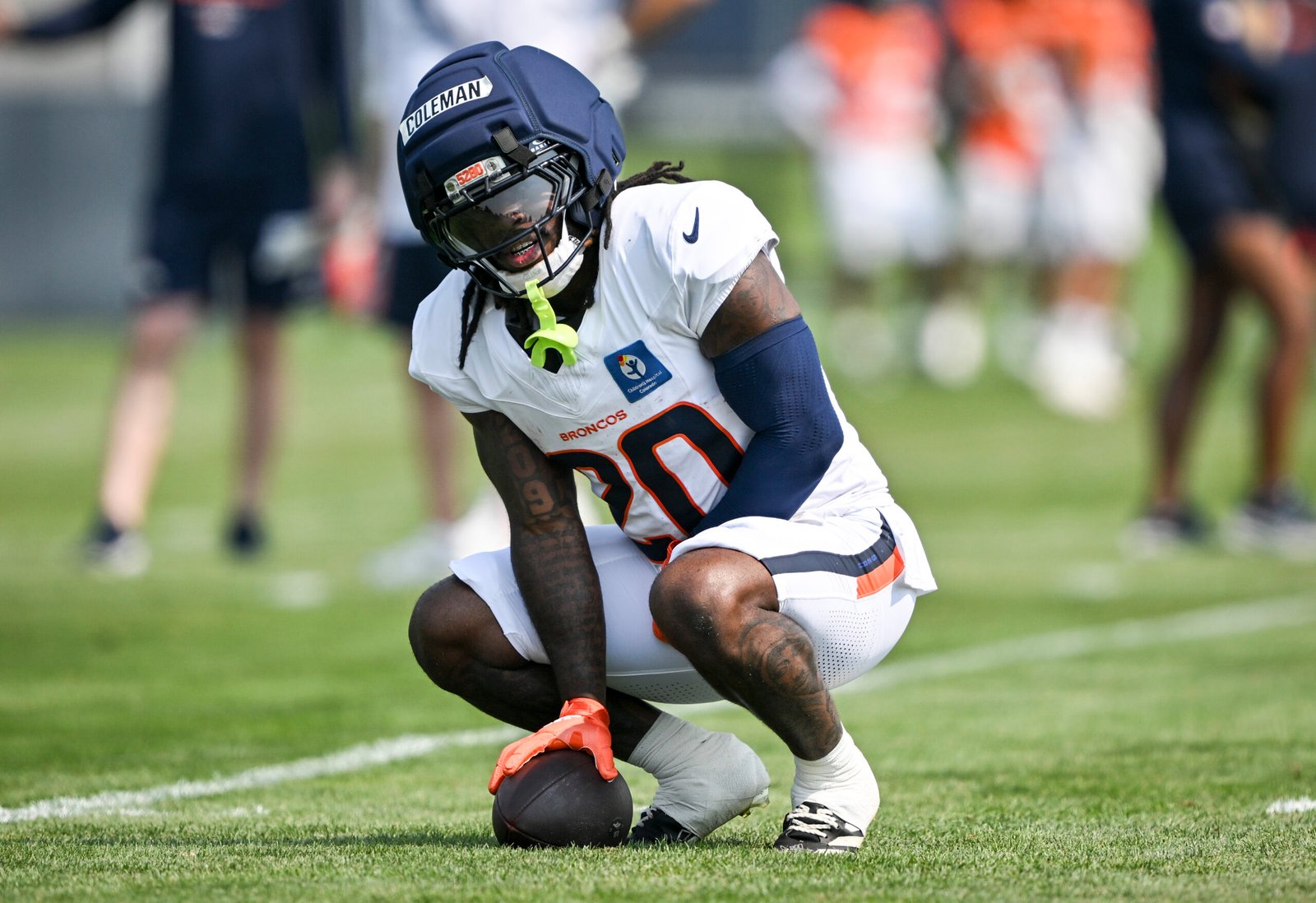
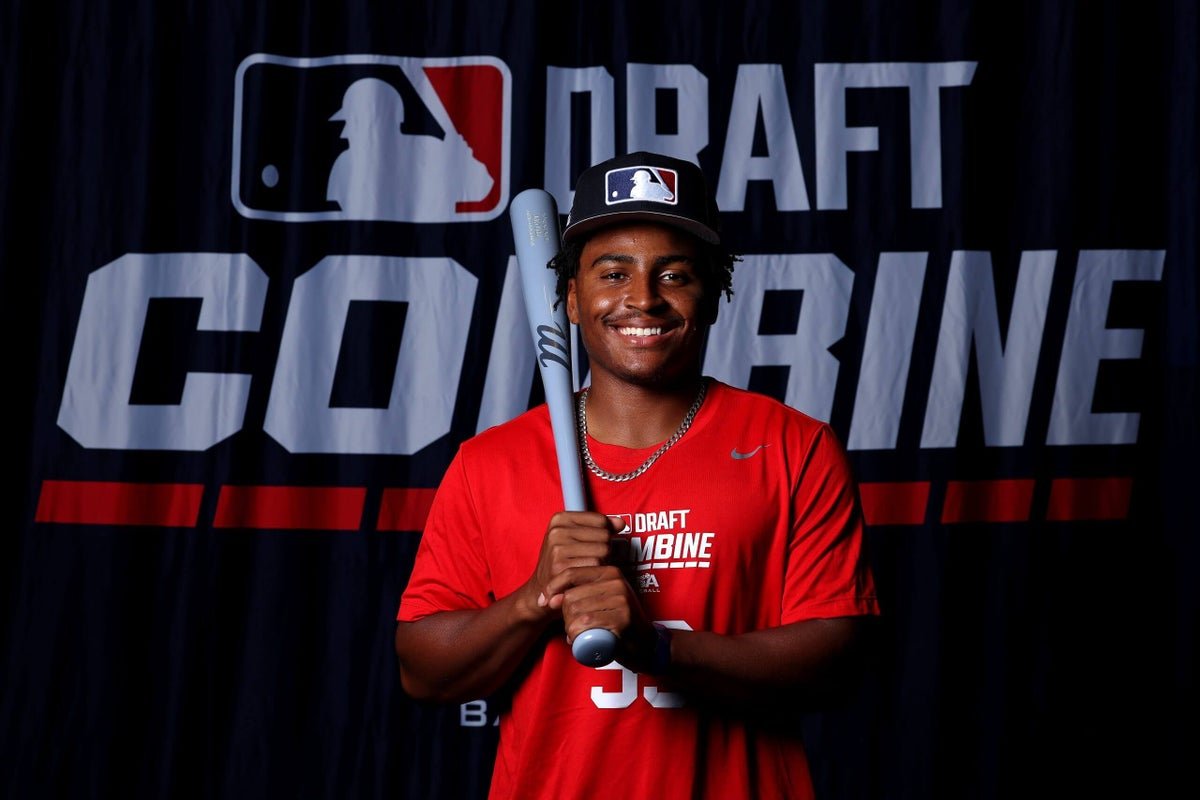
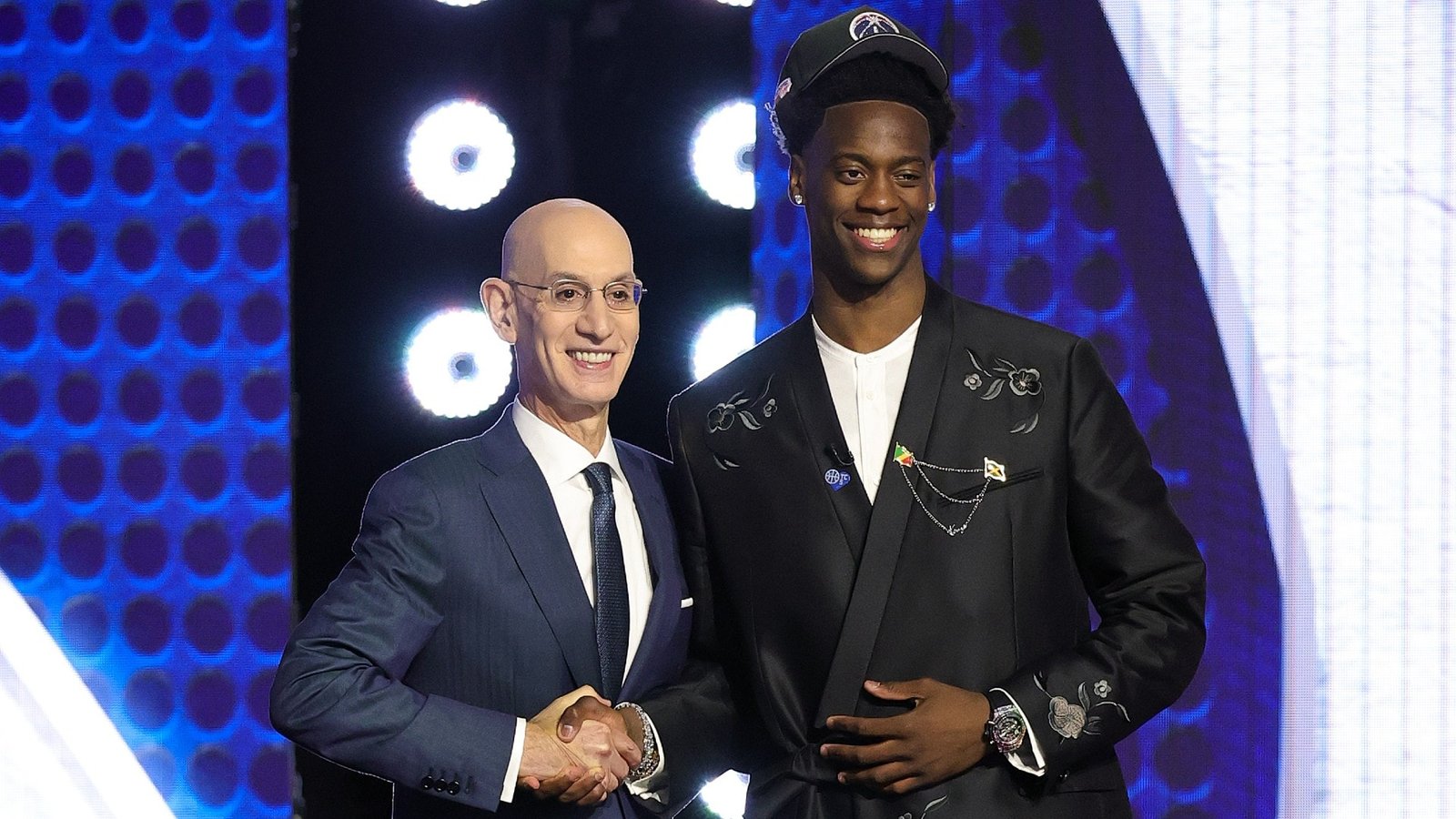
Source link

Cameron Boozer’s GPA surfaces ahead of NBA Draft

Cameron Boozer's GPA surfaces ahead of NBA Draft

Cameron Boozer’s GPA surfaces ahead of NBA Draft originally appeared on The Sporting News. Add The Sporting News as a Preferred Source by clicking here.

As Cameron Boozer takes the next step of his career, the former Duke Blue Devils standout is projected as a top-three pick in next month’s 2026 NBA Draft.

Advertisement

The NBA legacy and Sporting News Player of the Year has shined during his one-and-done college season. But all of his basketball accomplishments might be secondary to what he’s done in the classroom. Boozer graduated from Christopher Columbus High School in Miami, Fla. with a 4.88 GPA, which is one of the highest marks set by a student-athlete. It also rivals the 4.86 GPA mark Fernando Mendoza set at CCHS years earlier.

Hard to believe two of the best athletes coming out of college in the same year are from the same prep school.

Source link

Quintayvious Hutchins, Patriots draft pick out of Boston College, charged with assault

Quintayvious Hutchins, Patriots draft pick out of Boston College, charged with assault


Quintayvious Hutchins, a New England Patriots draft pick out of Boston College, has been charged with assault, according to court documents.

Hutchins, 23, is charged with misdemeanor assault and battery on a family or household member for an alleged incident on Tuesday.

No details are available at this point in the investigation.

Quintayvious Hutchins on February 25, 2026 in Indianapolis, Indiana.

Cooper Neill / Getty Images


Hutchins was arraigned Wednesday morning in Newton District Court. A plea of not guilty was entered on his behalf and he was released on a promise to return to court for the next hearing in the case.

There has been no comment yet from Hutchins, his lawyer or the Patriots.

Hutchins, an edge rusher at Boston College, was drafted by the Patriots in the seventh round of the NFL Draft, 247th overall.

“If I could be honest, I didn’t think I was going to get a call,” Hutchins told reporters after the Patriots drafted him on April 25. “So, getting that call from the Patriots was like a dream come true, and hope and faith rising inside of me, knowing that I have another chance to go showcase my talent.”

The 6-foot-3, 245 pound linebacker grew up in Alabama, before spending the last five years at BC. He described himself after the draft as a “dynamic special teams player.”


Source link

2026 PWHL DRAFT ELIGIBILITY LIST FEATURES RECORD NUMBER OF PLAYER DECLARATIONS | PWHL

2026 PWHL DRAFT ELIGIBILITY LIST FEATURES RECORD NUMBER OF PLAYER DECLARATIONS | PWHL


NEW YORK AND TORONTO (May 12, 2026) – The Professional Women’s Hockey League (PWHL) today announced that 235 eligible players have declared for the 2026 PWHL Draft presented by Upper Deck, representing the largest talent pool of prospective players since the inaugural season. The draft will take place on Wednesday, June 17 at 5 p.m. ET at the Fox Theatre in Detroit, Michigan, with the Vancouver Goldeneyes holding the first overall pick. 

Five U.S. gold medalists headline a list of 23 draft-eligible players who competed at the 2026 Olympic Winter Games, including Tournament MVP and Best Defender Caroline Harvey, who also earned the prestigious Patty Kazmaier Memorial Award before winning a National Collegiate Championship with the University of Wisconsin. She enters the draft alongside fellow Badgers Laila Edwards and Michigan native Kirsten Simms, along with Penn State’s Tessa Janecke and Abbey Murphy from the University of Minnesota.  

The list also includes 2026 Olympians from Finland (4), France (1), Germany (5), Italy (3), Japan (1), Sweden (2), and Switzerland (2), including Swiss bronze medalist Andrea Braendli, named Best Goalkeeper in Milan, and top Swedish scorer Thea Johansson. Laura Fortino, who won Olympic gold (2014) and silver (2018) with Canada before representing Italy in 2026, has also declared for the draft, as has four-time Canadian Olympian and three-time gold medalist Meghan Agosta. 

The group of 235 players features 129 forwards, 69 defenders, and 37 goaltenders, with more than 50% of draft-eligible players from NCAA programs. All eligible players officially declared for the draft by the May 8 deadline.  

The 2026 PWHL Draft presented by Upper Deck will take place on Wednesday, June 17 at Fox Theatre, beginning at 5 p.m. ET, and will be open to ticketed fans. Tickets for the 2026 PWHL Draft presented by Upper Deck are available to the public here,, opens in a new tab beginning on Wednesday, May 13 at 10 a.m. ET. 

2026 PWHL DRAFT ELIGIBILITY LIST  

Players are grouped by position and listed alphabetically by last name. The * in the nationality column denotes players who have Senior National Team experience representing their country in international competition.   

DNP = Did not play in 2025-26 


Source link