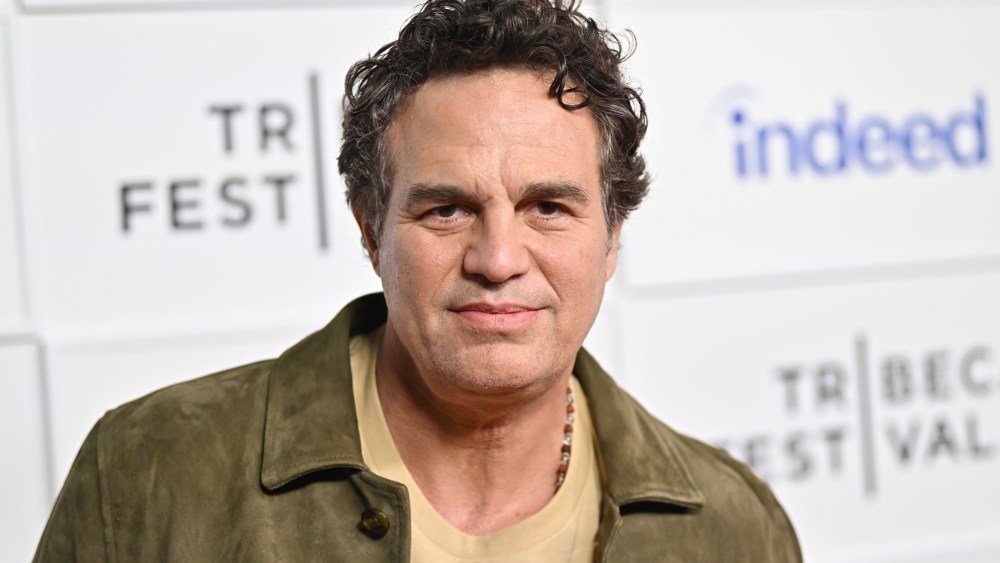
Paramount has come out swinging against a Friday screed from Mark Ruffalo, in which the award-winning actor accused moguls David and Larry Ellison of “powering some of the most destructive and inhuman forces in the world.”
A spokesperson for the David Ellison-run enterprise said the company is “troubled when antisemitic tropes are invoked in purported service of a business dispute. Words like ‘genocide’ and ‘apartheid,’ applied to a corporate transaction, aren’t just wrong — they’re a bridge too far, and they cheapen the very real suffering those words are meant to describe. This doesn’t deserve a response in kind — and to be clear, we don’t tolerate prejudice of any kind, against anyone.”
Ruffalo took to Instagram with a years-old clip of Paramount board member Safra Catz discussing “really profoundly scary technologies” that Oracle used to assist the Israeli military following the Oct. 7 terror attacks. That 2023 event saw Hamas and other Palestinian militant groups kill 1,195 Israelis and foreign nationals and abduct 251 people. Ruffalo referred to Larry Ellison as a “classic Oligarch,” and warned of the danger of his son’s bid to combine Paramount with Warner Bros. Discovery. Referencing the Catz clip, Ruffalo encouraged his followers to “look how she revels in what we now have come to see as a genocide, which was built on an apartheid system of oppression powered by Oracle.”
Ruffalo was one of the earliest Hollywood figures to decry the proposed Warner Bros. Discovery and Paramount merger. Numerous industry sources have expressed concern over Ruffalo’s conflating the merger with anti-Israel sentiments.
Paramount said Ruffalo’s post “brings us to a moment to lower the temperature, not raise it. We’d rather build than further engage in such rhetoric. This simply exposes the true motivation of some who have advocated opposition to this transaction. On the other hand, our commitment to great content is matched by our commitment to acceptance – to every story, every storyteller, and no blacklists, no exceptions, for anyone.”
A little-known New Zealand footballer gained more followers than his country has people in just a few days. For Mark Ritson, Tim Payne’s sudden fame, just before the World Cup, lays bare something no brand can ever replicate. Humanity.
Tim Payne preparing for the World Cup after viral sensation (Instagram/Tim Payne)
Chances are, you started the week not knowing the name. And ended it, unable to avoid him. The 32-year-old defender plays for Wellington Phoenix, a team you don’t know, in a league you have never heard of, in a country that has never won a match at a World Cup.
He has earned 50-odd caps for New Zealand in an unremarkable, dependable way, the kind you retire on and occasionally surprise people with at the pub.
Two weeks ago, he had 4,700 followers on Instagram. He had posted twice all year.
Then an Argentine content creator called Valen Scarsini, who trades online as El Scarso, went looking for the least famous footballer at the 2026 World Cup. He ranked all 1,248 registered players and landed on Payne. He told his audience that here was a man who united us all, a footballer we could support regardless of nationality, and that the mission was simply to make him famous. Flood his posts. Mention him everywhere. Build a social media legend from scratch. A tiny Kiwi scratch.
I saw a young Steven Bartlett do this a decade ago at a conference. He invented a 16-year-old phenom called Rex Secco and then used the digital skills of his Social Chain agency to have the fictional football star trend across social media. The results were impressive but left a queasy aftertaste. The stunt confirmed Social Chain’s capabilities, along with the manipulative possibilities at the heart of digital life. A Russia-sized hole in the authenticity of culture.
At least Tim Payne is real.
Even if his newfound fame isn’t, El Scarso worked at a speed that should frighten anybody who sells marketing for a living. Payne crossed 1m followers inside 24 hours. By the time he met Scarsini at New Zealand’s training camp in Florida last week, the number had passed 5m on Instagram. [It’s up another 400k since Mark wrote this.]
There is a song. There are stickers. The man who could not get a parking ticket in March now gets 50,000 comments on a single post marking his 50th cap.
Want to go deeper? Ask The Drum
He has more followers than the All Whites, the national team he actually plays for. Twice the followers of the All Blacks, the most successful sporting institution New Zealand has ever produced, a brand with a 130-year history and a full-time digital marketing team. A reserve full-back overtook them in four days. Payne has nine times the follower count of Air New Zealand, the beloved national carrier. Heinz, a brand whose ketchup sits in a fridge on every inhabited continent, a name older than the motor car, manages about 256,000 followers on its global account. The bloke from the Phoenix is 20 times bigger.
And we should not be surprised.
Social media has always been social media. The clue is in the name. These platforms were built for people to follow people, and the entire architecture rewards exactly that. We follow Payne because there is a face, a story, an underdog, a man visibly bewildered by his own fame, saying gracias and meaning it. There is something there to attach to.
In contrast, people don’t want to follow a yogurt or get messages from a brand of cat food. A person is a natural object of affection, and Scarsini understood that he was not manufacturing interest in a footballer so much as manufacturing a character we could all decide to love at once.
Brands cannot do this, and the failure is inherent rather than a matter of effort or budget. Air New Zealand has tried. Heinz has tried. But a corporate account on a social platform is a thing pretending to be a person, and everyone can feel the pretense even when they can’t name it.
The platform is for people, and the brand is not one. So it posts, and it boosts, and it begs for engagement, and it accumulates a following measured in the low hundreds of thousands while a man who plays in front of half-empty stadiums in Wellington romps past it in an afternoon. Social media is for the social. Brands are the gatecrashers, and the room knows.
Which is precisely why the brands did what they did next. The moment Payne went vertical, they swarmed.
McDonald’s commented.
KFC commented.
Duolingo, the reigning champion of online brand desperation, was in there.
Inter Miami, whose training facility happened to be where New Zealand were preparing, hustled Payne into promoting their sessions.
This was brands doing the only thing brands can do on a platform built for people: find a person and stand as close to them as possible, hoping a little of the organic body heat rubs off.
Marketers have a $200 word for this.
Borrowed interest.
You cannot generate affection from a logo, so you borrow it from someone with it to spare. Influencer marketing, in its entirety, is the industrialization of this two-step dance: a person is loved online in a way a brand never will, but that love is then rentable by the post.
So here is the thing to take away. Tim Payne will go back to being a dependable defender the moment the tournament ends and the followers drift off to the next manufactured darling.
Scarsini proved he could conjure 5m followers from nothing in a week, attached to a man with no engagement history and no marketing budget, simply because he was a person, and the platform is built for people. No brand on earth can replicate that, no matter how much it spends. Which is why brands will keep doing the next best thing: finding the people the internet has chosen to love, and renting them out.
Tim Payne, the former least famous footballer at the World Cup, just reminded the entire industry of the oldest digital lesson of them all: social media is social media.
Mark Ritson is a former marketing professor, brand consultant and seven-time winner of the PPA’s Columnist of the Year. 300,000 followers, too. But MiniMBA is bigger.
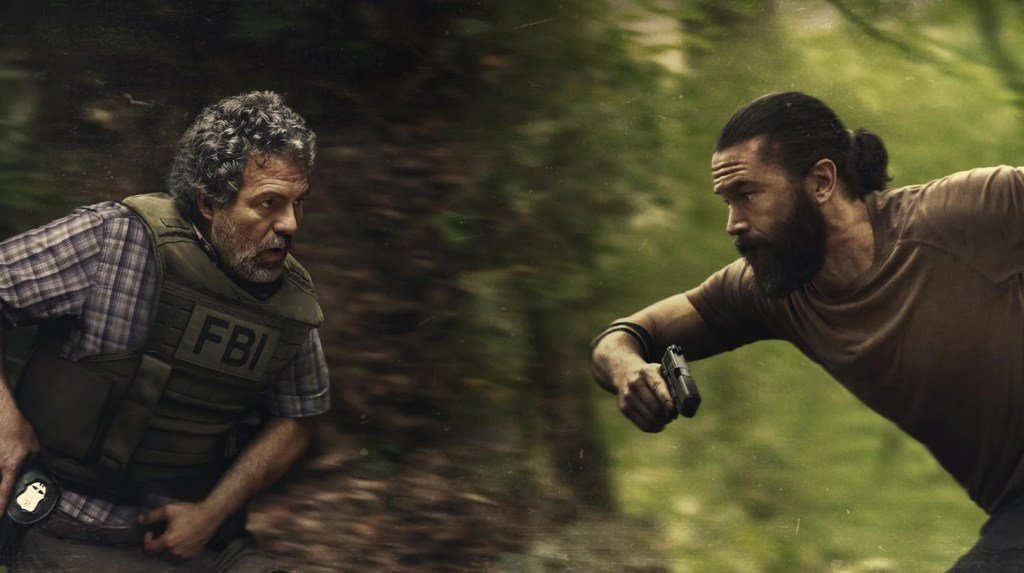
EXCLUSIVE: On HBO’s Task,Mark Ruffalo‘s FBI agent Tom Brandis and Tom Pelphrey‘s sanitation worker-turned-robber Robbie Prendergrast go toe to toe, but Ruffalo and Pelphrey will not be going head to head at the Emmys. Ruffalo, a two-time Emmy winner, has been submitted as a Lead Actor in a Drama Series, while Pelphrey will compete in the Supporting Actor in a Drama Series category.
Pelphrey is leading a strong field, with most of Task‘s remaining main cast up for Supporting Actor/Actress in a Drama Series: Fabien Frankel (Anthony Grasso), Raúl Castillo (Cliff Broward), Jamie McShane (Perry Dorazo), Sam Keeley (Jayson Wilkes), Emilia Jones (Maeve Prendergrast), Alison Oliver (Lizzie Stover), Thuso Mbedu (Aleah Clinton) as well as Martha Plimpton (Kathleen McGinty), a previous winner in the category for CBS’ The Good Wife.
Ruffalo is an Emmy contender in two categories; as an executive producer, and as part of Task‘s Outstanding Drama Series submission alongside other multi-hyphenated EPs, series creator Brad Ingelsby and directors Jeremiah Zagar and Salli Richardson Whitfield, a nominee in the category for HBO’s Winning Time: The Rise of the Lakers Dynasty.
Ingelsby’s Season 1 finale “A Still Small Voice” is being submitted in the Writing for a Drama Series category; he was previously nominated in the Outstanding Limited or Anthology Series category and the corresponding writing field for his previous HBO show Mare of Easttown.
Zagar is up for directing the opening Episode 101 “Crossings”, Whitfield for helming Episode 106, “Out beyond ideas of wrongdoing and rightdoing, there is a river.”
Other areas where Task will be vying for nominations include Cinematography For A Series (One-Hour) with submissions for both Alex Disenhof (Episode 101) and Elie Smolkin (Episode 106), Casting For A Drama Series, Picture Editing For A Drama Series, Production Design For A Narrative Contemporary Program (One-Hour or More), Contemporary Costumes, Contemporary Hairstyling, Contemporary Makeup, Prosthetic Makeup, Music Composition For A Series, Sound Editing, Sound Mixing, Stunt Coordination For A Drama Programming as well as Stunt Performance for both Richard Burden and Michael Johnson.
The submissions in the crafts categories include several crew members who received Emmy nominations for Mare of Easttown, casting director Avy Kaufman, costume designer Meghan Kasperlik, production designer Keith P. Cunningham and editor Amy E. Duddleston.
Source link
More: https://theglobaltrack.com/
https://corinthiames.com.br/
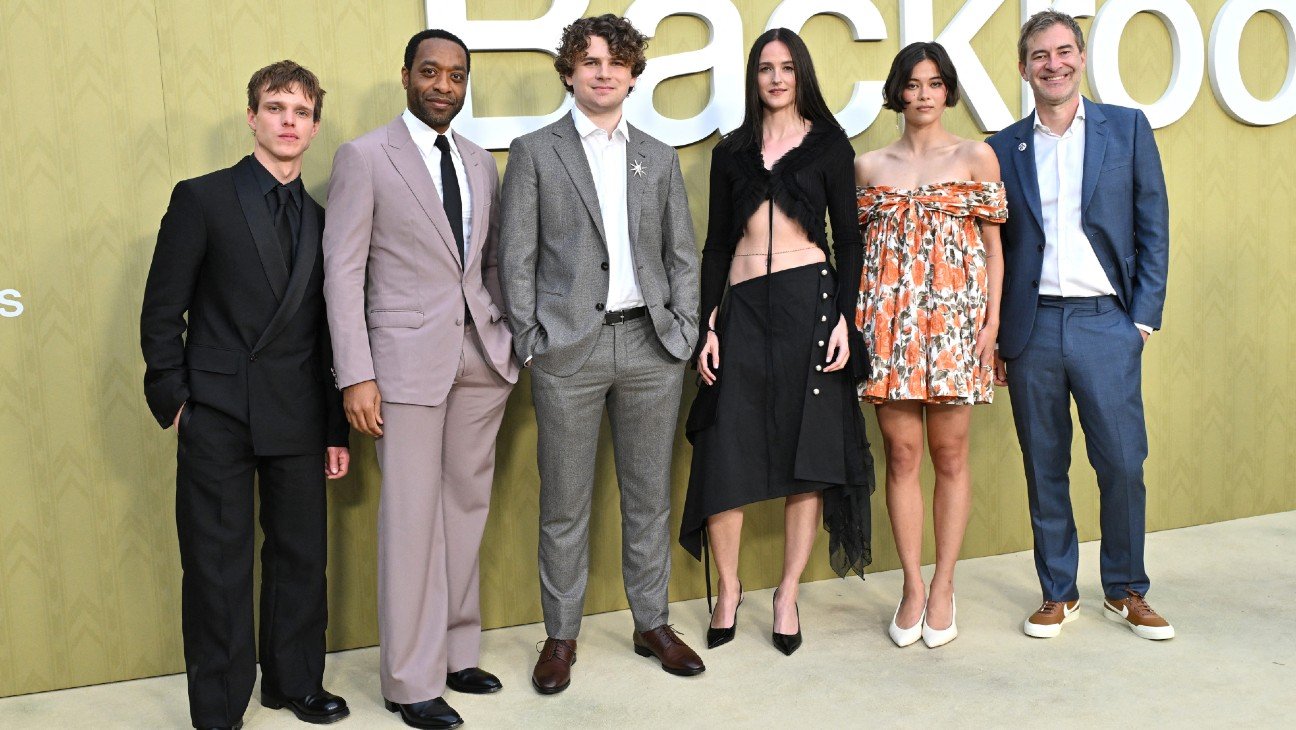
Hitting theaters Friday from A24, Backrooms stars Duplass alongside Chiwetel Ejiofor, Renate Reinsve, Finn Bennett and Lukita Maxwell in the film about a therapist tracking down a missing patient in a bizarre dimension of liminal space. Parsons becomes the studio’s youngest feature director with the project that adapts the YouTube series that he began uploading as a teen in early 2022 and centered on an infinite maze of rooms.
Given that the Backrooms movie counts such established filmmakers as James Wan, Shawn Levy and Osgood Perkins among its producing team, social media users have suggested theories questioning whether Parsons was the primary director on the feature. Such posts have also suggested similar claims about Curry Barker, the 26-year-old filmmaker who helmed Focus Features’ recent breakout horror hit Obsession.
After an X user posted that “we all know Kane Parsons absolutely didn’t direct this movie,” Duplass responded to dismiss the accusation about his Backrooms director.
“Hmmm, with all due respect I don’t remember seeing you on set,” the actor wrote in his post Tuesday. “When I was there, Kane was 100% in control. More so than many directors 3x his age.”
Hmmm, with all due respect I don’t remember seeing you on set. When I was there, Kane was 100% in control. More so than many directors 3x his age. https://t.co/GXQsI5jxG0
During a recent discussion about Backrooms at CCXP Mexico, Parsons revealed that the film’s team created 30,000 square feet of actual backrooms. He explained that the movie, which counts A24 and Chernin Entertainment as co-financiers, uses the existing series and online lore as a jumping-off point to examine its characters.
“It does take more of a specific approach, where you’re seeing it through the lens of these specific characters — these individuals living these atomized, lonely lives,” Parsons said. “In the film, there is rarely a moment where there’s more than one or two characters on screen at a given time. It’s a pretty lonely film.”
Chiwetel Ejiofor in Backrooms.
A24
Earlier this year, YouTube content creator Markiplier self-distributed his horror movie Iron Lung after numerous studios and distributors had rejected the project. The video game adaptation ended up surpassing $43 million at the global box office, marking an unlikely feat for a self-distributed title.
“There still is a stigma against YouTube,” Markiplier told The Hollywood Reporter at the time of his film’s theatrical release. “It’s not like I’m going to topple the mountain by myself. It has to be toppled and then toppled again, until it becomes normalized. Once it becomes normalized, then it can become boring, and it’s like, ‘Of course a YouTuber can do this,’ and there’s nothing to question about it.”
Source link
More: https://theglobaltrack.com/
https://corinthiames.com.br/
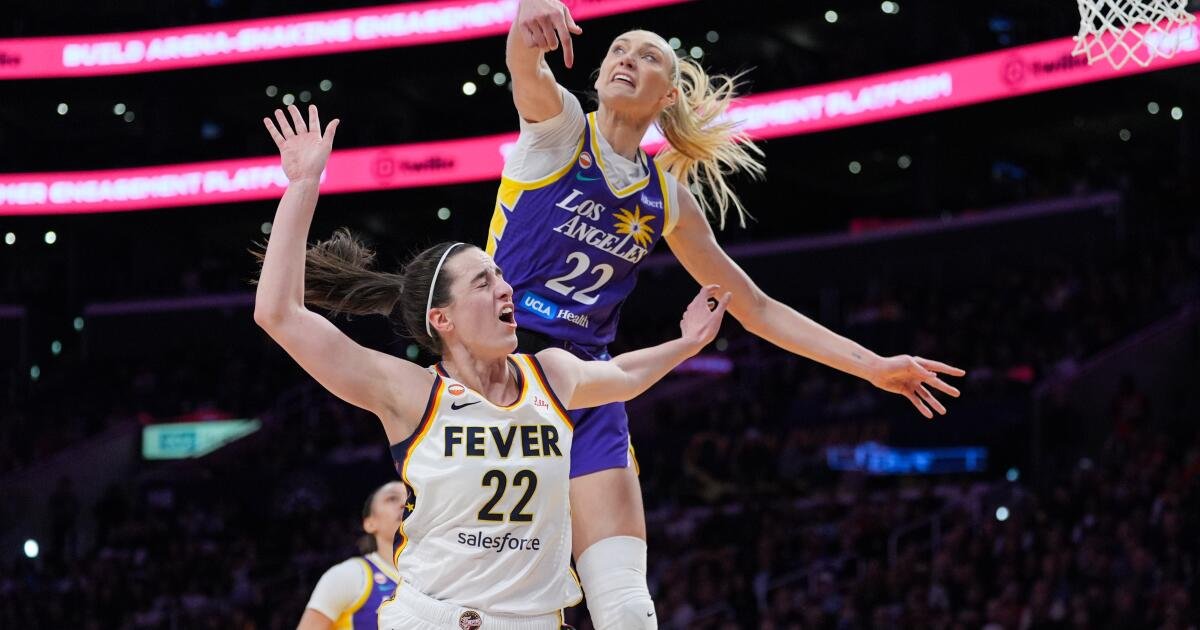
It was a familiar sight: Caitlin Clark stepped to her left, paused and lofted a right-handed layup.
But looming tall, Cameron Brink smacked it out of bounds, caught on camera yelling a couple of curse words before chest-bumping teammate Erica Wheeler so hard she tumbled backward.
That’s the Brink that the Sparks were hoping for this season, and the version of the third-year center they fully expect to shine.
“That was quite the highlight,” coach Lynne Roberts said last week. “That’s what we see in practice, she’s been like that. I was just smiling. … I’m so proud of her.”
After the first game of the season, a 105-78 loss to Las Vegas, Roberts was asked about Brink playing only eight minutes, when she was a minus-19.
“We need Cam to produce,” Roberts said. “We need Cam to bring that defensive energy. We have so much confidence and belief in her. She’s got to get out on the floor with some confidence and do what she’s capable of doing.”
After the next game, when Brink contributed 11 points with five rebounds in that 87-78 loss to Indiana, Roberts wanted to end “the narrative” that the 24-year-old was off to a slow start. Then she netted 10 points in 16 minutes during a defeat of the Toronto Tempo.
The Sparks are in win-now mode but are yet to prove this version of the team can do that. Brink would be a cornerstone player for almost any team in the league, yet she’s coming off the bench with high expectations for her to be one of the team’s most important players.
“My teammates aren’t gonna trust me if I don’t believe in myself,” said Brink, who is averaging 8.0 points and 4.6 rebounds per game. “Coaches, same thing. So, you know, I’ve had a slow start, but I’m putting in the work with the coaches. They work with me every day. We watch film, shoot a little extra.”
The Sparks need Brink this season. In her first two seasons, she had moments. With Dearica Hamby starting and the addition of Nneka Ogwumike, she is coming off the bench again after doing so last year for the first time since her freshman season at Stanford.
Roberts has said she wants at least two of them on the court at all times. Through the first four games, Brink has played 16.2 minutes per game and the Sparks are minus-29 points when she is on the court.
“Coming into the league, it’s interesting because a lot of times people feel like they have to do something different or more,” Ogwumike said. “But I think one thing that she’s done is she’s really leaned into who she is, and that that level of self assurance is something that I think really plays out when she’s on the court as well.”
In 38 career games, she is already 10th all-time in blocks in Sparks history. Brink dealt with a 13-month layoff after tearing her ACL and meniscus just 15 games into her rookie season, and was slowly re-integrated last season in 19 games.
Sparks forward Cameron Brink tries to power her way past a Tempo defender during agame May 15.
(Jeff Lewis / Asociated Press)
What could really separate the Sparks from the rest of the league, though, would be if Brink plays to her full potential as a sixth player. There are few players in that role who can take over a game the way she can.
“I definitely feel like I have an understanding for just the speed of the game, the nuances and what we’re doing,” Brink said. “The playbook this year is much easier because it was the same as last year.”
The Sparks rebuild started last season with the addition of Kelsey Plum, where they gave up the No. 2 pick to Seattle that would become Dominique Malonga. Then, this offseason they added Ogwumike, Ariel Atkins and Wheeler while trading away their other young star, Rickea Jackson.
The Sparks still gave up 90-plus points in three of their first four games. Brink has the second worst plus-minus rating on the team, but has also made some of their important defensive plays and has 1.8 blocks per game.
“She erases a lot of mistakes out there,” Ogwumike said. “Being able to be out there and know that she has my back, and we’re looking for each other to be in good spots to do well, yeah, I’m just, I’m just happy that we’re rebuilding our chemistry early and fast.”
Brink was a star at Stanford but became known for her fouling habits. As a pro, getting one extra foul to work with, has helped considerably. She’s averaged seven fouls per 36 minutes in her first two seasons.
But the new officiating mandate to allow more freedom of movement is another hurdle. The path to being an elite pro has not been easy for one of the most dynamic college players of the past half-decade, but this season seems essential for Brink and the Sparks to find themselves, together.
Moments like that block of Clark‘s shot are signs the player they need is in there.
“It’s one of those things where you’re in awe,” Ogwumike said. “But also, you know she can do that. I always tell her, go out there and release everything and be yourself. That was very much a Cam Brink play.”
Source link
See more: https://theglobaltrack.com/
https://corinthiames.com.br/
Nio (NIO) is heading into one of its most important earnings reports in years. The China-based electric vehicle maker is set to release first-quarter 2026 results on Thursday, May 21, before U.S. markets open, and investors will be watching closely to see whether the company can turn strong delivery growth into a more durable financial recovery.
The report comes at a time when Nio is trying to prove that its strategy still has room to work. The company has spent years building around a battery-swapping model that sets it apart from many other EV makers, while also expanding into a three-brand lineup that now includes Nio, Onvo, and Firefly. That mix gives the company exposure to premium SUVs, mass-market family vehicles and smaller urban cars, but it also raises the bar for execution.
More News from Barchart
Nio has already shown that demand can be strong. The company said it delivered 83,465 vehicles in the first quarter, well above the top end of its own guidance. That kind of volume matters because it suggests the brand portfolio is gaining traction and that the new models are finding buyers in a highly competitive market.
The Stock Has Already Been Through a Sharp Swing
The market has not been waiting for the earnings report quietly. Nio shares have gained roughly 13% year-to-date, but that gain has been uneven. The stock surged sharply in March after the company reported its first-ever quarterly net profit in the fourth quarter of 2025, a milestone that briefly changed the tone around the name.
At the same time, the shares have also pulled back nearly 16% over the past month as some investors locked in gains ahead of the report. That kind of move is not unusual for Nio, which has long been one of the more volatile names in the EV space. The stock’s history suggests that sentiment can shift fast when investors get a fresh read on deliveries, margins, or guidance.
www.barchart.com
Valuation Leaves Room for Both Optimism and Caution
Nio’s valuation continues to divide investors. On one hand, the stock trades at about 0.9 times forward sales, which looks inexpensive compared with many growth stocks and even some auto peers. That lower sales multiple suggests the market is still skeptical about how much of Nio’s growth can be converted into lasting earnings power.
On the other hand, the company’s price-to-book ratio is above 22x, which shows that the market is still assigning significant value to the turnaround story. That is a high bar for a company that has yet to prove it can consistently generate profits.
What to Expect from the Upcoming Report
For the first quarter, Wall Street is looking for revenue of about $3.78 billion, which would mark a 109% increase from a year earlier. That is a sharp top-line jump and would reinforce the idea that Nio’s delivery momentum is real.
Even so, the market is not expecting the company to stay in the black just yet. Analysts are looking for a net loss of about $0.24 per share, suggesting that the fourth-quarter profit was not enough to signal a full turnaround. In other words, Nio is expected to show strong sales growth, but the financial picture may still be uneven.
Gross margin will be another important number. Citi has projected a first-quarter margin of 17.9%, helped by strong vehicle volume and a sales mix tilted toward higher-priced SUVs. If Nio can deliver that type of margin result, it would support the case that scale and product mix are beginning to work in its favor.
Management’s guidance also matters. The company previously pointed to first-quarter revenue of $3.5 billion to $3.6 billion, which was already above earlier market expectations. That means investors will not just be looking for a beat. They will also want to know whether the company sees continued momentum in the second quarter.
Analysts Remain Cautious, but Constructive
Opinion on Nio is still mixed. Of the 17 analysts covering the stock, five rate it “Strong Buy,” two “Moderate Buy,” seven rate it “Hold,” and only one rate it “Strong Sell,” which suggests the Street is not fully aligned on the pace of the recovery.
The average 12-month price target is about $6.60, indicating that many analysts see around 14% upside if the company keeps improving deliveries and margins.
Morgan Stanley has pointed to the ramp-up of Onvo models as a key driver, while DBS has argued that new products and better profitability could support a re-rating. Bank of America, meanwhile, has remained more cautious, saying the valuation already reflects much of the good news.
That split captures the investment case well. Nio has already shown it can grow fast. The real test now is whether it can do that while moving closer to consistent profitability.
www.barchart.com
On the date of publication, Nauman Khan did not have (either directly or indirectly) positions in any of the securities mentioned in this article. All information and data in this article is solely for informational purposes. This article was originally published on Barchart.com
Source link
See more: https://theglobaltrack.com/
https://corinthiames.com.br/
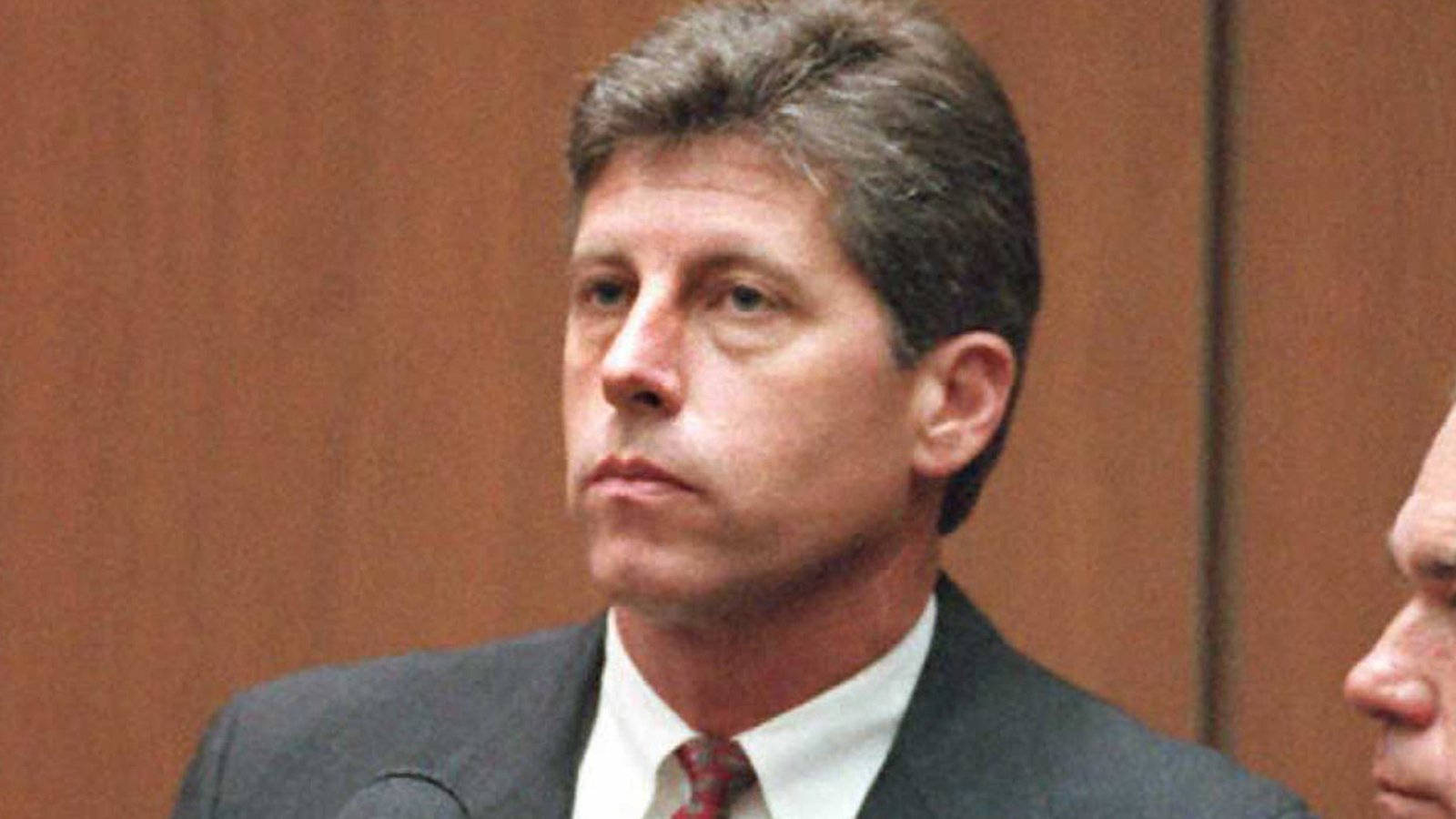
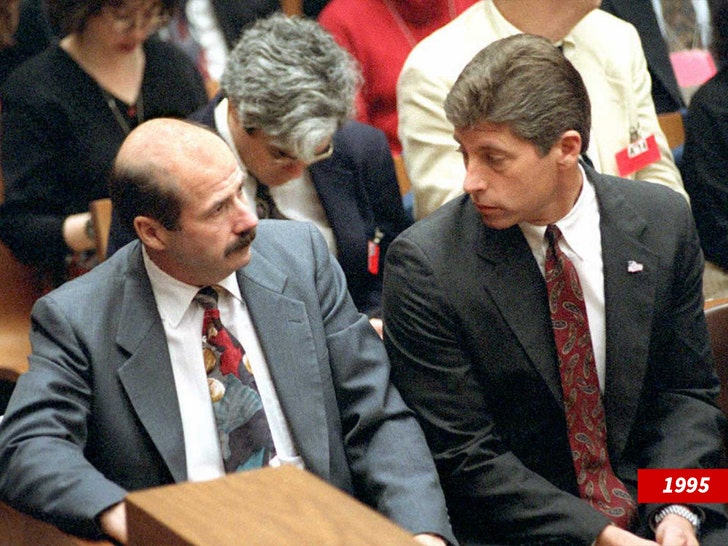
Former LAPD detective Mark Fuhrman, who discovered the bloody glove in the O.J. Simpson murder case and later torpedoed the prosecution with his use of the n-word, is dead … TMZ has learned.
Sources tell TMZ … Mark died from an aggressive form of throat cancer, which he was diagnosed with last year. Mark had been hospitalized for about a week before he died. He had done some cancer treatment … but made the final decision to stop. There won’t be a funeral.
1995
Mark had been living in Idaho and the Kootenai County Coroner Office tells us Mark died May 12.
He retired from LAPD way back in August 1995 and started writing true crime books. He became a TV and radio personality and even worked as an expert for Fox News.
A year after retiring, Mark pleaded no contest in 1996 to a felony count of perjury for lying about using a racial slur when he testified during O.J.’s trial.
O.J.’s defense team infamously played a tape in court, in which Mark used the n-word. The audio contradicted his earlier testimony, specifically him denying using the slur.
With Mark as the cop who found the bloody glove, O.J.’s legal team called out Mark’s credibility by resurfacing old tapes of the detective using racist language … ultimately suggesting he might have planted the evidence.
O.J.’s defense strategy worked and he was acquitted … and Mark’s eventual felony perjury conviction made him the only person ever convicted of any crime in the murders of Nicole Brown Simpson and Ron Goldman.
Mark was barred from returning to police work in California in May 2024 … and the reason was because of his felony conviction as part of the O.J. case.
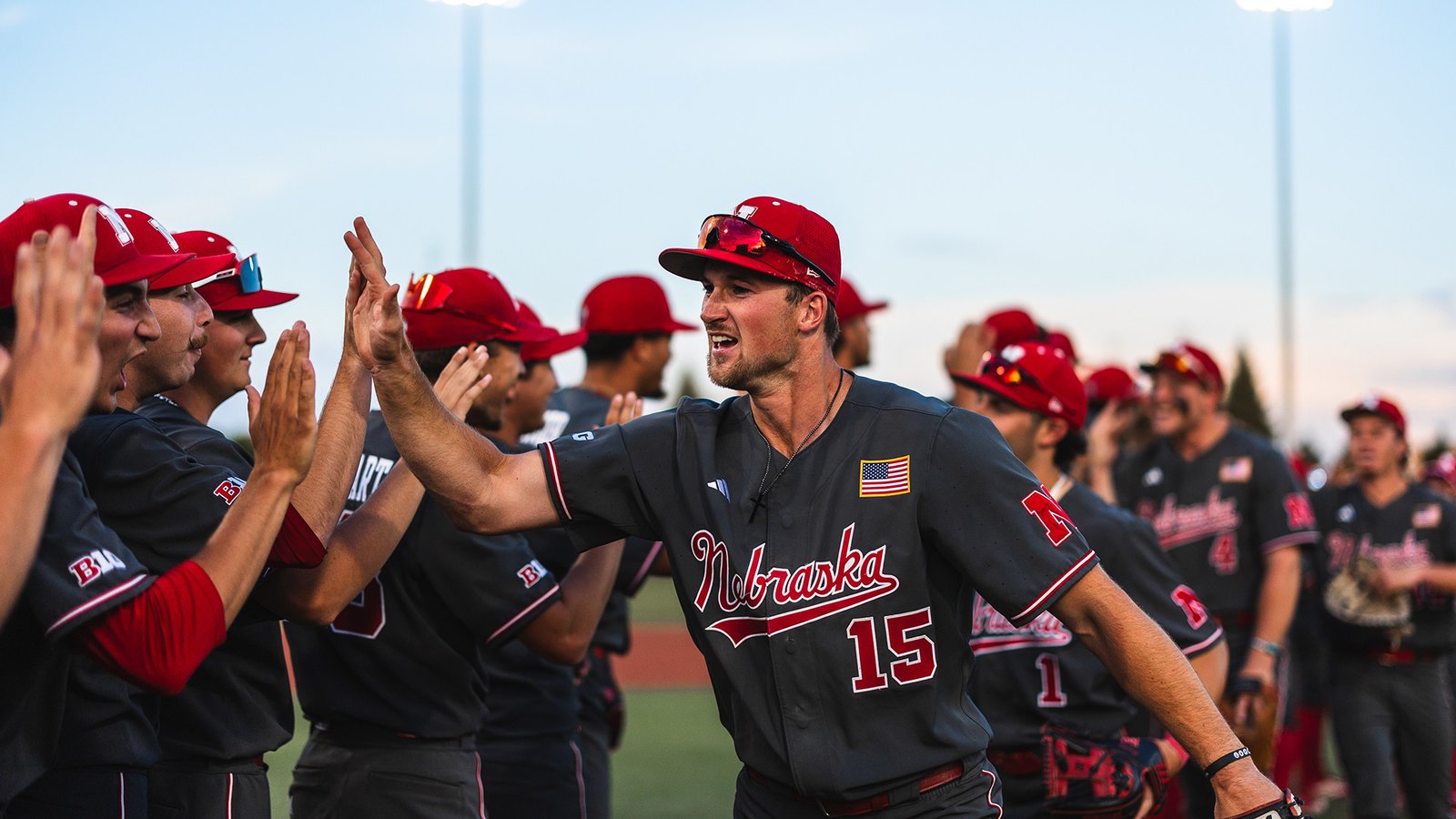
No. 24 Nebraska rallied for six runs in the ninth inning to overcome a five-run deficit and defeat Minnesota 7-6 on Friday evening, reaching 40 wins in the regular season for the 12th time in program history and first time since 2005.
Nebraska (40-14, 22-7 Big Ten) scored seven runs on seven hits, while Minnesota (30-22, 11-18 Big Ten) recorded six runs on nine hits.
With 22 Big Ten victories, the Huskers have totaled their most conference wins in a season in program history, excluding the 2021 campaign that only featured Big Ten contests.
Ty Horn started and worked seven innings, allowing four runs on seven hits with eight strikeouts and no walks. Grant Cleavinger was tagged for two runs without recording an out in the eighth before Braxton Stewart and Ryan Harrahill combined to record the three outs in the bottom of the eighth. Harrahill earned the win to improve to 1-0 on the season.
J’Shawn Unger closed things out in the ninth, working around a single to pick up his 10th save of the season.
The Gophers broke the scoreless deadlock in the bottom of the second with a two-run homer to grab a 2-0 lead.
Minnesota added to its lead in the fifth with a ground-rule RBI double and scored another run in the sixth behind three hits in the frame to hold a 4-0 lead through six innings.
The Huskers broke through in the eighth when Je. Worthley blasted a 411-foot solo homer to left field.
The Gophers answered right back with a two-RBI double in the bottom of the eighth to send a 6-1 Minnesota lead into the ninth inning.
The Huskers mounted a stunning rally in the ninth, with Sanderson singling and Grego reaching on a hit by pitch to set the table. Overbeek singled to loaded the bases with one out, while Buck’s RBI single to center plated one to begin the scoring in the inning.
A bases-loaded balk brought the Big Red within three, and Je. Worthley’s two-RBI single up the middle with the bases loaded made it a 6-5 game with two outs. Carey followed with an RBI single to lock the game at six, and Je. Worthley raced home from third on a wild pitch in the next at-bat to give Nebraska its first lead of the night at 7-6.
Unger worked around a two-out single to keep the Gophers off the board and preserve Nebraska’s series-clinching 7-6 win on Friday night.
No. 24 Nebraska and Minnesota conclude the series tomorrow afternoon at 1 p.m. on B1G+.
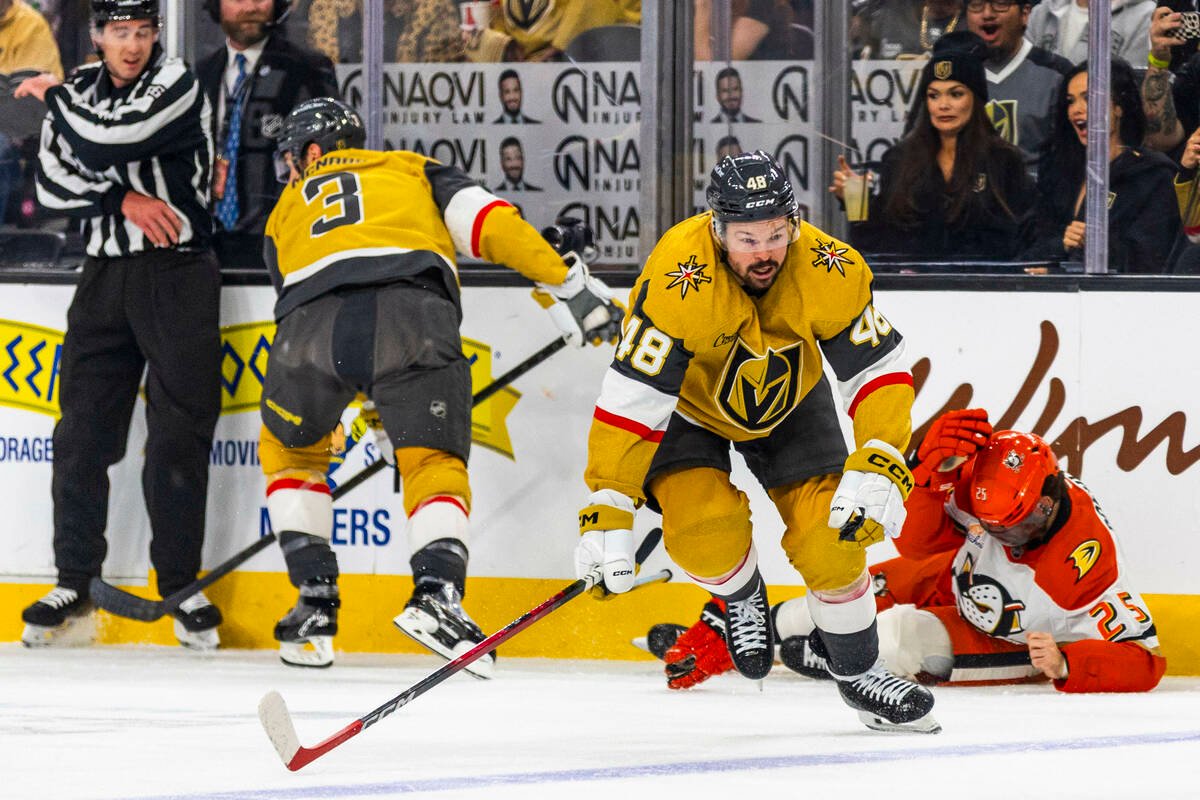
ANAHEIM, Calif. — The Vegas Golden Knights will have to try and close out the Anaheim Ducks without Mark Stone and Jeremy Lauzon.
The Knights’ captain will miss his third straight game with a lower-body injury, while Lauzon still hasn’t played in the second round with an upper-body ailment.
Defense will be tested, as the Knights try to end the second-round series at Honda Center on Thursday. Brayden McNabb is serving a one-game suspension for his hit on Anahiem center Ryan Poehling in the first period of Game 5.
Kaedan Korczak will draw back into the lineup and is expected to be paired with Ben Hutton.
Shea Theodore will move to the left side on the top pairing, and Dylan Coghlan will get the opportunity on the top pairing in his fourth ever playoff game.
This is a developing story. Check back later for updates.
Applied Materials (AMAT) is one of the biggest suppliers of semiconductor manufacturing equipment, and relentless spending has caused the stock to climb 153.29% in just the past year. When major companies build a new fab, this company’s tools are often the ones etching and inspecting the wafers. As hyperscalers keep spending on AI, the higher-margin Applied Materials’ sales are expected to be.
Applied Materials is expected to confirm that trend on May 14 when it provides Q2 results after the closing bell. Knowing what to expect on earnings day will give investors an edge, because if Applied Materials keeps growing, another triple-digit move to the upside in the next year is a possibility. Its current valuation is at $342.2 billion, which isn’t all that special during the AI rally.
More News from Barchart
Let’s take a look at what the market expects and whether or not Applied Materials could reach a valuation of $500 billion and beyond.
www.barchart.com
Expectations for Q2
Analysts want to see revenue in the $7.68 billion to $7.7 billion band, but higher than that is always welcome. This would imply a growth rate of 5% – 8.5% year-over-year (YOY). EPS is expected to be $2.66 – $2.68, up from $2.39 in the year-ago quarter. Prior to this, Applied Materials’ management had guided Q2 revenue “in the range of $7.15 billion to $8.15 billion” and adjusted EPS at ~$2.64. For the full year, EPS is expected to be $11.10.
Investors might expect AMAT stock to deliver a beat on both lines, just like it did in prior quarters. AI companies tend to underestimate their actual expectations, and analysts follow the guidance, so $7.9 billion to $8 billion wouldn’t necessarily be out of range. The upper level of that estimate will likely spur a move above $450 billion in market cap over the coming quarter. This is less than 33% upside potential, so even that may be an underestimate if the broader rally accelerates.
As for EPS, I would expect it to come above $2.7 – $2.8. It has been beating EPS estimates consistently.
www.barchart.com
AMAT Stock Will Keep Being On Fire
Negative developments have surrounded the macroeconomy. Inflation is rising again and came in above expectations at 3.8%. This is bad, but I do not think this can derail the broader rally unless inflation returns cataclysmically high. Oil prices are to blame for any inflation, so it’s not a 2022-like “structural” problem the Fed can blame to raise rates above 5% anytime soon.
And once you look beyond the macros, everything else is flashing green. Software companies are betting everything on AI, and even sensible players who were somewhat on the sidelines are stepping in. Hyperscalers are not just burning their cash. But they are actively going cash flow negative to fund more data centers.
And why wouldn’t they? The market is happily rewarding it. As long as Wall Street reacts positively to higher spending, you’re going to see a self-reinforcing loop that could continue for years. Even in 2023, bulls wouldn’t have expected close to a trillion in data center spending.
Sam Altman asked for $7 trillion to make AGI come true. The spending is looking less and less absurd each year that goes by, regardless of whether or not AGI comes true.
All of these factors should keep AMAT stock riding high.
AMAT is Overpriced (In Relative Terms). Here’s What You Can Do
Even though I expect AMAT stock to keep going up due to market irrationality, you should keep in mind that there are better options out there. I wouldn’t put all my eggs into this stock because it trades at nearly 39 times forward earnings.
The revenue growth rate over the coming years is expected to be ~15% annually on average, along with 20% annual EPS growth at best. And this is if the market keeps being rosy about AI demand.
Instead of buying companies that sell equipment to chipmakers, I’d just buy the chipmaker stocks instead, regardless of the results of earnings day for Applied Materials. The moat for companies like Nvidia (NVDA) or AMD (AMD) is far bigger.
On the date of publication, Omor Ibne Ehsan did not have (either directly or indirectly) positions in any of the securities mentioned in this article. All information and data in this article is solely for informational purposes. This article was originally published on Barchart.com
AI‑infrastructure stocks have been the market’s adrenaline shot for more than a year now. Yet the ground is shifting. Investors have rotated from “buy the narrative” to “show me the cash flow.” Pure‑play AI cloud builders, companies that don’t just rent GPUs but own the concrete, steel, and fiber, are suddenly the act that everyone wants to see.
Into this glare steps Nebius Group (NBIS), the Amsterdam‑based full‑stack AI cloud operator, which has rapidly rebuilt itself after sanctions-related disruption and grown into a $45 billion AI infrastructure player that few investors expected.
More News from Barchart
So now, on Wednesday, May 13, before the opening bell, it reports first‑quarter 2026 numbers. For anyone holding shares or just watching the AI trade, that date is now circled in red.
How Did Nebius Stock Perform?
Nebius shares have been on the tear. It surged by about 111% year-to-date and more than 527% over the past 12 months, making it one of the biggest winners in the AI infrastructure trade. The rally has been driven by major contract wins, expanding demand for AI cloud capacity, and growing investor confidence that Nebius is becoming a serious long-term player in the space.
Among the biggest catalysts was Nebius’ landmark contract with Meta (META), which helped cement the company’s place among the more serious players in AI cloud infrastructure. The company also gained attention after announcing a strategic tie-up with Nvidia (NVDA), a move that many investors viewed as a strong validation of Nebius’ position in the market.
More recently, Nebius said it would acquire Eigen AI, a small but specialized inference-optimization company, for about $643 million. That deal matters because it fits neatly into Nebius’ higher-margin Token Factory platform, which is designed to serve production workloads rather than simply offer raw compute.
www.barchart.com
What to Expect From the Upcoming Report
All of that now leads to May 13, when Nebius is scheduled to report first-quarter 2026 results before the opening bell. This is the first major earnings test since the market began pricing the company more like a scaled AI infrastructure winner than a speculative growth story.
Wall Street is expecting revenue in the high $300 million range for the quarter, with losses ($0.81) still likely as the company continues to spend heavily on expansion. That is not unusual for a business at this stage, but it does mean the bar is high. A strong print could reinforce the idea that Nebius is becoming an execution story.
A miss, or any sign that capacity constraints are slowing growth, could quickly cool the enthusiasm.
The company’s fourth-quarter 2025 report reminded investors that this name can move sharply in either direction. Nebius missed both earnings and revenue expectations in that report, which triggered a selloff. That is why this next update matters so much: Investors are no longer willing to buy the story alone.
Valuation Still Looks Stretched
Even after all the progress, Nebius is not a cheap stock. On traditional measures, the valuation remains demanding. The EV/sales stands at 88, significantly higher than the sector median of 4, indicating a very expensive stock. Similarly, the price-to-book ratio is 9x compared to the sector’s 4x, suggesting overvaluation.
That does not automatically make the stock unattractive. Bulls argue that old-school valuation metrics do not tell the full story when revenue is compounding rapidly, and capacity remains constrained across the AI ecosystem. If Nebius continues to scale and keeps locking in long-duration contracts, the current valuation could look less extreme in hindsight.
Analyst Opinions on NBIS Stock
Wall Street remains constructive overall, but not unanimously so. Goldman Sachs wasted no time after the Meta deal. It hiked its NBIS price target to $205, raised 2027‑2030 revenue estimates by 30‑54%, and kept its “Buy” rating, declaring the stock “a structural winner.”
Morgan Stanley’s Josh Baer is more guarded; he initiated on Jan 15 with an “Equal‑Weight” and a $126 target, emphasizing that “long‑term metrics, not near‑term earnings, should drive valuation.”
Wolfe Research split the difference with a “Neutral” and a fair‑value range of $80 to $170, calling the demand story compelling but warning that “execution and financing risk remain material.”
The consensus on Wall Street is “Moderate Buy.” The average 12‑month price target sits at $172.5, which the current stock price already surpassed; however, its street high is $291, which is floating around. $215 implies at least 21% upside potential.
www.barchart.com
On the date of publication, Nauman Khan did not have (either directly or indirectly) positions in any of the securities mentioned in this article. All information and data in this article is solely for informational purposes. This article was originally published on Barchart.com
Based in Hangzhou, China, Alibaba (BABA) is a global conglomerate specializing in e-commerce, cloud computing, and digital media. Founded in 1999 by Jack Ma, the company has evolved from a small B2B marketplace into a dominant ecosystem featuring Taobao and Tmall. Today, Alibaba is repositioning itself as an “AI-first” enterprise, integrating its Qwen AI models — now the world’s most downloaded open-source family — directly into its shopping interfaces.
Here’s what investors should know as Alibaba’s March quarter and full-year fiscal 2026 results draw near.
More News from Barchart
Alibaba Stock Rebounds
Alibaba stock has staged a significant recovery from its 2025 lows, although shares remain about 29% below the October 2025 high of $192.67. Investors have responded positively to a massive $41 billion net cash position and aggressive buyback programs that have reduced Alibaba’s share count by 5% annually.
In comparison to the broader market, Alibaba’s performance has been highly cyclical and volatile. While the Nasdaq Composite ($NASX) has gained approximately 47% over the past year, Alibaba has gained about 10% over the same period. However, BABA stock has also delivered a staggering 71% return over the past two years, outperforming the U.S. tech benchmark.
www.barchart.com
Alibaba Will Report Results on May 13
Alibaba is scheduled to report its March quarter and full-year fiscal 2026 results on May 13. Data from the preceding quarter showed total revenue of RMB 284.8 billion ($40.7 billion), a 9% increase on a like-for-like basis. The company’s standout performer remains the Cloud Intelligence Group, which saw revenue surge 36% to RMB 43.3 billion, driven by triple-digit growth in AI-related product revenue for the 10th consecutive quarter.
The core China eCommerce segment maintained steady 6% growth, supported by a double-digit increase in 88VIP members, which now exceed 59 million. Despite heavy R&D spending, the company’s “quick commerce” and international segments have shown marked improvements in unit economics.
Looking toward the remainder of 2026, management is doubling down on agentic AI. The company recently integrated its Qwen2.5 Max model to automate logistics, price tracking, and personalized shopping conversations, a move expected to drive higher conversion rates on Taobao. CEO Eddie Wu has set an ambitious target of surpassing $100 billion in combined cloud and AI revenue over the next five years. To fund this expansion, Alibaba recently raised $3.2 billion via convertible bonds, signaling a long-term commitment to infrastructure.
Analyst Earnings Estimates
Analysts have an average earnings estimate of $1.02 per share for the March quarter, which would marking a 35% decrease from the $1.57 reported in the prior-year period. Projections from analysts show a wide range, however, with a high EPS estimate of $1.62 and a low estimate of $0.48.
For full-year fiscal 2026, the average estimate is $4.32, down 48% from the previous year’s $8.26 per share. With analyst estimates between $4.11 and $4.94 at the low and high ends, these figures highlight the impact of aggressive AI infrastructure spending and intense domestic competition on Alibaba’s bottom line as it prioritizes its long-term “AI-first” transition.
www.barchart.com
Should You Buy BABA Stock?
Despite the anticipated decline in earnings, Alibaba’s valuation remains attractive to long-term investors. BABA stock currently holds a consensus “Strong Buy” rating based on 26 analysts with coverage. That breaks down to 21 “Strong Buy” ratings, one “Moderate Buy,” three “Hold ratings, and one ”Strong Sell.” With a mean price target of $183, BABA stock offers potential upside of 33% from current levels.
While the near-term bottom line is pressured by AI infrastructure costs, Alibaba’s massive net cash position and dominant cloud presence suggest the company is well-positioned for a recovery as its “AI-first” transition begins to bear fruit.
On the date of publication, Ruchi Gupta did not have (either directly or indirectly) positions in any of the securities mentioned in this article. All information and data in this article is solely for informational purposes. This article was originally published on Barchart.com
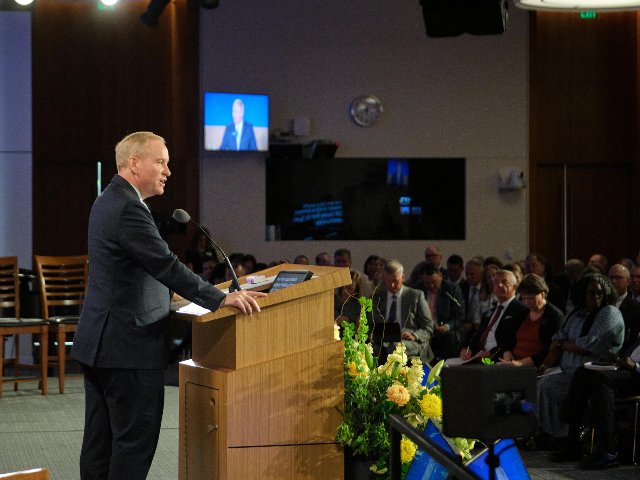
The Church of Jesus Christ of Latter-day Saints released the following statement today on the passing of Elder W. Mark Bassett:
We are deeply saddened at the sudden passing of Elder W. Mark Bassett, a General Authority Seventy who had been serving since April of 2016. Elder Bassett passed away on May 11, 2026, as a result of a traumatic brain injury. He was with his family in St. George, Utah, when the incident occurred.
At the time of his death, Elder Bassett was serving as the Executive Director of the Missionary Department, overseeing worldwide missionary efforts. His service in this calling coincided with a period of historic growth in missionary efforts around the world and unprecedented levels of missionaries deciding to serve. Elder Bassett will be deeply missed and always remembered for his great faith and dedicated service to the Lord Jesus Christ.
During a devotional for missionaries held at the Missionary Training Center (MTC) in Provo, Utah, just days before his passing, Elder Bassett bore testimony and challenged missionaries to “Invite everyone to come – and do everything you can to help them enter this beautiful gate which leads to eternal life.” His devotion in life reflected these teachings and leaves a loving legacy for all.
Our love and prayers are with his dear wife Angela, his children, and his grandchildren during this difficult time.
After a few minutes of obligatory questions to forestall the only query millions of people across the country actually cared about, Tyran Stokes was ready to reveal the decision college basketball fans had been waiting months to hear.
Was Stokes, the No. 1 player in the 2026 recruiting class, going to go to Kansas or Kentucky?
Near the end of his appearance on ESPN’s NBA Tip-Off, Stokes began to open the blue box that had been sitting in front of him throughout the segment. Inside was another box, this one covered in shiny blue wrapping paper and a white ribbon, a stylistic choice that caught the eye of Charles Barkley, two seats to Stokes’ left.
“A lot of blue over there,” the NBA and broadcasting legend said, seeming to imply Stokes might be picking the Wildcats.
Stokes quickly turned his gaze to Barkley.
“Don’t get too excited,” he said, nonchalantly.
Seconds later, Stokes pulled out a personalized edition of NBA 2K on the cover, with Stokes in a red Kansas jersey.
For the program on the wrong side of the decision, the end result of Stokes’ months-long recruiting saga – and his four-word message to Barkley – was painfully familiar.
Whatever hopes there were for better days for Kentucky after a disappointing 2025-26 season have quickly vanished during an even more disheartening offseason. The Wildcats’ rebuilding efforts have been persistently plagued by high-profile recruiting misses, whether it’s from transfer portal targets, top high-school recruits or overseas talent. The kinds of flashy, high-impact commitments that were once a given for the program in the not-so-distant past have largely vanished over the past month, becoming a constant source of consternation for arguably the sport’s most engaged fan base.
That collective anxiety brewing in the Bluegrass State is warranted.
A Kentucky team that lost its top five scorers from a team that was a half-court heave away from getting bounced by Santa Clara in the first round of the NCAA Tournament last season – including everyone who averaged at least eight points per game – hasn’t sufficiently restocked its roster more than four weeks after the transfer portal opened. The Wildcats have the No. 13 portal class according to 247Sports, but have only one of the top-40 transfers (former Washington guard Zoom Diallo, the No. 27 player in the portal). Their high-school recruiting, which annually stocked the program with five-star recruits throughout John Calipari’s tenure, is in even worse shape. Kentucky has 247’s No. 91 class, with 6-foot-2 guard Mason Williams, the No. 110 player in the class, as their only recruit. The Wildcats are four spots behind Toledo and Penn in 247’s team rankings.
At least for now, the outlook is grim at a program with justifiably lofty expectations. Virtually any rundown of offseason winners and losers will have Kentucky headlining the latter category. One former Wildcats beat writer said they have a bottom-five roster in the SEC right now.
The search for blame for Kentucky’s woes hasn’t gone particularly far. There’s an obvious target who, at 6-foot-10, isn’t very hard to miss.
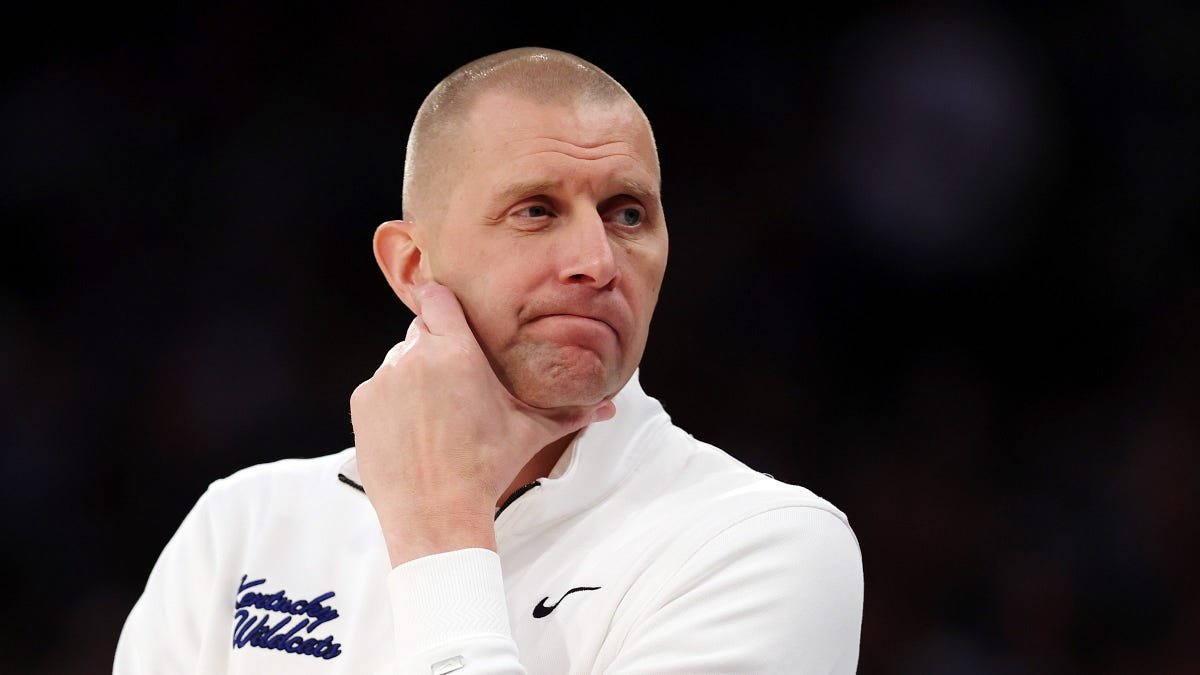
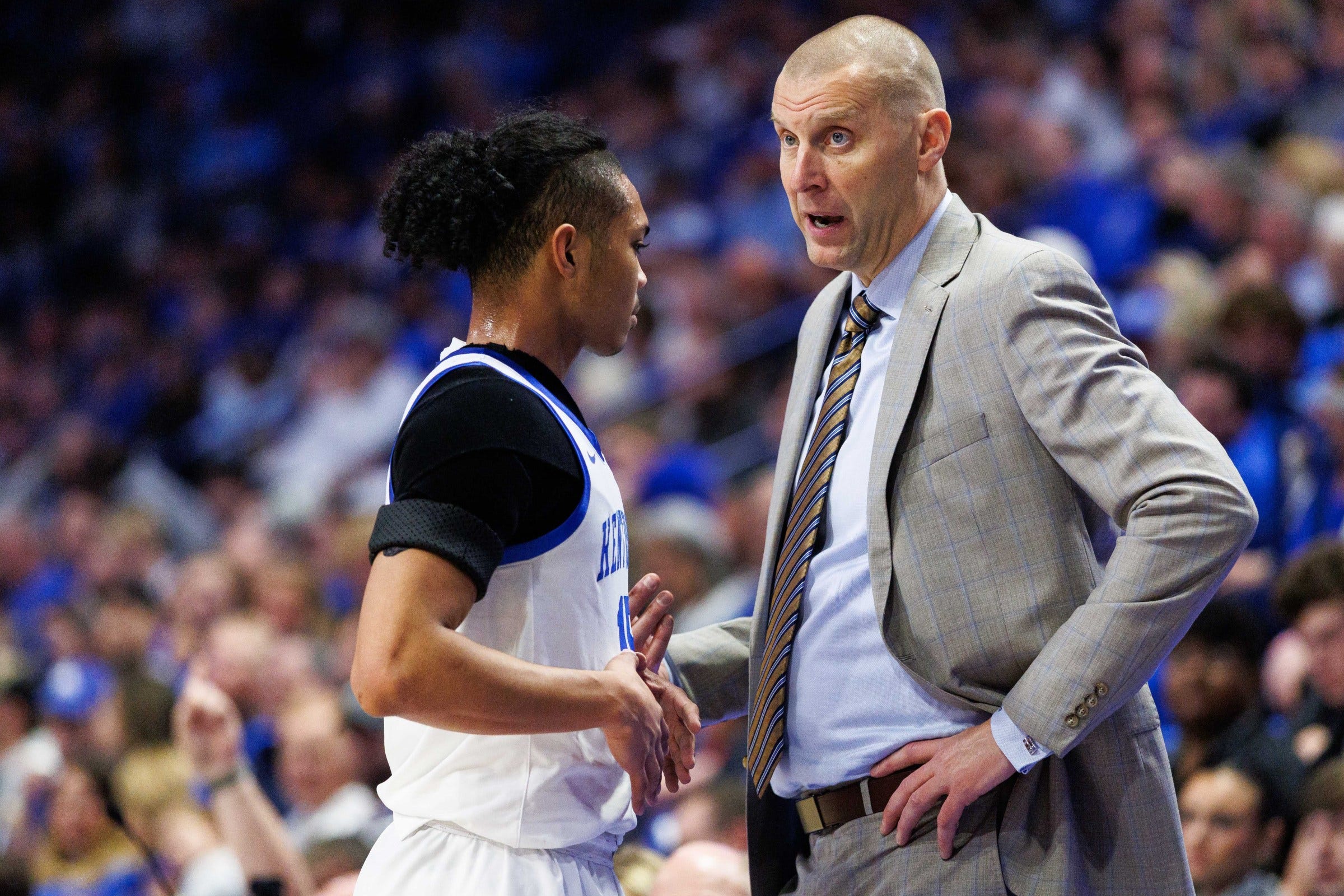
Twenty-four months after he was greeted in front of a packed Rupp Arena as a conquering hero arriving to once again lead his alma mater to Final Fours and national championships, Mark Pope is squarely in the metaphorical crosshairs of a fan base that has grown frustrated with increasingly middling results.
Public opinion around him has changed quickly. One year ago, Pope was coming off a strong debut season in which the Wildcats tied the NCAA single-season record for most wins against top-15 teams in the Associated Press poll, earned a No. 3 seed to the NCAA Tournament and advanced to the program’s first Sweet 16 in six years.
Whatever momentum he gathered was quickly squandered. Pope’s second Kentucky team came with a reported $22 million price tag – by far the highest mark in the sport – but it was a bafflingly constructed group, especially for Pope’s 3-point-heavy offense. It was headlined by a player, big man Jayden Quaintance, who tore his ACL in late February of the previous season and who almost certainly wouldn’t be ready for the early weeks of a demanding non-conference schedule. Pope brought in a point guard, Jaland Lowe, who is a quick and athletic slasher, but who is a woeful outside shooter. The six-man transfer haul included two players, Kam Williams from Tulane and Reece Potter from Miami (Ohio), who didn’t average double figures in scoring at mid-major programs. When the $22 million figure was first reported ahead of last season, there was surprise – not only about the sheer size of the number, but that it didn’t yield a better return.
Those concerns about the roster heading into the season were on display once games began. Quaintance didn’t appear in his first game until Dec. 20 and was limited to just four contests. Lowe wasn’t nearly the playmaker many expected him to be and appeared in only eight games due to a shoulder injury. Despite their coach’s reputation for producing potent offenses, the Wildcats struggled to score, finishing 40th nationally in adjusted offensive efficiency, according to KenPom, their second-worst mark since 2009. In all, it added up to a 22-14 record – tied for Kentucky’s second-most losses in a season since 1989 – a No. 7 seed and a 19-point loss in the second round of the NCAA Tournament to an Iowa State team without its best player.
Photo: Jordan Prather-Imagn Images
Now, more than six weeks after that season ended, things have arguably gotten worse as Kentucky’s clean slate heading into next season has already been sullied.
The types of NBA-bound, one-and-done talent that served as the centerpiece of Calipari’s rosters during his 15-year reign in Lexington have been turning down the Wildcats at an alarming rate during the latest recruiting cycle. Of the top 15 prospects in 247’s 2026 recruiting rankings, nine visited Kentucky’s campus. None of them ultimately ended up committing. Based on On3’s rankings, it was even more bleak, with 14 of the top 20 recruits visiting and the Wildcats missing out on all of them.
It hasn’t been that much better with transfers. Since the portal opened the day after the national championship game, Kentucky has been linked to several of the best players available, but in all but a couple of instances, they whiffed. Robert Wright III was viewed as a virtual lock for the Wildcats shortly after he entered the portal, but on April 15, the day after he wrapped up his Kentucky visit, he announced he was returning to BYU. Syracuse transfer Donnie Freeman was also viewed as a shoo-in to commit to Pope only to visit the school and commit shortly after that to St. John’s and Rick Pitino (who coached Pope at Kentucky and vouched for him to get the job two years ago). Dink Pate, a G League player, was heavily pursued by the Wildcats before committing to Providence.
The list hardly ends there. Among other top-100 transfers Pope and his staff have gotten a visit from or met with only to miss out on include:
Jeremiah Wilkinson (committed to Arkansas)
Cruz Davis (Texas Tech)
Neoklis Avdalas (North Carolina)
Dedan Thomas (Houston)
Terrence Hill Jr. (Tennessee)
Miles Byrd (Providence)
Terrence Brown (North Carolina)
Magoon Gwath (DePaul)
DeSean Goode (Miami)
Devin Vanterpool (Providence)
Missteps are an occupational hazard in recruiting, whether it’s high-school players or transfers, but the rate at which they’ve been occurring for Kentucky and Pope has been staggering.
A few different factors have only made things worse, turning an underwhelming situation into something decidedly more embarrassing.
When Stokes visited Kentucky in mid-April, a couple of weeks before his commitment announcement, he was in the process of signing non-revenue share paperwork with Kansas, according to a report from Kentucky Sports Radio.
When Stokes posted the announcement time for his commitment on social media, newly appointed Kentucky assistant coach Mo Williams responded “Let’s gooooooooooooo.” Not only was it an NCAA violation – coaches can’t publicly talk to or about recruits who haven’t yet signed with their program – but it gave the false impression the Wildcats were about to land a seismic addition.
Elsewhere in public relations mishaps, Kentucky announced the signing of James Madison transfer Justin McBride 40 minutes before Stokes’ commitment announcement. The news was soon swallowed by missing out on Stokes, denying the Wildcats the shine from the rare bit of good news this offseason and depriving McBride of much of the excitement and adoration he was set to receive.
Shortly after Freeman’s commitment to St. John’s, college basketball insider Jeff Goodman reported a huge factor in Freeman’s decision was that he “wanted a guy that would coach him hard, and wanted someone who had coached pros.”
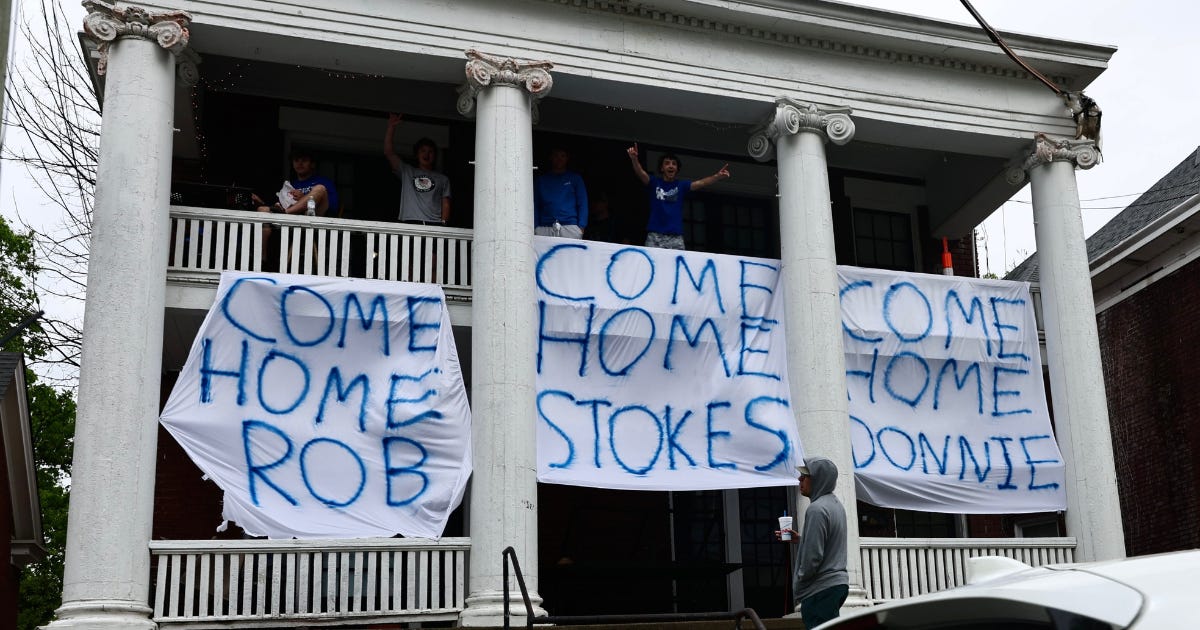
In mid-April, right around when Wright, Freeman and Stokes were set to visit, members of the school’s Sigma Chi chapter hung white bed sheets on their fraternity house on campus with messages written in blue reading “COME HOME ROB,” “COME HOME STOKES” and “COME HOME DONNIE,” creating an image that quickly went viral on social media. None of the three players ended up committing to the Wildcats.
On April 29, Pope flew all the way to Israel to watch Márcio Santos, a 6-foot-8 Brazilian forward playing for Israeli club Maccabi Tel Aviv. In the game Pope watched, Santos was held scoreless. One week later, he committed to LSU.
To his credit, Pope put out a video on social media this week asking for questions from Kentucky fans. Many of the responses to the video, which has 2.2 million views as I type this, are about what you’d expect.
Compounding the Wildcats’ issues over the past few weeks is what their most hated foes have managed to accomplish during that time.
Archrival Louisville, coming off an underwhelming season of its own under second-year coach Pat Kelsey, has cleaned up in the transfer portal, bringing in what 247 ranks as the No. 1 transfer class in the country, headlined by big man Flory Bidgunga. Two of the Cardinals’ most recent additions – guard De’Shayne Montgomery and 7-foot-5 center Gabe Dynes, the latter of whom is a Kentucky native – came in head-to-head recruiting battles against Kentucky.
Just behind Louisville in the transfer rankings is Tennessee, Kentucky’s most bitter SEC rival, which has loaded up this offseason with five of the top 60 players in the portal. For good measure, Indiana, another one of the Wildcats’ historical rivals, has the No. 4 portal class.
Elsewhere, Calipari, the coach Big Blue Nation was eager to run off after a pair of stunning first-round NCAA Tournament exits in his final three seasons, is excelling at Arkansas, with back-to-back Sweet 16s using a tried-and-true method that garnered him so many wins at Kentucky. Since arriving in Fayetteville in April 2024, Calipari has signed four five-star recruits, all of whom were in the top 20 nationally in their class. His high-school recruiting classes have been ranked, in order, third, fourth and second. Pope, meanwhile, has yet to land a five-star recruit or a top-20 high-school prospect.
To make matters worse, the athletic director who hired Pope and was more invested than anyone in the former captain of Kentucky’s 1996 national championship team being a success, Mitch Barnhart, will retire at the end of June.
The Wildcats and their coach aren’t doomed for failure, of course.
Though they’re all heavily exploring the possibility of heading to the NBA, three of the top five players in the portal remain uncommitted and there’s perhaps no program out there with more leftover money to spend on them than Kentucky. One of those available players, Iowa State’s Milan Momcilovic, a potentially seamless fit for Kentucky’s offense, has reportedly been in contact with Pope.
There are things to like about the players they have. Diallo is a proven, productive player at the power-conference level. As just a freshman, Alex Wilkins was one of the best mid-major players in the country last season and helped Furman give UConn all it could handle in their first-round NCAA Tournament matchup. Rising seven-foot sophomore Malachi Moreno is a former top-30 recruit who showed promise last season as a freshman and who Pope believes will be the best center in the country next season. This isn’t the first time Kentucky’s had a less-than-splashy offseason under Pope. Heading into his first season, he had the No. 49 freshman class and a transfer haul that included only one of the top-30 players. That team spent much of the season ranked in the top 15 nationally and went on to advance to the Sweet 16.
If Pope falters, though, it won’t be all that difficult to point to where things went irreparably wrong.
After being the site for Calipari’s NBA training academy for the better part of two decades, the Wildcats relished the chance to bring in one of their own, someone who understood what made the program, its history and its outsized importance in the state special. After winning only 63.9% of his first 72 games at the school, though, there’s now a fear that what made him different from Calipari has made him worse than Calipari and some of the other most revered coaches in program history. Can someone who, by all accounts, is a friendly, decent and cheery man thrive in a high-stakes, high-pressure job that demands its occupant be, for lack of a gentler term, a bit of a motherfucker?
Unless that question can be answered and unless circumstances rapidly change over the next 10 months, a man who hoisted an NCAA championship trophy to the delight of a sold-out Rupp Arena only two years ago will be leaving as a loser as a place that doesn’t have much tolerance or patience for them.