
Salesforce, Anthropic expand partnership amid ‘SaaSpocalypse’ concerns

Salesforce, Anthropic expand partnership amid ‘SaaSpocalypse’ concerns

Salesforce and Anthropic on Wednesday expanded their strategic partnership and unveiled “Claudeforce,” a new way for salespeople to access critical data directly from inside Anthropic’s Claude chatbot.

Claudeforce is launching as a plugin with 37 pre-built sales skills that will allow Claude users to compose emails, update records and take other relevant actions, according to a release. The companies said they plan to introduce more integrations across Claude, Salesforce and its messaging platform Slack in the future.

“It’s really a first in the industry,” Salesforce CEO Marc Benioff told CNBC’s Jim Cramer on Wednesday. “It’s completely exciting. I think that this is the way all enterprise systems are going to run in the future.”

Wednesday’s announcement marks the first time that Salesforce has ever added its “force” suffix at the end of another company’s product name.

Salesforce and its software peers have been under pressure as investors question whether AI tools from companies like Anthropic and OpenAI will replace them. Salesforce shares are down about 22% this year after dropping 20% in 2025. The Nasdaq, meanwhile, is up about 35% since the end of 2024.

Shares of Salesforce rose 12% in extended trading on Wednesday, after the company announced the partnership and reported fiscal second quarter results that beat Wall Street’s expectations.

Stock Chart IconStock chart icon

hide content

Salesforce stock chart.

Anthropic primarily sells its Claude models and products to other businesses and has experienced a period of explosive growth this year. The company recently told investors that its annualized revenue run rate hit $65 billion at the end of July, a sevenfold increase from a year ago.

“Within Anthropic, for a long time we’ve been accelerating the research teams within Claude, but this is the first time that we’ve really been able to incredibly accelerate our go-to-market efforts within Claude,” Anthropic CEO Dario Amodei told CNBC’s Jim Cramer.

Claudeforce is available to a select group of pilot customers, and it will launch in a preview capacity next month, the companies said. Additional pre-built skills will be available later this year.

WATCH: Bill Nygren: Salesforce is not done growing, now redirecting cash flow to purchase shares

Bill Nygren: Salesforce is not done growing, now redirecting cash flow to purchase shares
Choose CNBC as your preferred source on Google and never miss a moment from the most trusted name in business news.

Mais Notícias

Home Page – Início

Source link
More: The Global Track
Corinthia Mes

Alphabet paces for worst day in a year after AI talent exits

Alphabet paces for worst day in a year after AI talent exits

Google ended its worst day on the stock market in over a year, as artificial intelligence concerns mounted and two high-profile researchers departed for rivals in recent days.

Shares of parent company Alphabet closed down about 5% on Monday, underperforming both the Nasdaq and the other tech megacaps. It was the steepest slide since about a 7% decline in May 2025.

The brain drain concerns began last week when Google’s vice president of engineering and a co-lead of its Gemini AI models, Noam Shazeer, announced Wednesday that he was leaving the company to join rival OpenAI. Shazeer’s departure came less than two years after he returned to Google.

In August 2024, Google brought back Shazeer and fellow researcher Daniel De Freitas to its DeepMind AI unit as part of a partnership with startup Character.AI, which the pair founded after leaving Google in 2021. 

The departure came weeks after Google unveiled new AI products, including its Gemini 3.5 Flash model and Gemini Spark AI agent, at its annual I/O developer conference.

Another exit came on Friday, when John Jumper, DeepMind vice president and engineering fellow, announced he was leaving the company after nine years for rival Anthropic.

Jumper, who won a Nobel Prize alongside Google’s Demis Hassabis in 2024, is best known as the co-creator of AlphaFold, a breakthrough AI that has predicted more than 200 million protein structures, cutting years off biological and medical research.

The share slide also came on the heels of a Sunday Wall Street Journal interview with Microsoft CEO Satya Nadella, who called for less dependence on “AI Giants” and said the AI market was commoditized. 

Alphabet has been spending heavily on AI, including raising $141 billion in debt and equity since October. The company has been trying to prove that its vertically integrated AI stack can generate returns.

If models become cheaper and more interchangeable, as noted in Nadella’s interview, investors may question whether that spending is building a durable advantage or simply adding pressure to margins.

Google users on Monday also reported outages on Gmail and YouTube.

Google moving forward on AI data center without developer Crusoe
Stock Chart IconStock chart icon

hide content

Alphabet one-year stock chart.

Choose CNBC as your preferred source on Google and never miss a moment from the most trusted name in business news.

Source link
More: The Global Track

Corinthia Mes

SpaceX stock falls 9%, continuing selloff after blockbuster IPO

SpaceX stock falls 9%, continuing selloff after blockbuster IPO

Billboards in Times Square celebrate the SpaceX IPO debut at the Nasdaq on June 12th, 2026.

Adam Jeffery | CNBC

SpaceX stock fell 9% on Monday, continuing a selloff that has seen shares tumble in the past two full days of trading after an initial rally from its record-breaking initial public offering.

Elon Musk‘s space and artificial intelligence firm became one of the world’s most valuable companies after a blockbuster listing on June 12. Stock surged in SpaceX’s first two full days as a public company, with market cap surpassing Amazon and — briefly — Microsoft on Tuesday, before falling back below both.

Shares sank 5% and 3.6% on Wednesday and Thursday last week, before the Juneteenth holiday on Friday.

Stock Chart IconStock chart icon

SpaceX shares.

The stock was still up 37% since its historic debut at market close on Thursday, which offered shares at a set price of $135.

SpaceX also on Monday announced a senior unsecured notes offering and disclosed that it had $100.8 billion in cash and cash equivalents on hand as of June 19.

Bullish investors are betting big on the prospect of Musk driving long-term returns at SpaceX. The company posted a $4.9 billion net loss in 2025, and it lost $4.28 billion in the first quarter of this year.

But the average investor who bought SpaceX shares in the open market after its debut had seen nearly all of their gains disappear by the end of last week, thanks to the pullback.

Despite that, the blockbuster IPO has made Musk the world’s first trillionaire, minted thousands of new millionaires and saw some shareholders’ stakes surpass the billion-dollar mark.

Choose CNBC as your preferred source on Google and never miss a moment from the most trusted name in business news.

Source link
More: The Global Track

Corinthia Mes

Amazon starts selling its AI shopping technology to other retailers

Amazon starts selling its AI shopping technology to other retailers

An Amazon device is displayed at an Amazon Devices launch event in New York City on Feb. 26, 2025.

Brendan McDermid | Reuters

Amazon has been using homegrown artificial intelligence technology to help users compare products and buy or reorder items on their behalf. Now the company is licensing that technology to other retailers, as it vies to be the backbone of AI shopping across the web.

In a blog post Wednesday, Amazon said it’s taking the “architecture, starter code and learnings” from Alexa for Shopping and packaging it together for the rest of the retail industry. The new service allows retailers to launch their own AI shopping tools tailored to their storefront, catalog and branding “in as little as 60 days,” Amazon said.

For Amazon, the move marks another effort to take technology built internally and sell it to other companies, including competitors, as a service. It’s the approach Amazon took roughly two decades ago with Amazon Web Services, its cloud computing unit, and later with its cashier-less checkout, warehousing and supply chain services.

Earlier this month, Amazon rebranded its e-commerce chatbot from Rufus to Alexa for Shopping and enabled it by default in search queries on its store. As it turns outward, the new tool is being offered by AWS, which could help reassure retailers leery of partnering and sharing data with the industry giant.

Amazon said it’s already signed up Tapestry-owned luxury fashion brand Kate Spade as a customer, which used the service to launch a gifting assistant. Additional retailers are “currently in testing,” the company said.

Across the burgeoning AI industry, leading players are targeting shoppers. OpenAI, Google and Perplexity have rolled out research tools and agents for shopping, though some of those efforts have stumbled due to technical bugs or challenges with onboarding retailers. It’s also unclear if shoppers are ready to hand off the task of completing a purchase to bots.

Retailers and marketplaces like Walmart, Target, Etsy, Gap and eBay have taken a multipronged approach to AI shopping by building their own tools while also partnering with OpenAI and Google. Software companies like Salesforce have pitched services to help retailers launch chatbots or agents on their sites.

Amazon has been reluctant to partner with rival AI platforms, opting instead to focus on building internal tools like Alexa for Shopping. It’s also walled off its site from being scraped by external agents. Meanwhile, Amazon built a feature called Buy for Me that can make purchases for users on other retailers’ websites.

In Wednesday’s post, Amazon suggested retailers build their own AI tools, rather than relinquishing control of the shopping experience to “an intermediary.”

“Retailers already possess deep vertical knowledge about their products, customers, and categories that no general-purpose AI can match,” the company said.

WATCH: OpenAI deepens Amazon ties

Choose CNBC as your preferred source on Google and never miss a moment from the most trusted name in business news.

Source link
See more: https://theglobaltrack.com/
https://corinthiames.com.br/

Why Is Marvell Technology (MRVL) Stock Rocketing Higher Today

Why Is Marvell Technology (MRVL) Stock Rocketing Higher Today

What Happened?

Shares of networking chips designer Marvell Technology (NASDAQ: MRVL) jumped 5.7% in the afternoon session after Micron’s blowout day signaled that AI-driven chip demand is structurally undersupplied which is bullish news for the equipment makers and foundries that build the capacity.

Semiconductor manufacturing equipment (Applied Materials, Lam Research, KLA, ASML) and foundries (TSMC, GlobalFoundries) benefit when chip companies announce capacity expansions. Every dollar of additional Micron capex flows to the equipment makers that supply the tools, and every new fab Micron builds is a multi-year revenue stream for the foundries that share processes. UBS estimated Micron will spend $50B+ on capacity over the next 5 years. At industry-average tool intensity, that’s billions of equipment orders.

Is now the time to buy Marvell Technology? Access our full analysis report here, it’s free.

What Is The Market Telling Us

Marvell Technology’s shares are extremely volatile and have had 37 moves greater than 5% over the last year. In that context, today’s move indicates the market considers this news meaningful but not something that would fundamentally change its perception of the business.

The previous big move we wrote about was 6 days ago when the stock gained 5.9% on the news that multiple Wall Street analysts raised their price targets on the stock, signaling strong confidence in demand for its artificial intelligence (AI) chips.

The wave of positive revisions comes ahead of the company’s upcoming earnings report. Analysts from firms including Citigroup, Oppenheimer, Wells Fargo, and Melius Research cited accelerating demand for AI infrastructure and custom processors. In particular, analysts highlighted strong sales of Marvell’s Trainium chips to major clients like Amazon as a key growth driver. Oppenheimer forecasts custom chip sales could reach $2 billion in the current year, while other analysts pointed to a significant sales backlog for the Trainium product line. The bullish sentiment reflects a broader Wall Street view that Marvell is positioned to benefit from a multi-year expansion in AI infrastructure spending.

Marvell Technology is up 134% since the beginning of the year, and at $209.43 per share, has set a new 52-week high. Investors who bought $1,000 worth of Marvell Technology’s shares 5 years ago would now be looking at an investment worth $4,307.

WHILE YOU’RE HERE: The Next Palantir? One satellite company captures images of every point on Earth. Every single day. The Pentagon wants it. Hedge funds are using it to beat earnings. You’ve probably never heard of it.

This is what the early days of Palantir looked like before it became a $437 billion giant. Same playbook. Different technology. If you missed Palantir, you need to see this. Claim The Stock Ticker for Free HERE.

Source link
See more: https://theglobaltrack.com/
https://corinthiames.com.br/

Val Kilmer appears in new film ‘As Deep as the Grave’ via AI technology

Show summary Hide summary

Val Kilmer returns to the big screen for the first time since his death in 2025. The AI-generated version of the late Hollywood icon will star in the spiritual western drama As Deep as the Grave. Directors have vowed to honor both the craft and the actor’s legacy with unprecedented technology.

🔥 Quick Facts

  • Original Casting: Val Kilmer cast in 2020, 5 years before his death in April 2025
  • AI Reveal: First images released March 18, 2026 via Variety
  • CinemaCon Debut: Trailer premiered April 15, 2026 at the Las Vegas trade show
  • Screen Time: AI Val Kilmer appears in roughly 1 hour of the film’s runtime

AI Technology Honors Fallen Star’s Final Dream Role

As Deep as the Grave tells the true story of Southwestern archaeologists Ann and Earl Morris. The couple explored Canyon de Chelly in Arizona to trace the history of the Navajo people. Val Kilmer played Father Fintan, a Catholic priest and Native American spiritualist integral to the narrative.

Director Coerte Voorhees designed the role specifically around Kilmer’s heritage and his deep connection to the American Southwest. When illness prevented the actor from shooting, producers faced a critical choice. Recasting meant losing Kilmer’s vision entirely, or they could pioneer ethical AI recreation with family blessing.

Groundbreaking Partnership with Kilmer Estate Reshapes Cinema

Kilmer’s daughter Mercedes and his estate fully endorsed the AI recreation. She released a statement confirming her father “always looked at emerging technologies with optimism as a tool to expand the possibilities of storytelling.” Her endorsement gave filmmakers the confidence to proceed with cutting-edge deepfake technology.

The production followed SAG-AFTRA guidelines and compensated the estate financially. Sonantic, the same AI voice company that assisted Kilmer in Top Gun: Maverick (2022), recreated his distinctive voice. The audio bridges a poignant gap between the actor’s earlier recordings and his illness-affected final years.

How the Film’s Budget Crisis Sparked an AI Solution

Production stretched across 6 years due to COVID shutdowns and financial constraints. At one point, filmmakers removed Father Fintan‘s scenes to cut costs. But upon reviewing the footage, they realized the character was essential to the story’s emotional core. The narrative felt incomplete without him.

Production DetailInformation
DirectorCoerte Voorhees (writer-director)
ProducerJohn Voorhees (brother)
Supporting CastAbigail Breslin, Tom Felton, Abigail Lawrie
AI Voice PartnerSonantic, UK-based AI company

Voorhees explained the dilemma: normally they would recast the role. However, as an indie film without studio resources, recasting and reshooting was impossible. The innovative solution emerged as the only authentic path forward.

“His family kept saying how important they thought the movie was and that Val really wanted to be a part of this. He really thought it was important story that he wanted his name on. It was that support that gave me the confidence to say, okay let’s do this.”

— Coerte Voorhees, Writer-Director

Pioneering Ethical AI in Hollywood Sets New Precedents

The AI recreation uses archived footage and younger images provided by Kilmer’s family. The technology shows Father Fintan across multiple life stages. The trailer reveals the character as both a young spiritual guide and an elderly, spectral figure warning a child, “Don’t fear the dead and don’t fear me.”

CinemaCon audiences applauded the technical achievement and emotional authenticity. Producer John Voorhees stated they were “breaking new ground” ethically and creatively. The brothers’ decision to pursue written consent demonstrates how AI can honor, not exploit, a performer’s legacy.

Could This Revolutionary Film Change Hollywood’s Future with AI?

As As Deep as the Grave approaches its theatrical release, the film serves as a landmark moment. This is the first time a major Hollywood actor’s likeness has been recreated with explicit family consent for a full feature role. The ethical framework established here will likely shape industry standards moving forward.

Technology advocates see Val Kilmer’s legacy as proof that AI recreation can be conducted with respect, transparency, and fairness. Whether this becomes a template for future productions or remains a unique tribute to an irreplaceable talent depends on how the industry responds to its groundbreaking success.

Sources

  • Variety – Exclusive first look and interview with director Coerte Voorhees about Val Kilmer’s AI recreation
  • NBC News – CinemaCon coverage of the As Deep as the Grave trailer premiere and audience reaction
  • The Guardian – Analysis of ethical AI deepfake in western film and Hollywood precedents

Give your feedback

★★★★★

Be the first to rate this post
or leave a detailed review

Source link
See more: https://theglobaltrack.com/
https://corinthiames.com.br/

Evercore ISI Raises Marvell Technology (MRVL) Price Target on Rising AI Infrastructure Demand

Marvell Technology (MRVL) Price Target Increase by $21 Following Strong Sector Signals

With a 5-year average revenue growth rate of 23.14%, Marvell Technology, Inc. (NASDAQ:MRVL) is included among the 11 Best Long Term US Stocks to Buy Right Now.

Evercore ISI Raises Marvell Technology (MRVL) Price Target on Rising AI Infrastructure Demand

On May 19, Evercore ISI raised the firm’s price target on Marvell Technology, Inc. (NASDAQ:MRVL) to $155 from $133 and maintained an Outperform rating on the shares. Following a round of Q1 AI channel checks, the firm said one of the main themes it heard was that AI workloads are expected to shift from a training-focused market toward an inference-led market by the end of 2026. The shift is also increasing attention on cost-per-token, return on investment, and total cost of ownership. According to the firm, that trend is driving stronger interest from hyperscalers in internally developed ASICs and alternative accelerators.

On May 18, Melius Research analyst Ben Reitzes raised the firm’s price target on Marvell (MRVL) to $220 from $140 while keeping a Buy rating on the stock. The analyst said that while “nothing really emerged as incrementally good from Trump going to China,” the firm has become “incrementally good” on memory and AI semiconductor companies. Melius raised its long-term estimates and price targets for several Buy-rated “bottleneck stocks,” including Micron, Sandisk, AMD, Intel, and Marvell, along with Hold-rated Qualcomm. The firm also said it continues to believe semiconductor companies will capture market capitalization growth, or at least more upside, compared with traditional software companies and non-semiconductor members of the Mag 7 over the long term.

Marvell Technology, Inc. (NASDAQ:MRVL), along with its consolidated subsidiaries, supplies data infrastructure semiconductor solutions across the data center core and network edge. The company designs, develops, and sells integrated circuits.

While we acknowledge the potential of MRVL as an investment, we believe certain AI stocks offer greater upside potential and carry less downside risk. If you’re looking for an extremely undervalued AI stock that also stands to benefit significantly from Trump-era tariffs and the onshoring trend, see our free report on the best short-term AI stock.

READ NEXT: 11 Best Dividend Penny Stocks to Buy Right Now and 10 Best “Dogs of the Dow” Stocks to Buy for the Rest of 2026

Disclosure: None. Follow Insider Monkey on Google News.

Source link
More: https://theglobaltrack.com/
https://corinthiames.com.br/

Is the Vanguard Information Technology ETF the Right Fit for Your Portfolio Before Summer?

Is the Vanguard Information Technology ETF the Right Fit for Your Portfolio Before Summer?


Tech stocks have stormed back in recent weeks and have a lot of momentum heading into the summer.

But even as the Nasdaq has rallied, the Vanguard Information Technology ETF (NYSEMKT: VGT) has performed even better. The Vanguard Information Technology ETF is up 22% year-to-date (YTD) and 50% over the past 12 months.

Will AI create the world’s first trillionaire? Our team just released a report on a little-known company, called an “Indispensable Monopoly,” providing the critical technology Nvidia and Intel both need.

Continue »

That’s significantly better than the Nasdaq 100 and the Invesco QQQ (NASDAQ: QQQ), which tracks the Nasdaq 100. The QQQ is up about 17% YTD and roughly 39% over the past year.

Here’s why the Vanguard Information Technology ETF is a great option for investors looking for more heat in their portfolios heading into the summer.

Image source: Getty Images.

Broad exposure to tech stocks

The tech stock rally over the past two months has lifted the Nasdaq to an all-time high and it just keeps rising, touching 26,700 on May 14.

While investors should be wary of rising valuations, tech ETFs are a great way to tap into the alpha that the tech sector offers. While a potentially overvalued individual tech stock could be derailed by a macroeconimic or geopolitical shock, an ETF gives you the protection of a diversified portfolio. This way, if one overvalued tech stock stumbles, the damage is limited in a diversified portfolio.

That said, the Vanguard Information Technology ETF is a pure technology stock, unlike the QQQ, which includes the 100 largest non-financial stocks, so it has even more alpha, which has helped lift its return higher than the Nasdaq.

At the same time, the ETF is more diversified within the sector than most tech ETFs. It tracks the performance of the MSCI US Investable Market Information Technology 25/50 Index, which includes large-, mid-, and small-cap tech stocks with certain screens in place to limit the exposure to any one stock.

The VGT holds about 316 tech stocks at present with Nvidia (NASDAQ: NVDA), Apple (NASDAQ: AAPL), and Microsoft (NASDAQ: MSFT) the three largest holdings.

VGT beats the QQQ

There really isn’t a bad time to invest in the tech sector via an ETF. While tech stocks are prone to short-term swings, over the long-term they have outperformed the broader market by a wide margin.

I’ve already laid out VGT’s outperformance YTD and over the past 12 months. It’s the same over the longer term. The VGT has a five-year annualized return of 20.9% and a 10-year return of 24.3%. The Invesco QQQ has annualized returns of 17.6% and 21.2% over those periods, respectively. The S&P 500 lags with five- and 10-year annualized returns of 12.7% and 13.8% respectively.

If you go back 20 years, the VGT has averaged a 15.9% annual return, slightly beating the QQQ’s return of 15.5%. The S&P 500 is further back with a 9.2% average annulaized return over the past 20 years.

So while the wariness about piling into certain tech stocks is understandable, there has almost never been a bad time to invest in the Vanguard Information Technology ETF as a long term holding.

Should you buy stock in Vanguard Information Technology ETF right now?

Before you buy stock in Vanguard Information Technology ETF, consider this:

The Motley Fool Stock Advisor analyst team just identified what they believe are the 10 best stocks for investors to buy now… and Vanguard Information Technology ETF wasn’t one of them. The 10 stocks that made the cut could produce monster returns in the coming years.

Consider when Netflix made this list on December 17, 2004… if you invested $1,000 at the time of our recommendation, you’d have $469,293!* Or when Nvidia made this list on April 15, 2005… if you invested $1,000 at the time of our recommendation, you’d have $1,381,332!*

Now, it’s worth noting Stock Advisor’s total average return is 993% — a market-crushing outperformance compared to 207% for the S&P 500. Don’t miss the latest top 10 list, available with Stock Advisor, and join an investing community built by individual investors for individual investors.

See the 10 stocks »

*Stock Advisor returns as of May 16, 2026.

Dave Kovaleski has no position in any of the stocks mentioned. The Motley Fool has positions in and recommends Apple, Microsoft, and Nvidia. The Motley Fool has a disclosure policy.

Is the Vanguard Information Technology ETF the Right Fit for Your Portfolio Before Summer? was originally published by The Motley Fool


Source link

Marvell Technology (MRVL) Valuation Check After AI Chip Selloff On Inflation And Oil Concerns

Marvell Technology (MRVL) Valuation Check After AI Chip Selloff On Inflation And Oil Concerns

Never miss an important update on your stock portfolio and cut through the noise. Over 7 million investors trust Simply Wall St to stay informed where it matters for FREE.

Marvell Technology (MRVL) is back in focus after its stock declined alongside other chipmakers, as a cooling AI infrastructure rally, hotter April US inflation data, and higher oil prices weighed on sector sentiment.

See our latest analysis for Marvell Technology.

Even after the recent pullback, the stock’s 30-day share price return of 28.03% and 90-day share price return of 102.24% point to strong upward momentum. The 1-year total shareholder return of 151.90% and 5-year total shareholder return of 295.10% reflect how much sentiment has shifted over a longer horizon.

If you are watching how AI infrastructure stocks react to swings in sentiment, it can be helpful to compare Marvell with other chip-related opportunities using the 39 AI infrastructure stocks

After such strong recent returns and with the stock trading above the average analyst price target, the key question is whether Marvell is now overextended or if the market is still underestimating its AI infrastructure earnings power.

Most Popular Narrative: 18% Overvalued

Marvell’s most followed narrative points to a fair value of $140 per share, compared with the last close at $164.50, so it frames the current AI optimism as already more than fully reflected in the price.

Marvell has built something genuinely rare in semiconductors: a full-stack platform that coverscustom chip design, high-speed optical interconnect, silicon photonics, and memory switching, all converging on the single biggest infrastructure build-out of the current decade.

NVIDIA’s $2B investment is not a customer relationship. It is a vote of confidence from theworld’s most informed AI infrastructure buyer that Marvell’s technology platform is the rightfoundation for the next generation of AI factories.

Read the complete narrative.

Want to see how this narrative gets to a premium price on 2028 earnings power and future margins without relying on today’s hype multiples? The full write up walks through projected revenue scale, profitability assumptions and the earnings multiple that together produce that $140 figure, plus how those inputs compare with management guidance and market expectations.

Result: Fair Value of $140 (OVERVALUED)

Have a read of the narrative in full and understand what’s behind the forecasts.

However, you still need to watch for an AI capex slowdown or an Amazon Trainium shift that weakens custom ASIC growth and challenges this whole fair value story.

Find out about the key risks to this Marvell Technology narrative.

Another View: Multiples Tell a Harsher Story

That user narrative pegs fair value at $140 per share, yet Marvell trades on a P/E of 53.9x versus a US Semiconductor average of 59.6x and a fair ratio of 48.5x. The stock therefore screens cheaper than peers but richer than the level our fair ratio suggests the market could move toward, raising the question of how much valuation risk you are really taking at $164.50.

See what the numbers say about this price — find out in our valuation breakdown.

NasdaqGS:MRVL P/E Ratio as at May 2026

Next Steps

Given the mix of enthusiasm and caution across these views, it can be helpful to act promptly. Review the numbers yourself and decide where you stand, starting with the 3 key rewards and 2 important warning signs.

Looking for more investment ideas?

If you stop at a single stock, you risk missing opportunities that better fit your goals, risk tolerance, and income needs across the market.

  • Target quality at a discount by reviewing companies highlighted in the 44 high quality undervalued stocks that combine solid fundamentals with pricing that may not fully reflect them.

  • Strengthen your downside protection by scanning the 69 resilient stocks with low risk scores designed to surface stocks with more resilient risk profiles.

  • Boost your income potential by assessing the 13 dividend fortresses focused on companies with higher dividend yields and a focus on stability.

This article by Simply Wall St is general in nature. We provide commentary based on historical data and analyst forecasts only using an unbiased methodology and our articles are not intended to be financial advice. It does not constitute a recommendation to buy or sell any stock, and does not take account of your objectives, or your financial situation. We aim to bring you long-term focused analysis driven by fundamental data. Note that our analysis may not factor in the latest price-sensitive company announcements or qualitative material. Simply Wall St has no position in any stocks mentioned.

Companies discussed in this article include MRVL.

Have feedback on this article? Concerned about the content? Get in touch with us directly. Alternatively, email editorial-team@simplywallst.com

Source link

Rackspace Technology and AMD Sign Memorandum of Understanding to Establish New Category of Governed Enterprise AI Infrastructure

Rackspace Technology and AMD Sign Memorandum of Understanding to Establish New Category of Governed Enterprise AI Infrastructure

Rackspace US, Inc.

Agreement establishes framework for governed Enterprise AI Cloud built for mission-critical workloads

SAN ANTONIO, May 07, 2026 (GLOBE NEWSWIRE) — Rackspace Technology® (NASDAQ: RXT), a global enterprise AI infrastructure and solutions provider, and AMD today announced the signing of a Memorandum of Understanding (MOU) establishing a framework for a multiyear strategic partnership to create an Enterprise AI Cloud purpose-built for regulated enterprises and sovereign workloads where security, governance, and accountability are non-negotiable.

Today’s dominant model requires enterprises to rent GPU capacity by the hour and carry the operational burden themselves including integration, security and accountability. This collaboration proposes to invert that model by integrating AMD Instinct™ GPUs and EPYC™ CPUs into a fully managed, governed stack. Through this understanding, the companies aim to establish a new category of managed enterprise AI infrastructure where dedicated AMD compute is embedded inside a governed managed operating model, with Rackspace owning the stack from silicon to outcomes.

“As enterprises move AI out of the lab and into production environments, they’re asking who they can trust to run it there,” said Gajen Kandiah, CEO, Rackspace Technology. “Governing AI infrastructure in regulated environments with defined accountability is not something you bolt on after the fact. It must be built in from the start. Rackspace and AMD are building exactly that and in doing so, establishing a new category of enterprise AI infrastructure that the market has been asking for.”

“Enterprise AI is quickly moving from experimentation to production, and that requires a compute foundation engineered for performance and efficiency at scale,” said Dan McNamara, senior vice president and general manager, Compute & Enterprise AI, AMD. “Our collaboration with Rackspace delivers AMD AI compute into managed, private and governed environments so enterprises can deploy AI with the performance and flexibility their workloads demand.”

The AMD collaboration is intended to position Rackspace to complete its curated enterprise AI stack and introduce four integrated capabilities. Together, these capabilities are designed to form a complete, integrated stack from bare metal compute and developer-ready inference tooling through a fully operated inference runtime with defined SLAs to a governed Enterprise AI Cloud. The aim is to give enterprises a single operator accountable for every layer, calibrated to the sovereignty, performance, and compliance requirements of each workload.

Source link

MYCELX brings water treatment technology to Permian Basin TX

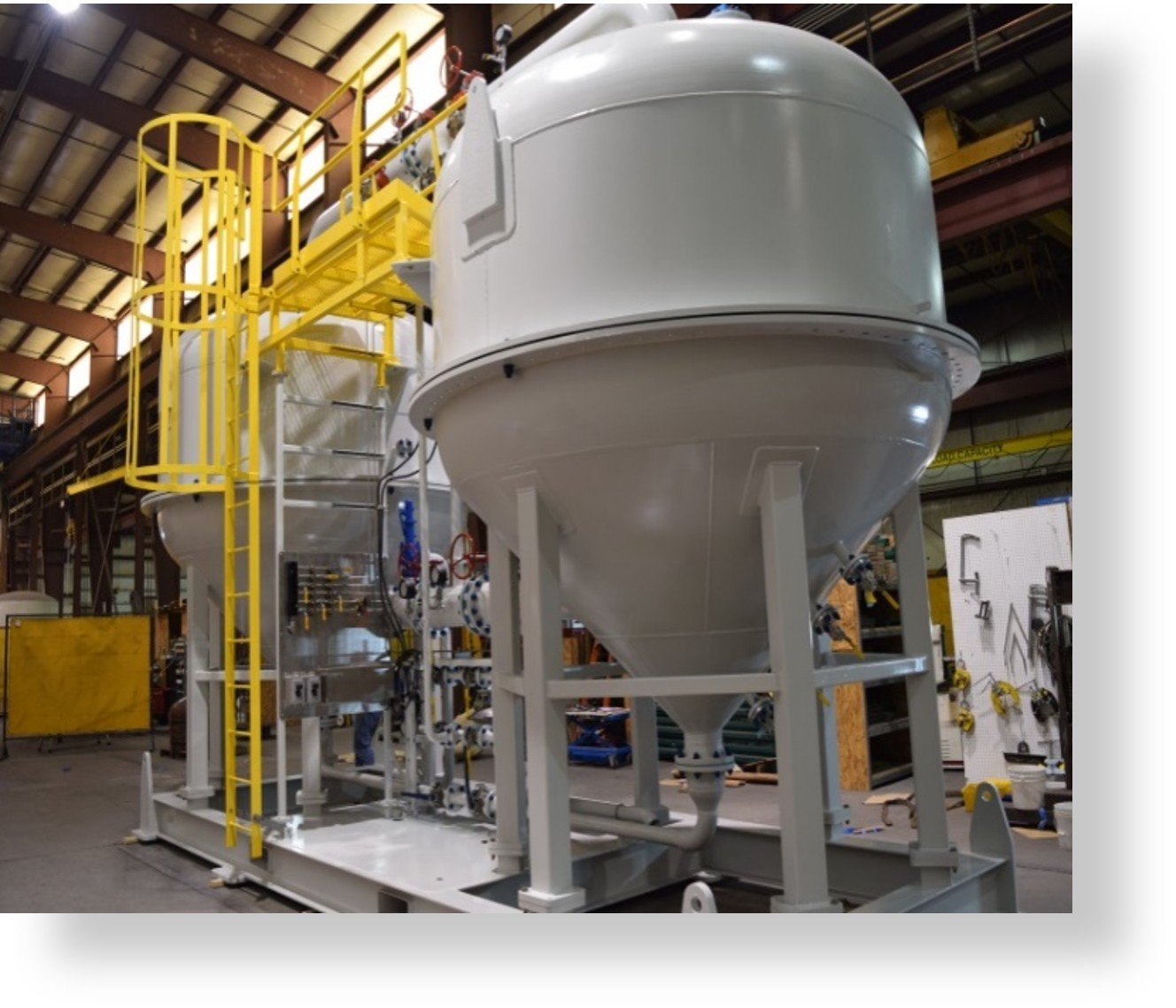
MYCELX is bringing its water treatment technology to the Permian Basin. Shown is a 20,000 barrel-per-day MYCELX Advanced Coalescer system.


A new water treatment technology born of the 1989 Exxon Valdez oil spill is making its way to the Permian Basin.

MYCELX founder Hal Alper developed the MYCELX polymer, a material that permanently and chemically bonds hydrocarbons on contact rather than simply filtering them. In 1994, he co-founded MYCELX Technologies with petroleum industry veteran John Mansfield Sr. The company has since grown from a single polymer innovation into a global water treatment provider with expertise in produced water treatment across onshore and offshore operations.

Following successful deployments worldwide, the company recently shifted its strategy to focus on the Permian Basin, citing the value creation and performance improvements its technology delivers in produced water treatment.

MYCELX offers two primary treatment systems for Permian Basin clients that work together, said Garrett Rasor, business development manager for oil and gas.

One is the MAC — MYCELX Advanced Coalescer — and the second is REGEN, the Regenerative Media Filter. Combined, the technologies can recover 99% sales-quality oil from produced water while also collecting suspended solids. Rasor said the treatment could be used before the water is sent to saltwater disposal wells.

Rasor said the systems can also be used as pretreatment for technologies that process produced water for beneficial reuse, desalination or evaporation.

REGEN is a backwashable media filter that generates recycle-quality water that can be placed in a frac pond or sold to a midstream or treatment company. He said the system operates within a small footprint.

The two technologies are also cost-effective because they require no chemicals, produce no emissions and require no labor because they are automated.

Jim Weidler, executive vice president of business development, said the company was awarded its first field-scale project using REGEN in the Permian Basin in November by a major midstream operator. It will begin operations in the third or fourth quarter, he said.

Weidler called the project the company’s showcase and said it is generating significant interest, along with the MAC technology.

The company recently conducted a pilot study with a supermajor operator in the Delaware Basin using the two-stage MAC and REGEN system to increase oil recovery, reduce solids and meet recycle water quality specifications. After three months and 55 days of data collection, the company found the paired technologies were able to receive produced fluids from the pipeline and exceed the less-than-15-parts-per-million specification for oil and grease, with an average effluent oil-in-water measurement of 11.64 parts per million.

In the future, Weidler said the company hopes to offer its PFAS treatment technology to the Permian Basin.


Source link

Marvell Technology (MRVL) Price Target Increase by $21 Following Strong Sector Signals

Marvell Technology (MRVL) Price Target Increase by $21 Following Strong Sector Signals


Marvell Technology, Inc. (NASDAQ:MRVL) is one of the 10 New Contenders for S&P 500 Index.

Marvell Technology (MRVL) Price Target Increase by $21 Following Strong Sector Signals

On April 13, 2026, B. Riley expressed confidence in Marvell Technology, Inc. (NASDAQ:MRVL)’s future growth value by raising the stock’s price target from $135 to $156. The firm’s analyst maintained a Buy rating on the stock. According to the analyst, Taiwan Semiconductor Manufacturing Company’s (TSM) strong Q1 sales and Q2 outlook signal notable growth across the broader semiconductor and technology supply chains and offer lateral benefits for Marvell Technology, Inc. (NASDAQ:MRVL).

In a more recent development, on April 22, 2026, Marvell Technology, Inc. (NASDAQ:MRVL) announced the acquisition of Polariton Technologies, a specialist in high-speed, low-power plasmonics-based silicon photonics. With this move, the company aims to scale optical performance to 3.2T and beyond, thereby addressing the exponential bandwidth demands of AI workloads. The financial terms of the acquisition remain undisclosed. As per the announcement, however, the takeover adds a specialized engineering team to Marvell Technology, Inc. (NASDAQ:MRVL), reinforcing its commitment to innovation in high-speed connectivity for evolving cloud infrastructures.

Founded in 1995, Marvell Technology, Inc. (NASDAQ:MRVL) is a leader in data infrastructure semiconductor solutions. The California-based company designs and develops high-performance chips that move, store, process, and secure the world’s data.

While we acknowledge the potential of MRVL as an investment, we believe certain AI stocks offer greater upside potential and carry less downside risk. If you’re looking for an extremely undervalued AI stock that also stands to benefit significantly from Trump-era tariffs and the onshoring trend, see our free report on the best short-term AI stock.

READ NEXT: MLP Stocks List: 20 Largest MLPs and 10 High Growth Chemical Stocks to Buy.

Disclosure: None. Follow Insider Monkey on Google News.


Source link

Myseum Rebrands as Myseum.AI to Align with Full Suite of Technology and Social Media Platforms

Myseum Rebrands as Myseum.AI to Align with Full Suite of Technology and Social Media Platforms


Myseum.AI, Inc.

Company developing privacy-first agentic platform for social media

NEW BRUNSWICK, N.J., April 15, 2026 (GLOBE NEWSWIRE) — Myseum, Inc. (Nasdaq: MYSE) (“Myseum” or the “Company”), a privacy-first social media and technology innovator, today announced that it is now operating under the new name Myseum.AI, Inc. effective April 15, 2026. The rebrand illuminates the Company’s core technology platform that will integrate proprietary privacy-first artificial intelligence (AI) into its secure messaging and social media platforms. The Company is developing privacy-first agentic localized AI agents that assist in managing personal media such as photos, videos and messages, while maintaining privacy. The technology adapts to individual patterns and preferences to better assist the user while maintaining data integrity and encryption to ensure that user information is never shared with any other social platforms. Essentially, the personalized AI assistant learns from the user’s individual actions and never shares that information with traditional AI models.

In conjunction with the name change, Myseum.AI stock will continue to trade on Nasdaq under the ticker symbol “MYSE.”

“As a privacy-first AI and social media technology company, we continue to deliver on our commitment to innovation in the secure digital media space through our development of popular privacy-first user platforms. Our new name, Myseum.AI, identifies our core AI-based technology that secures our multi-tiered social media ecosystem,” said Darin Myman, CEO of Myseum.

About Myseum, Inc.

Myseum, Inc. (formerly DatChat Inc.) is a privacy-focused AI and social media technology company developing innovative platforms for secure digital sharing and storage. Its flagship platform, Picture Party, is a next-generation patented instant social networking experience designed to make it easier, more fun and private to share. The platform enables users to create curated albums, build encrypted galleries with controlled access, personalize their content feeds, and organize collections within a broader digital ecosystem. Picture Party by Myseum is currently available at the iOS app store and Google Play store, with a desktop version expected later this year.

Built on patented technology and proprietary software, Picture Party by Myseum’s platform is an instant private social network for any occasion designed to make it easier, more fun and private to share. The platform enables individuals, families and groups to securely store and share messages, photos, videos within a private, multi-layered digital library, with a focus on privacy, control and long-term accessibility. The Company also operates DatChat Messenger & Private Social Network, which extends this focus on privacy by giving users greater control over their communications, including the ability to determine how long messages can be viewed, delete messages or entire conversations after sending, prevent screenshots and protect encrypted content stored on devices, all while maintaining a familiar messaging experience. For more information, visit myseum.com.

Notice Regarding Forward-Looking Statements

The information contained herein includes forward-looking statements within the meaning of Section 21E of the Securities Exchange Act of 1934, as amended, and Section 27A of the Securities Act of 1933, as amended. Forward-looking statements generally include statements that are predictive in nature and depend upon or refer to future events or conditions, and include words such as “may,” “will,” “should,” “would,” “expect,” “plan,” “believe,” “intend,” “look forward,” and other similar expressions among others. These statements relate to future events or to the Company’s future financial performance, and involve known and unknown risks, uncertainties and other factors that may cause the Company’s actual results to be materially different from any future results, levels of activity, performance or achievements expressed or implied by these forward-looking statements. You should not place undue reliance on forward-looking statements since they involve known and unknown risks, uncertainties and other factors which are, in some cases, beyond the Company’s control and which could, and likely will, materially affect actual results, levels of activity, performance or achievements. Any forward-looking statement reflects the Company’s current views with respect to future events and is subject to these and other risks, uncertainties and assumptions relating to the Company’s operations, results of operations, growth strategy and liquidity. More detailed information about the Company and the risk factors that may affect the realization of forward-looking statements is set forth in the Company’s most recent Annual Report on Form 10-K and other filings with the Securities and Exchange Commission. Investors and security holders are urged to read these documents free of charge on the SEC’s website at https://www.sec.gov. Except as may be required by applicable law, The Company assumes no obligation to publicly update or revise these forward-looking statements for any reason, or to update the reasons actual results could differ materially from those anticipated in these forward-looking statements, whether as a result of new information, future events or otherwise.

Investor Contact
ir@datchats.com
800-658-8081


Source link

Anyma and Lisa on Creativity, Technology, and Collaborating on “Bad Angel”

Anyma and Lisa on Creativity, Technology, and Collaborating on “Bad Angel”

Tonight in Indio, California, Matteo Milleri—the Italian-American DJ and producer better known as Anyma—debuts ÆDEN, his ambitious new audiovisual project, on Coachella’s main stage. His headlining performance, set to be reprised next Friday, marks the start of a major world tour, leaping from Shanghai to Brussels, Ibiza, London, and beyond, before concluding at Paris La Défense Arena in December. It’s all heady, exciting fare for fans of the fizzy textures and throbbing beats that define Anyma’s most beloved tracks.

Before all that, however, he joined forces with another agenda-setting global superstar, Lisa, to release the dance floor–ready single “Bad Angel” this past Wednesday. Already streamed more than six million times across Spotify and YouTube, the track arrived alongside a mind-bending video. In it, Lisa—sporting a white bodysuit and long, ashen tresses—transforms into Beatrix, an alter ego that is part human, part angel, and seemingly part android, existing in a dazzling liminal space between classical antiquity and a futuristic dystopia. (Aesthetically and conceptually, per Anyma, the world of ÆDEN reconciles the fantasy of a “digital afterlife” in which “human-uploaded intelligences and artificial intelligences try to find a point of coexistence” with the loose structure of Dante Alighieri’s Divina Commedia.)

Photo: Alexander Wessely

Source link