Newsletter Subscribe
Enter your email address below and subscribe to our newsletter
Enter your email address below and subscribe to our newsletter


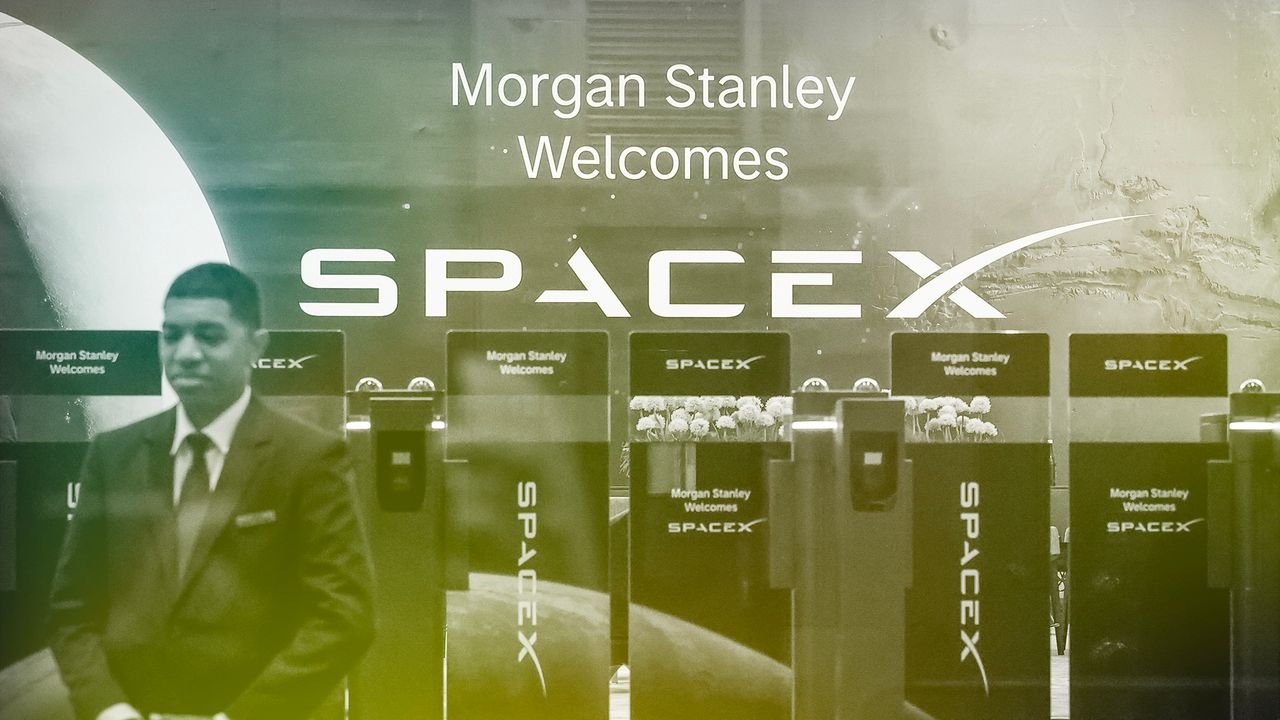
In SpaceX’s telling, the huge valuation gap will be made up by its new A.I. division. In February, it acquired another of Musk’s companies, xAI, the owner of X, the social-media platform formerly known as Twitter, and the developer of Grok, the A.I. chatbot that Musk has touted as a non-“woke” alternative to OpenAI’s ChatGPT, Anthropic’s Claude, and Google’s Gemini. Despite Musk’s best efforts, however, Grok has yet to achieve the success of its rivals. Now operating as part of SpaceX, the xAI business brought in barely a fifth of the over-all company’s revenue during the first quarter of this year, and it had an operating loss of close to $2.5 billion. These forbidding financials didn’t put off Musk. Anthropic and OpenAI are both laying the groundwork for their own I.P.O.s; evidently, Musk saw a chance to go first. SpaceX is pitching itself to investors as an A.I. company, and it estimates the potential A.I. market at $26.5 trillion—the equivalent of more than eighty per cent of U.S. G.D.P.
In a world where A.I. mania was less advanced, you might have expected the I.P.O.’s underwriters—the banks hired to sell shares to investors—to have queried these numbers. We don’t live in that world. Theoretically, these banks, which are paid a percentage of every dollar raised, have a reputational stake in not overselling. But last week, Goldman Sachs, the lead underwriter, reportedly predicted that SpaceX’s A.I. revenues would rise more than a hundredfold over the next five years. Even Musk hasn’t gone that far.
Not all of SpaceX’s A.I. business is dependent on Grok. At a time when many A.I. companies are facing a shortage of computing capacity, it has built two massive data centers in Memphis, Tennessee. During recent weeks, the company has reached agreements with Anthropic and Google to rent out some of this capacity for payments that, combined, reportedly come to more than two billion dollars a month. But the development that has generated the most excitement among Musk’s large investor fan club is the idea of SpaceX operating data centers in space. “As part of this agreement, Anthropic also expressed interest in partnering to develop multiple gigawatts of orbital AI compute capacity,” SpaceX said in a statement announcing the deal with Anthropic.
The term “orbital-compute capacity” refers to the idea of stationing data centers in orbit and using solar energy to power them. “SpaceX is the only organization with the launch cadence, mass-to-orbit economics, and constellation operations experience to make orbital compute a near-term engineering program rather than a research concept,” the statement went on. Perhaps. In the prospectus, where I.P.O. candidates are legally obliged to acknowledge the risk factors attending their plans and ambitions, SpaceX admitted that setting up a fleet of data centers in space is “an incredibly difficult challenge,” which would require thousands of rocket launches each year to transport payloads weighing approximately a million metric tons in cumulative terms. Even if the orbital network could be successfully deployed, how would its components be maintained in such a hostile and remote environment? “No one else has previously operated or attempted to operate orbital AI compute, and the conditions of space on such AI infrastructure have not been tested,” the prospectus noted.
At this stage, the project looks more like a science experiment than a fully worked-out business plan. In Morningstar’s assessment of SpaceX, it said that utilizing solar power in space could theoretically give the firm a cost advantage over terrestrial operators of data centers, but added, “We are uncertain about the scientific and economic feasibility of such a plan.” Given these doubts, it placed a provisional value of $180 billion on SpaceX’s A.I. division, bringing its overall estimate of the company’s value to $780 billion, which is nearly a trillion dollars short of the I.P.O. target.
That’s a huge gap, and, purely in financial terms, the new stock looks like a risky proposition. The I.P.O. values SpaceX at more than ninety times its 2025 revenues. By comparison, when Google went public in 2004, it was valued at about ten times its trailing revenues; when Palantir, the data-analytics company, went public sixteen years later, the revenue multiple was about twenty. Musk is even outdoing himself. In June, 2010, when Tesla first issued shares, the company was valued at roughly fifteen times its prior-year revenues.
Source link
More: The Global Track