
Newsletter Subscribe
Enter your email address below and subscribe to our newsletter
Enter your email address below and subscribe to our newsletter



The dermatology CRO market is growing due to rising skin conditions, increased R&D investments, and digital tool use. Opportunities lie in decentralized trials, AI, personalized medicine, and expanding global presence, particularly in Asia-Pacific and Latin America, supported by technological advances.
Dermatology CRO Market
Dublin, Oct. 02, 2025 (GLOBE NEWSWIRE) — The “Dermatology CRO Market Size, Share & Trends Analysis Report by Type (Drug Discovery, Preclinical, Clinical), by Service (Clinical Monitoring, Project Management/Clinical Supply Management, Data Management), by Region, and Segment Forecasts, 2025-2033” report has been added to ResearchAndMarkets.com’s offering.
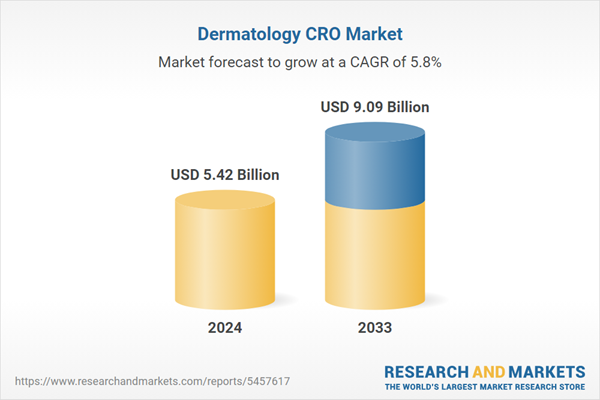
The global dermatology CRO market size was estimated at USD 5.42 billion in 2024 and is projected to reach USD 9.09 billion by 2033, growing at a CAGR of 5.80% from 2025 to 2033. The dermatology contract research organization (CRO) market is experiencing robust growth, primarily driven by the rising prevalence of chronic skin conditions such as psoriasis, eczema, acne, and skin cancers across the globe.
Besides, growing interest of dermatological companies and increasing awareness of dermatological health, coupled with the expansion of the biopharmaceutical pipeline for innovative topical and systemic therapies is further driving the demand for specialized clinical research services. In addition, factors such as growing investments in dermatology R&D, the rising adoption of personalized medicine, and enhanced patient participation facilitated by digital tools are expected to support the market growth.
Moreover, the emerging trends such as decentralized clinical trials, tele dermatology, and AI-powered skin imaging are reshaping the dermatology clinical trial landscape, improving patient access and data accuracy. The increased use of wearable skin sensors and advanced imaging technologies is further enhancing real-time monitoring and endpoint assessment. Overall, the market scenario is favorable due to rising government initiatives supporting dermatology research, expanding applications in cosmetic dermatology, and increased clinical trial activity in emerging regions like Asia-Pacific and Latin America.
Furthermore, the CROs are taking strategic initiatives such as expanding their geographic presence, forming partnerships with technology providers, and investing in integrated digital platforms to offer comprehensive dermatology trial solutions. In addition, technology advancements, including AI and machine learning for lesion analysis, decentralized trial platforms, and the integration of real-world data, enable CROs to enhance trial efficiency, patient engagement, and data quality, strengthening their competitive position in this dynamic market.