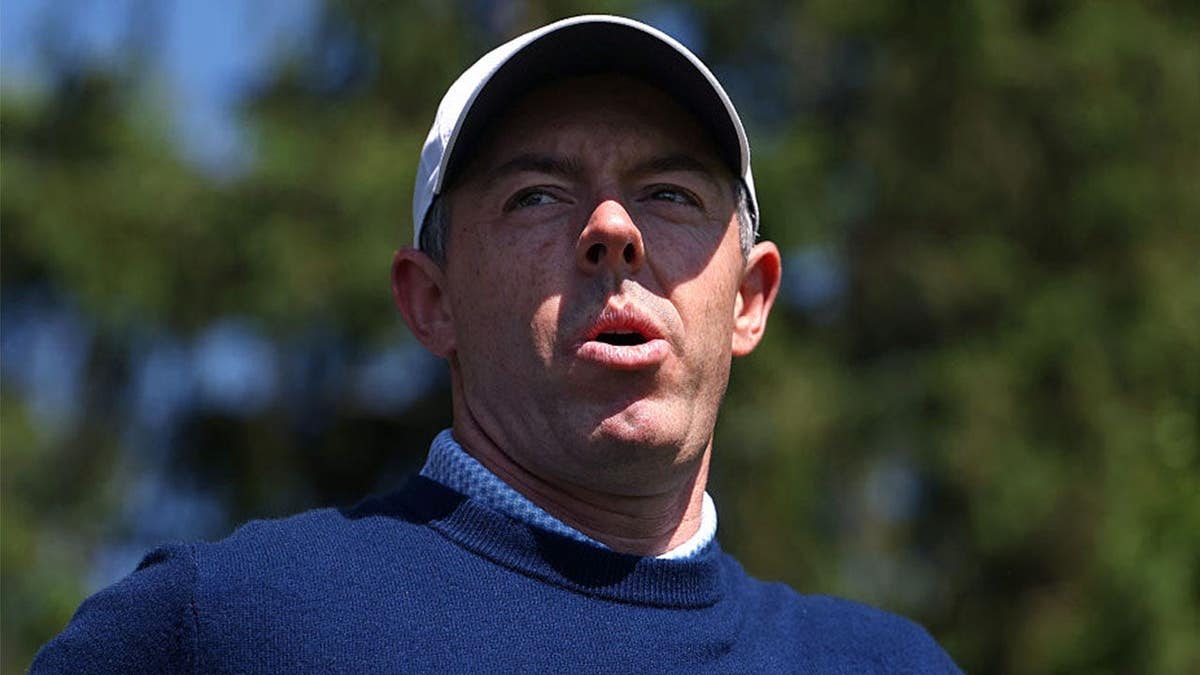
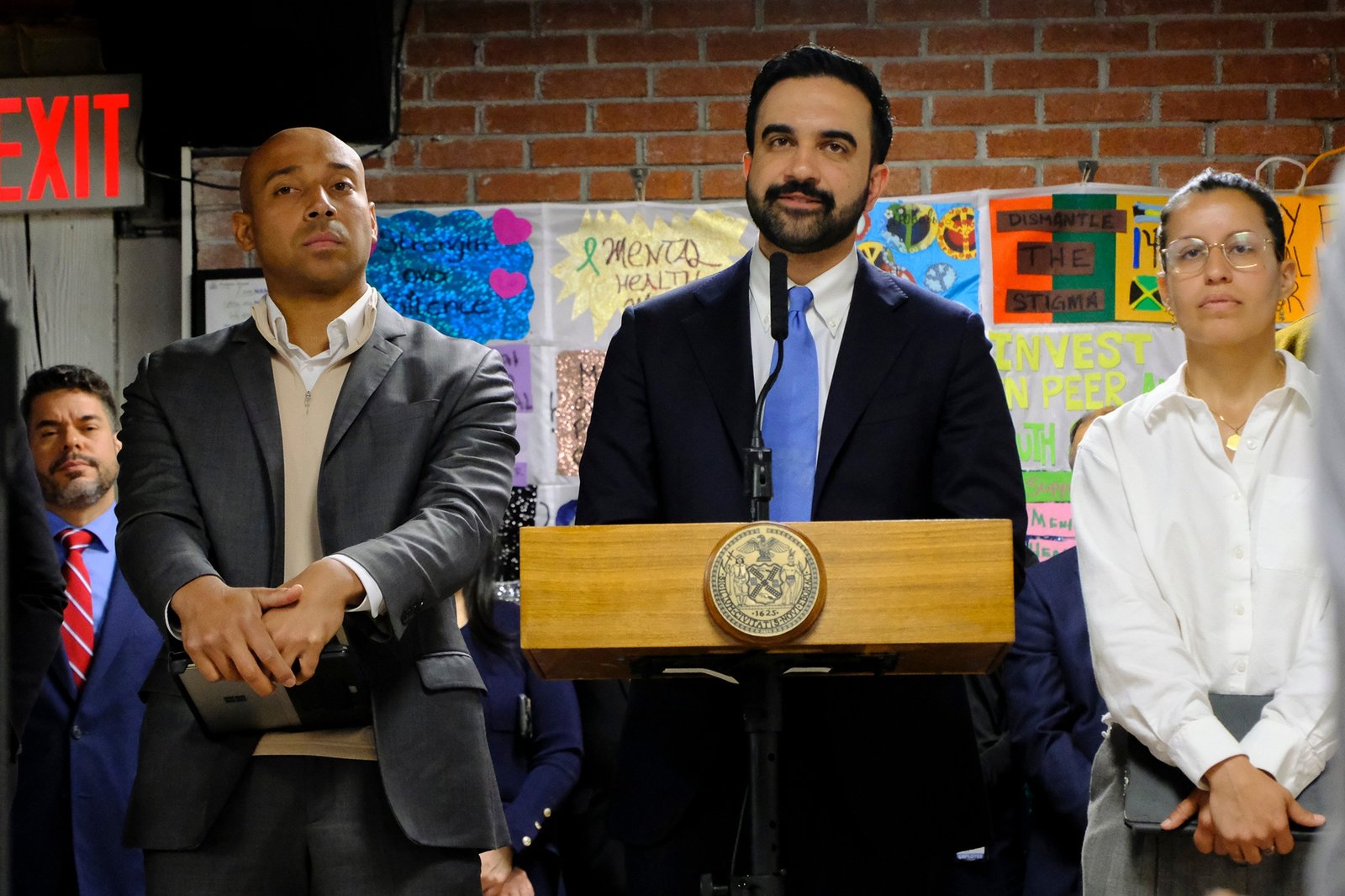
Microsoft is preparing to cut thousands of jobs next week, continuing to rein in operating costs as the company pours unprecedented sums into AI infrastructure.
Business Insider broke the news Tuesday afternoon, saying that the cuts will impact less than 2.5% of the company’s global workforce of about 220,000 people. It includes not just Xbox, where cuts have been signaled for weeks, but also layoffs in sales and consulting.
GeekWire confirmed the details of the report with a person familiar with the company’s plan. Microsoft isn’t commenting on the report.
The timing follows a familiar pattern. Microsoft often restructures its operations around the close of its fiscal year on June 30, and the cuts would come just as the new year begins.
The reductions were bigger last year. Microsoft laid off more than 15,000 people in two rounds of cuts a few weeks apart: about 6,000 in May 2025, then around 9,000 (roughly 4% of the company at the time) in early July 2025.
One difference this year: Microsoft’s first-ever voluntary retirement program. About a third of the approximately 8,750 eligible U.S. employees took the buyout, reportedly allowing the company to cut a smaller share of its workforce through layoffs than a year ago.
The company is on pace to spend more than $100 billion building AI and cloud infrastructure in the fiscal year that just ended — up from $88.7 billion the year before — with about two-thirds going to the chips that power AI.
Microsoft shares closed Tuesday at $373.02, down 19% over the past month and near a 52-week low, as Wall Street questions whether its heavy AI spending will pay off.
The layoffs come amid a broader wave of restructuring across the tech industry, which has shed more jobs than any other sector this year. U.S. tech companies have announced 123,653 cuts so far in 2026, up 66% from the same stretch of 2025, according to a report from outplacement firm Challenger, Gray & Christmas.
Across all sectors, not just tech, AI was the most commonly cited reason for job cuts in May — the third straight month it has led the list. The 38,579 cuts attributed to AI were the most in any month since Challenger began tracking the cause in 2023. For the year, AI has been linked to 87,714 cuts, already surpassing the 54,836 attributed to it in all of 2025.
HBO has discounted its subscription price 40 percent ahead of the return of House of the Dragon for season three.
The sale cuts the cost of all three HBO streaming tiers — basic with ads, standard or premium.
The only catch: You can’t just pay for a month-by-month plan, you have to buy the annual plan, playing for 12 months in advance.
But given that HBO has Harry Potter coming in December, it’s not like the streamer doesn’t have some good stuff on tap for genre fans.
Also, Dragon season three — which premieres Sunday — is currently averaging the show’s highest score yet on Rotten Tomatoes, with a 97 percent critics score.
The sale is good now through July 15, and you can check out the details here.
According to Warner Bros. Discovery’s most recent quarterly report, HBO Max has topped 140 million subscribers, and it estimates the streamer will hit 150 million by the end of the year.
“We are seeing healthy acceleration and subscriber-related revenue growth, which we expect will pick up real pace in Q2 and through the rest of the year,” David Zaslav told shareholders in May.
The unscripted message referenced people “suffering in Palestine” and “families being torn apart by ICE.” A school official cut off the student.
College grads expect an $80k salary. They may be disappointed
Newly minted college graduates may have to manage their expectations about how much they will earn at their first job.
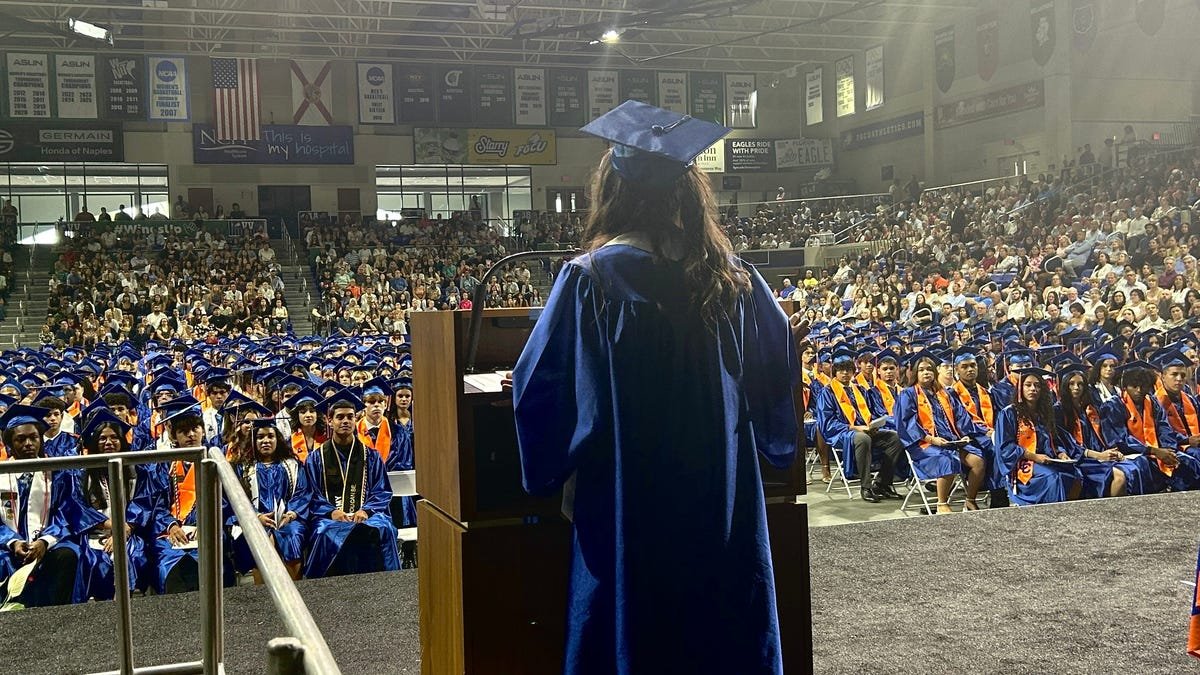
A high school valedictorian was cut off while delivering a speech at graduation, and video of the incident has been widely shared online as a familiar scene played out: a school’s attempt to silence a speaker’s unplanned message actually amplified it across the nation.
Video of Clayton High School valedictorian Leen Hijaz in Johnston County, North Carolina, just outside Raleigh, shows her wrapping up her speech with a message about her peers and onlookers using their voices.
“Before I leave the stage, I have one last thing to say. Every single person here has a voice, and we are privileged to have the freedom to use it when so many people around the world are struggling and suffering to be heard,” Hijaz said.
“Whether it’s the millions suffering in Palestine, Sudan, Congo, Afghanistan and so many other countries around the world, or the families being torn apart by (Immigration and Customs Enforcement), these are not distant issues. They are happening right now as I speak,” she said as cheers and applause could be heard from the audience. “My point is, we’re not given a voice to stay silent.”
At that point, a school official approached the podium and appeared to say something to Hijaz while guiding her away from the microphone. The official was Clayton High School Principal Melissa Moore Hubbard, reported local station WNCN.
Hijaz said in a post on social media and in comments to local news outlets she was “threatened” with the withholding of her diploma. Johnston County Public Schools didn’t immediately respond to a request for comment.
The school district told WNCN in a statement that Hijaz’s speech, which was a welcome message at the ceremony, departed from her approved remarks prepared in advance.
“School administrators intervened in order to maintain the integrity and focus of the program in real time. This action was not about limiting a student’s voice, but about ensuring that a school-sponsored event remained consistent with its intended purpose,” the statement said.
The Council on American-Islamic Relations applauded Hijaz’s speech and said schools should “encourage thoughtful civic engagement, not suppress it.”
“We commend Leen Hijaz for demonstrating the moral courage to speak out on behalf of people whose voices are too often ignored,” CAIR National Executive Director Nihad Awad said in a statement “We urge school officials to respect students’ constitutional rights and to ensure that no punitive action is taken against her for engaging in peaceful expression.”
High schools, colleges have history of cutting off speakers
The incident at the Clayton High School graduation is just the latest example of a school attempting to cut a speaker’s message off or preemptively prevent it from being shared. There have been several cases of high schools or colleges around the United States that ended up plastered across social media and in the national spotlight.
One college sought to prevent that from happening altogether in 2026. New York University told its student speakers at school-specific ceremonies that their speeches would be pre-recorded and played during the graduations instead of being delivered live, reported independent student newspaper Washington Square News.
The move came after last year’s speaker at NYU’s Gallatin School of Individualized Study, Logan Rozos, commented on “the atrocities currently happening in Palestine” and condemned Israel’s military actions during his speech, according to Georgetown University’s Free Speech Project tracker. Rozos’ remarks went viral and the school said it was withholding his diploma while it pursued disciplinary action.
At a Louisville, Kentucky, middle school graduation in 2026, eighth grader Daniel Mattingly gave a passionate speech criticizing the school for telling him his originally planned speech, which discussed his parents’ death and experiencing bullying, was “too negative,” reported the Louisville Courier Journal, part of the USA TODAY Network. Video of his speech was viewed over 1 million times in five days on Facebook, the Courier Journal reported. The school district did not respond to a request for comment from the outlet.
“My name is Daniel Mattingly, and apparently this school doesn’t know better than to give an angry gay kid a microphone,” he said at the beginning of the speech.
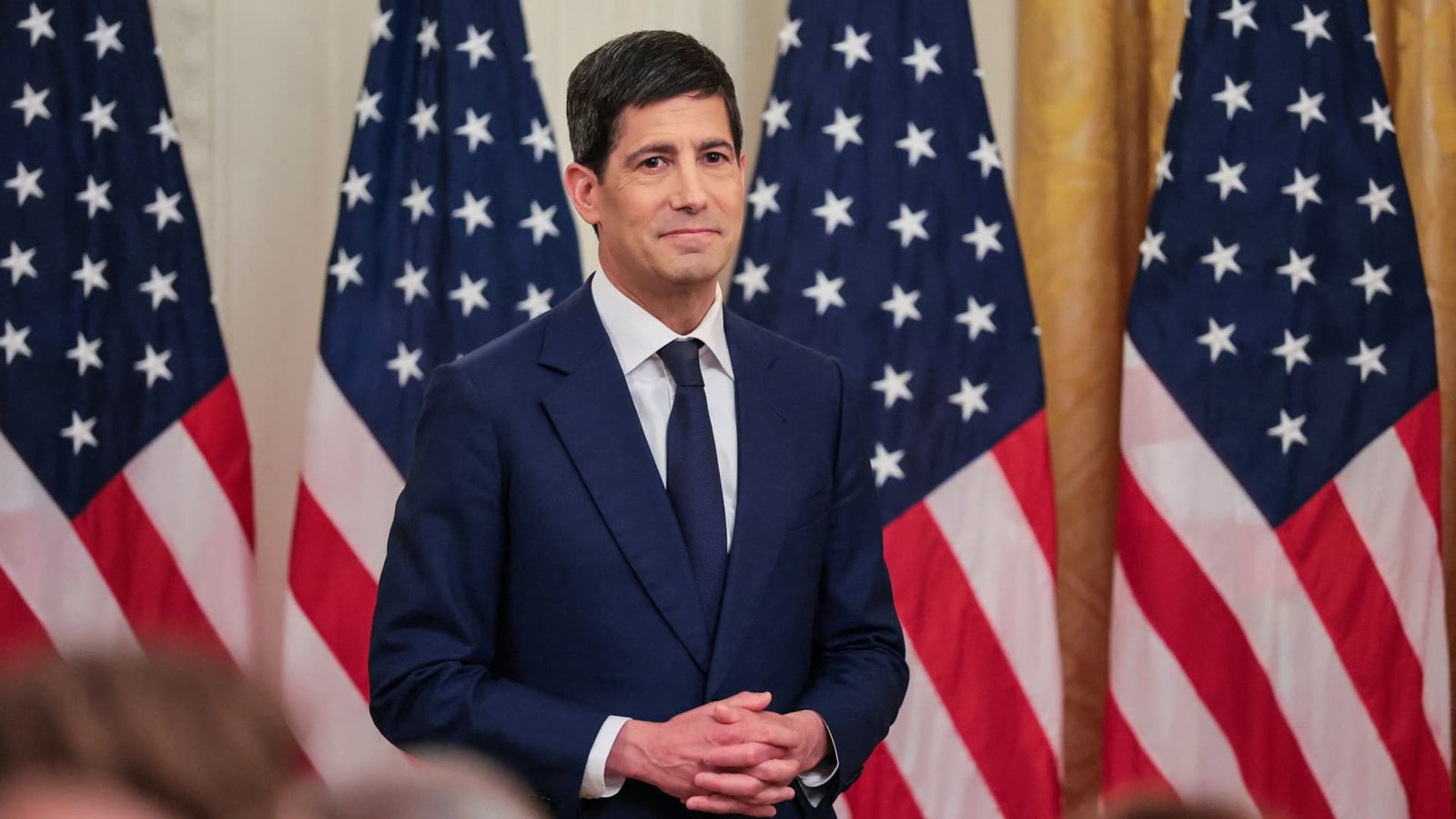
Trump, whose actions toward the Fed have spurred bipartisan alarms about executive influence on the historically independent central bank, said he wanted Warsh to “just do your own thing and do a great job.”
“I want Kevin to be totally independent,” Trump said at the start of the event Friday morning. “Don’t look at me, don’t look at anybody.”
But the swearing-in ceremony itself highlighted the the president’s unprecedented involvement with the Fed during his second term: Warsh is the first Fed chair to be sworn in at the White House since Alan Greenspan in 1987.
The event in the East Room was attended by a range of high-profile figures, including Supreme Court Justices Clarence Thomas and Brett Kavanaugh, House Speaker Mike Johnson and a range of other politicians and Cabinet officials.
Warsh, 56, will become the 11th Fed chair of the modern banking era and succeeds Jerome Powell, who served eight years.
Powell, a major target of Trump’s ire over his refusal to lower rates as quickly or steeply as the president desired, will continue to serve at the Fed as a governor. He is the first Fed chair to make such a move in nearly 80 years.
Friday’s swearing-in marks Warsh’s second stint at the Fed. He previously served as governor from 2006 to 2011, a time in which the central bank joined forces with Treasury officials to rescue the economy from the global financial crisis.
Though Warsh helped the Fed effort, he later grew critical of the central bank for allowing crisis-era policies to remain in place and to overreach its mandate for stable prices and low unemployment. For instance, he has cited prior efforts to address climate change and social inequality as areas of mission creep, and has vowed to trim down the central bank’s imprint on markets.
Warsh gained the seat following a wide-ranging competition that began in the summer of 2025 and included as many as 11 candidates, ranging from current and former Fed officials to prominent economists and Wall Street strategists.
Powell’s term was marked by repeated and often personal criticism from Trump. The president demanded more aggressive action from the Fed when it came to cutting rates and accused Powell of having “Trump derangement syndrome,” even though the Fed lowered its benchmark borrowing rate by three-quarters of a percentage point and raised by 4.25 points during one stretch of the Joe Biden presidency.
Despite Trump’s demands for lower rates, markets are betting the Fed will stay on hold through most, if not all, of 2026, and then possibly hiking rates in early 2027.
The Powell run also was characterized by inflation running above the Fed’s 2% goal for five years running. Warsh has vowed he can both control inflation while lowering benchmark rates.
Since leaving the Fed, Warsh has spent time at Stanley Druckenmiller’s Duquesne Family Office, and as a lecturer at Stanford University and the Hoover Institution. Warsh was thought to be a leading candidate for Fed chair when Trump made clear he was not going to renominate Janet Yellen, but the president ultimately chose Powell, reportedly at the urging of former Treasury Secretary Steve Mnuchin.
This is developing news. Please check back for updates.
A previously undetected outbreak of Ebola is coursing through parts of central Africa, and the US appears to be doing little to help stop it, after massive cuts to global and domestic public health efforts.
There is no cure and no vaccine for the rare Bundibugyo variant of Ebola, which has caused two outbreaks in recent decades. Health leaders and scientists are now racing to understand where the virus is spreading and attempting to stop it – but the US is notably absent in these efforts.
In the past year, the US Agency for International Development (USAID) has been dismantled, thousands of staff at US health agencies were laid off, communications stalled and key scientific research canceled.
There are 482 suspected cases and about 116 deaths reported since April in the Democratic Republic of the Congo (DRC), with two cases and one death in Uganda and potential spread to neighboring South Sudan. The outbreak “might have been going on for a few months”, said Kristian Andersen, a professor of immunology and microbiology at Scripps Research.
The outbreak was immediately declared a public health emergency of international concern (PHEIC) by Tedros Adhanom Ghebreyesus, the director general of the World Health Organization (WHO), before even convening the committee that usually makes that determination. Officials say it may last for months.
“The DRC is one of the most vulnerable health systems in the world, and was the second-biggest recipient of USAID funding,” said Matthew Kavanagh, director of the Center for Global Health Policy and Politics at Georgetown University. The US withdrawal of funding with “zero notice” has been “disruptive to the country’s basic activities”, he said.
US foreign assistance to the DRC dropped from $1.4bn in 2024 to $431m in 2025 and only $21m so far this year. Assistance to Uganda dropped from $674m to $377m in 2025 and a negative $1.2m so far in 2026.
“It was pennies compared to what you get in return,” Andersen said of global health investments. It is far cheaper and easier to prevent and contain outbreaks than it is to respond to them, he said. With the US cutting off the first option, the second scenario will become increasingly common.
The US also announced it would leave the WHO and end $130m in funding, which resulted in 2,371 lost jobs at the organization, Kavanagh said, calling the cuts a “self-inflicted wound that the administration has really brought on us”. This outbreak and response was “deeply foreseeable when you gut public health surveillance and you gut public health capacity”, Kavanagh added.
“It’s not just that we’re leaving the table, we are completely cutting ourselves out of the conversation,” Andersen said. “We are upending the table.”
The CDC has “always been the premier agency” when it comes to country-level leadership and played a key role as a partner “you could turn to”, Andersen said.
But under the second Trump administration, Ebola response teams were suspended, and health centers and medical supplies – particularly crucial with a virus spread through touch, with supportive care the only treatment – were dramatically cut back.
A world-class Ebola lab in Frederick, Maryland, with the National Institutes of Health (NIH) was designed for exactly this scenario. The lab would normally be swinging into action, following up on research indicating monoclonal antibodies and a vaccine might be effective against this strain, possibly testing those treatments and vaccines, performing in-depth sequencing work on the samples shared during the outbreak.
But that lab was shuttered last year, with staff laid off abruptly and their work – key for preventing and responding to outbreaks – ended with no notice. The website for the lab is still closed, indicating it has not been revived during this outbreak.
Satish Pillai, an incident manager for the CDC’s Ebola response, said he “can’t speak” to the NIH lab when the Guardian asked about it in a press conference on Monday. Instead, Pillai said that the US is able to test for Ebola through its laboratory network, a comment unrelated to the Guardian’s questions.
Because of layoffs, terminations and high-profile departures, key confirmed positions at US health agencies are vacant. Currently, the CDC has no director; there’s no US surgeon general; there’s no commissioner at the FDA.
Officials say there are now between 25 and 30 staff in the DRC country office. The CDC is sending one more person, Pillai said, and other experts are available remotely.
The DRC office suffered massive and sudden cuts when USAID was unexpectedly dissolved last year. Former employees sued the US government after they were abandoned and lost everything, with no jobs or options to evacuate from DRC, they said.
“When those USAID stop-work orders came out, there was a whole series of people who were actively looking for spillover in the DRC and in Uganda,” Kavanagh said. “There were hundreds of health workers doing surveillance activities, and then, of course, you had the bigger picture, which is the thousands of health workers who were doing HIV, TB, malaria, maternal and child health – all of these things funded through US funding from USAID and also some from CDC to be doing global health activities – who were the frontlines of detection.”
Patients don’t usually come to the clinic suspecting they have Ebola, he pointed out; they usually come in with a fever or other symptoms, and “those frontline community health workers … are always the ones that detect outbreaks early”.
That work ended abruptly and is now being replaced with country-by-country agreements, some of which appear to be predicated on resource-sharing agreements. The US government is “essentially holding hostage” the countries that have built health systems around US guidance, “and then from one day to the next you just cut it”, Andersen said.
In the past, the US had ensured that “many, many potential global outbreaks didn’t become global”, but now it’s stepping back, Kavanagh said, adding: “This outbreak should have been detected weeks ago, and exactly how and why will be figured out as we go, but it certainly says that the United States has stopped playing the role.”
Instead, the US is announcing travel bans for noncitizens who have recently traveled to the region, which is “public health theater” that essentially punishes the countries and doesn’t actually stop cases, Kavanagh said. The Africa CDC called for countries to refrain from “fear-driven” travel bans. “The fastest path to protecting all countries in the world is to aggressively support outbreak control at the source,” Dr Jean Kaseya, director general of the Africa CDC, said in a statement.
“At this point, this is an out-of-control epidemic that has now crossed borders, and this is really bad for the region, and will result in lots more deaths, and could be a real crisis,” Kavanagh said. Health leaders in the DRC are among the smartest, most experienced Ebola responders – but now they’re confronting an outbreak “with hundreds of millions of dollars cut from the global capacity to help them respond”.
Andersen noted “these countries are way more competent than we are in responding to something like Ebola” and that African scientists have done “remarkable” work already sequencing the virus, which demonstrates a new spillover event and could offer clues to where the outbreak originated.
“But that doesn’t mean that we should just completely cut ourselves out of the picture,” he said.
Outbreaks like these have economic, geopolitical and global stability implications, Kavanagh said. But they also matter because allowing anyone to die “needlessly of a disease that can be stopped is immoral, and we are living in a world where we don’t have to allow infectious diseases to spread unchecked”, he said. “Ebola can be stopped, and if we don’t mobilize the dollars and the public health efforts, then we are simply choosing not to stop the outbreak. Because it can be stopped. The question is, will it be? And when?”
Source link
See more: https://theglobaltrack.com/
https://corinthiames.com.br/
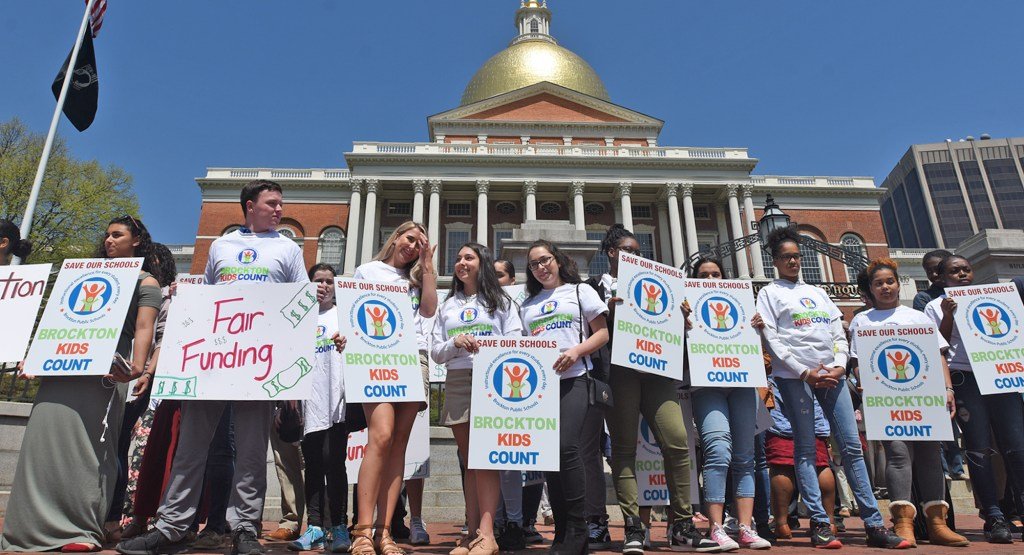
Budget constraints are set to hit Massachusetts schools and educators hard in the coming year, with teachers warning well over 1,000 positions are currently sitting on the chopping block at schools across the state.
“1,400 educators will not be in the classroom or in schools supporting our kids,” said MTA President Max Page. “That’s what we’re facing. And that’s probably an incomplete number. So it’s really terrible at this moment, when kids need more support, to hear that communities are having to make these terrible choices.”
Across about 70 school districts, including Boston Public Schools, budgets have proposed about 1,410 cuts to educator and staff jobs, according to data collected by the MTA from districts’ locals and BPS.
Boston alone has proposed slashing 568 positions in a budget proposal passed by the local school committee in March, resulting in slashes to currently vacant positions but also including hundreds of layoffs. The BPS budget is currently before the City Council for approval.
Other communities set to be hit hard include Brockton at 83 proposed cuts, Framingham at 81, Methuen at 70, Mendon-Upton at 70, and Marshfield at about 63.
The MTA broke the proposed slashes into teachers, education support professionals and administrators — though many were unspecified — showing 919 set to hit teachers and 182 set to hit the support professionals.
Page cited a combination of federal funding cuts, skyrocketing health care costs, diminishing enrollment and more behind the budget constraints, while local teachers cited local investment issues as well.
The Massachusetts Executive Office of Education cited the state’s increased investment in education in recent years, which includes a $1.6 billion increase in Chapter 70 investment since the Healey administration came into office.
“The Governor’s FY27 budget proposal includes historic support for K-12 education, with record levels of Chapter 70 funding and significant investments to help districts meet rising costs and better serve students,” an EOE spokesperson said. “We remain committed to ensuring that every student in Massachusetts has access to a high-quality public education and that our schools have the resources they need to succeed.”
The state Board of Elementary and Secondary Education cited enrollment trends constraining districts’ financial resources at the April meeting examining the legislature’s proposed $7.66 billion, representing “all education aid accounts funded at their historically highest levels.” Across the state, officials said, 236 districts are seeing decreasing enrollment, while only 81 are increasing.
Christine Mulroney, president of the Framingham Teachers Association, said the district is down around 800 students in the year.
The cuts the community is facing are “absolutely unprecedented,” she said.
“The other issue is Framingham has over relied on that Chapter 70 money to fund the schools and hasn’t really kept up with its local contribution to the schools,” said Mulroney. “So because that gap between the funding and the local contribution was getting greater when student enrollment dropped, that caused a huge gap. A $15 million gap. Which, it’s hard to find $15 million to cut.”
Her biggest concern is for “our vulnerable students,” Mulroney said.
“We have many (autism spectrum disorder programs) that require a lot of staff, and our ESL students,” said Mulroney. “Those two populations in particular, we always want to see those areas improve. They will improve if we staff for success in those areas instead of just staffing for compliance; we can’t just staff the bare minimum. And so I have significant concerns about the potential loss.”
Kara Blatt, co-president of the Methuen Education Association, said the city is in an “education crisis” hitting safety, on-time learning and other issues.
The schools are looking at “almost an automatic 60 cuts, 37 classroom teaching positions, which would be one in every grade level, first through eighth, for four schools,” Blatt said, and hits to guidance counselors, special education and more. The proposal is coming at a time the district has already faced hefty layoffs, she added.
“We’re just fractured and broken and can’t do what other districts have been doing,” said Blatt. “You’ve got other districts that might be laying off, but we have already laid off literacy tutors, math tutors. All these other things that other towns right now might be trimming. We’ve trimmed over the last 10 to five years, so we’re down to the bone and see these devastating cuts.”
The uncertainty is “impacting the morale a lot,” and teachers are “trying our best to support each other and get us through the year and keep as many of our colleagues as we can,” Blatt said.
In Mansfield, Page said, during a town meeting they were discussing the need to focus on literacy.
“But they were laying off a number of reading specialists and librarians, along with cutting back on their arts programs, which we know are essential to young person’s development,” said Page. “So it just, it just makes no sense. The heart of it is that we don’t have the funds needed to maintain the best public education system in the country, even though we have the resources in this state.”
Page said the MTA will be asking the state education board to be “much more vocal and active in the budget debate” ongoing in the Legislature at the May meeting on Tuesday. The union is also advocating for the legislature to create a commission to look at the school funding formula, Page said, noting that the Student Opportunity Act has “helped improve things” over the last seven years but the state is due to reevaluate.
“We haven’t had a funding commission in the state since 2015 or 2014 I think,” said Page. “The point is, it’s been more than a decade where we have not looked at how is money raised, how many money distributed, etc., in our public schools.”
Page noted that two proposed ballot initiatives to cut the income tax and cap tax collection would remove an estimated $7 billion out of annual state budget, arguing “deep cuts would happen everywhere.”
“Massachusetts is wealthier than it has ever been, and yet somehow we’re not able to afford keep classroom teachers and paraprofessionals and reading specialists and librarians and mental health professionals in our schools,” said Page. “There’s something that’s deeply wrong with that, and it’s got to change.”
DAKAR, Senegal (AP) — U.S. President Donald Trump’s decision last year to abruptly dissolve the U.S. Agency for International Development — once a leading global aid donor — has been followed by a significant increase in violence in several African countries that the agency had supported, according to a study published on Thursday.
While the authors did not blame the USAID cuts for the increase in violence, they said the findings demonstrate that “large-scale, sudden aid cuts can destabilize fragile settings.” They, however, added that this is not evidence that more aid reduces conflict, instead it only shows “the effect of a sudden and unexpected disruption.”
For many years, USAID had provided crucial support to African countries wrecked by conflict and violence. By eliminating more than 90% of foreign aid contracts, the Trump administration effectively cut some $60 billion in funding.
The study by researchers from several universities in Europe and the United States said the abrupt withdrawal of USAID resources also interrupted contracts, staffing and aid procurement.
“The abrupt withdrawal of USAID led to a significant and sustained increase in conflict across Africa’s most USAID-dependent regions,” said the study, published in the Science journal.
The researchers said they examined whether the abrupt shutdown of USAID was followed by an increase in violence in regions of Africa that had historically received the most support and found that there was a correlation.
Africa is facing a threat from jihadis more than any other region in the world, conflict experts say. The Armed Conflict Location & Event Data, or ACLED, said Wednesday in a new report that jihadis in the region have been more involved in violence across the board and have been increasingly targeting civilians in the last four years.
USAID had long been the key funding partner for many African countries, helping to provide funding that helped governments and aid groups respond to multiple crises across different sectors.
And in northern Ivory Coast, a front line of the global fight against extremism, USAID had made significant financial commitments to counter the spread of al-Qaida and the Islamic State group.
The findings from the study underscore the lasting impact of funding cuts, said Nathaniel Raymond, executive director of the Humanitarian Research Lab at the Yale School of Public Health, who was not among the authors of the study.
“The lasting problem with the shuttering of USAID is likely going to be that for much of its conflict prevention work, even if you put back all the money … the experience is gone,” Raymond said.
Also, some USAID programs may have helped prevent spillover from conflict zones, said Ladd Serwat, senior Africa analyst at ACLED.
“We now see increasing insurgency and spillover, so some of those programs may have supported these communities from insurgent threats, and now they are no longer active,” said Serwat.
Rory McIlroy’s PGA Championship week has gotten off to a painful start.
The six-time major champion managed to make it through just three holes during his Tuesday practice round at Aronimink Golf Club due to a painful blister that has recently developed on his right foot. McIlroy was seen limping a bit during Sunday’s final round of the Truist Championship.
“Yeah, I’ve got a blister on my pinky toe on my right foot, but it’s underneath my nail,” McIlroy said on Sunday before revealing the blister began developing on Friday. “I can’t really get to it, so it’s a little sore. But I’ll be all right.”
Rory McIlroy of Northern Ireland stands on the fourth tee with this shoe off during a practice round prior to the PGA Championship at Aronimink Golf Club on May 12, 2026 in Newtown, Pennsylvania. (Photo by Emilee Chinn/Getty Images)(Emilee Chinn/Getty Images)
While he didn’t believe he could get to the blister on Sunday, things changed at some point before he arrived at Aronimink on Tuesday, as he managed to give himself an at-home surgery.
“I ended up ripping the toenail off last night, just because it was bothering me so much,” McIlroy told the Irish Independent on Tuesday. “I just got in the bath and got the toenail to soften up and then burst the blister that was underneath. It feels better today.”
Rory McIlroy of Northern Ireland walks to a cart on the fourth hole during a practice round prior to the PGA Championship at Aronimink Golf Club on May 12, 2026 in Newtown, Pennsylvania. (Photo by Emilee Chinn/Getty Images)(Emilee Chinn/Getty Images)
McIlroy also explained that he actually had to go up a shoe size to accommodate the blister on his right foot. He was seen during his Tuesday practice round messing with his shoe and sock on his right foot before ultimately calling it quits.
Rory McIlroy of Northern Ireland attends to a blister on his right foot on the third hole during his practice round prior to the PGA Championship at Aronimink Golf Club on May 12, 2026 in Newtown, Pennsylvania. (Photo by David Cannon/Getty Images)(David Cannon/Getty Images)
While a blister on the pinky toe may not seem like too big a deal, it can certainly be a painful and annoying distraction for a player trying to win a major championship tasked with walking over a half-dozen miles throughout the week.
McIlroy is the No. 2 favorite to hoist the Wanamaker Trophy this week behind World No. 1 Scottie Scheffler, who is the defending PGA champion.
New York City Mayor Zohran Mamdani released a city budget on Tuesday that completely eliminates what he has described as a $12 billion deficit left over from the Eric Adams administration, the largest gap since the Great Recession. The budget does not include the property tax increases Mamdani threatened earlier in the year or any new taxes on ordinary New Yorkers, and the mayor’s office says there are no cuts to city services for those in need.
Solving the budget riddle, which is still subject to negotiations with the city council and the resolution of a state budget that funnels billions to the city, clears a major hurdle that threatened Mamdani’s expansive agenda before it even got started. The mayor had planned for several new investments, including universal child care, free and fast city buses, a pilot of five public grocery stores, and much more. Some of these priorities are embedded in the new budget.
The deficit closure is achieved in part through addressing what Mamdani has called gimmicks and making more forthright assessments of what the city can bear. But it also adopts the kind of government efficiency critics often argue that democratic socialists refuse to provide.
“Many said the only way out of this was slashing services and passing an austerity budget. We rejected that,” Mamdani said in a video accompanying the announcement. “Our city is now on firm financial ground.”
Much of the budget hole was filled by changing the relationship between New York state and its largest city. Earlier on Tuesday, Mamdani and Gov. Kathy Hochul announced a total of $8 billion in state assistance for New York City over the next two fiscal years, achieved through reducing costs on the city while formalizing the expansion of universal free child care (worth $1.2 billion annually) and making investments in education and infrastructure.
“I have been committed to ensuring New York City succeeds, because a strong and stable City means an even stronger New York State,” Hochul said in a statement.
The state, which must approve nearly all new city taxes, has allowed one major tax on second homes valued over $5 million, known as the pied-à-terre tax. This has angered ultra-wealthy New Yorkers like Citadel founder Ken Griffin. Mamdani has added another tax on wealthy individuals, by limiting something called the unincorporated business tax (UBT), which is largely a benefit for sole proprietorships and LLCs.
But the pied-à-terre tax raises an estimated $500 million in revenues per year, just a fraction of the $12 billion needed, and the limitations to the UBT would yield $68 million. Mamdani and state leaders dealt with the bulk of the budget deficit through other means.
One provision that will have a legitimate effect on city residents is a negotiated delay to a class size reduction law that would have kicked in for the upcoming school year, requiring 80 percent of city classrooms to have between 20 and 25 students, depending on the grade level. Mamdani has been negotiating for the city for an additional two years to meet the mandate, while state legislators have talked about a percentage compliance reduction (for example, 70 percent of classrooms might comply next year).
Mamdani’s office said it was working through the final details with state officials and labor unions. The administration has committed to hiring 1,000 more teachers to begin to implement the class size reduction, but what they call a more realistic timeline will save $500 million in the next fiscal year.
Full compliance with the original timeline would have cost $1.7 billion per year for new teachers alone. Most of the city’s high-poverty schools are under the class size cap; the delay would primarily be for higher-income schools.
The Mamdani administration has also been talking about restructuring the timing of certain pension payments, while making no changes to benefits for retirees or current employees. Some have criticized this step as increasing long-term obligations while freeing up money in the short term. The final deal makes no changes to a mandatory contribution to city pension funds, while smoothing out the Unfunded Accrued Liabilities (UAL) payment, which is based on an actuarial analysis of future needs. The current schedule can fluctuate by hundreds of millions of dollars every year; Mamdani extends those payments by five years and makes them consistent, while banking the difference for the next fiscal year. City pension funds would continue to be funded above the national average, Mamdani’s office says.
CityFHEPS, a rental assistance program for poor New Yorkers that the city council expanded in 2023 but which has yet to be implemented, will also see changes that the Mamdani administration characterizes as addressing chronic underbudgeting and reining in cost growth, both by centralizing support functions, limiting emergency hotel use, and using other tools to help residents find permanent housing. The city has not been realistic about increases in CityFHEPS spending, the mayor pointed out in his preliminary budget. The proposed savings would total about $519 million in the next fiscal year.
Mamdani has faced protests from housing advocates after his administration filed an appeal in a lawsuit initially pursued against Adams to implement the expansion. The mayor’s office says settlement negotiations for the lawsuit are ongoing.
Another significant chunk of the deficit is reduced by making city government more efficient. The city found $1.77 billion in operational savings by reducing overtime, negotiating better rates on outside contracts, modernizing software and technology, consolidating leases and giving up excess property, phasing out programs nobody was using, claiming revenue owed to the city, and better estimating actual expenses.
In addition, the budget proposal would reduce so-called Carter cases, whereby families of students with disabilities can get their private-school education expenses reimbursed by the government if the city itself cannot provide a public education for those students. New York City spent $1.3 billion on Carter cases last year, so investing in special education to accept students with disabilities in public schools actually saves money. The administration estimates an increase in Carter spending this year but it will drop in 2027, with $149 million in net annual savings.
The proposed budget also restores $2 billion to the city’s rainy day fund and adds $5.2 billion to the Retiree Health Benefit Trust.
City Council Speaker Julie Menin, who would negotiate the final budget with Mamdani, released the following statement: “We are pleased with Governor Hochul and the state legislature’s commitment to providing the City with billions in additional funds and savings … We have important work ahead to advance key priorities including affordability, public transit access, and investments in the services New Yorkers rely on every day.”
Mamdani’s administration believes that any attempt to address the affordability crisis will only succeed if it is honest about past budgets that papered over significant gaps. Incorporating realistic and predictable estimates can identify what resources are legitimately available for the rest of the agenda.
In the video, Mamdani touts “investments in citywide trash containerization, cheaper groceries, safer streets, [and] relief for taxi drivers,” along with spending on libraries and parks, public-housing repairs, and capital improvements at the City University of New York.
“We’re proud to put forward a budget for the working people of this city,” he adds. “And we’re going to do it again next year.”
The audio version of this article is generated by AI-based technology. Mispronunciations can occur. We are working with our partners to continually review and improve the results.
Air travel continues to be impacted by soaring fuel prices. On Thursday, Air Canada confirmed that because of the current high cost of jet fuel, it is halting service earlier than planned on four seasonal routes to U.S. destinations.
The affected routes are:
•Toronto to Sacramento: Last flight is Aug. 1
•Vancouver to Raleigh: Last flight is July 29
•Toronto to Charleston: Last flight is Sept. 6
•Montreal to Austin: Last flight is Sept. 7
Air Canada plans to resume full service on these routes in the summer of 2027. The airline says affected passengers will be offered alternative travel options or a refund, where applicable.
Airlines around the world have begun cutting flights as the conflict in Iran, and the resulting Strait of Hormuz oil blockade, have caused jet fuel prices to more than double.
Last month, Air Canada announced it would suspend six domestic and cross-border routes it deemed “no longer economically feasible.”
WestJet also announced it was cutting capacity by about one per cent in April, three per cent in May and nearly six per cent in June by consolidating flights on some routes and shortening the travel period for seasonal service to several destinations.
The jet fuel shortage has also affected airfares. Air Canada, WestJet, Porter Airlines and Air Transat have each announced plans to raise fares or add a surcharge to offset rising costs.
WATCH | Air Canada suspends 6 routes:
Air Canada suspends 6 routes amid jet fuel cost crisis
Air Canada has suspended service on six different routes, both domestic and cross-border, as the war in the Middle East drives up fuel costs.
Investors will be looking to Coinbase Global (COIN) CEO Brian Armstrong for fresh remarks on his firm’s forward prospects when it reports first quarter results on Thursday that will show how the major crypto exchange weathered a rough stretch in crypto markets.
Coinbase is expected to post year-over-year declines across nearly all of its business units, along with its lowest adjusted earnings in two years and a net income loss, according to analyst forecasts compiled by Bloomberg.
Earlier this week, Coinbase said it plans to reduce its headcount by 14%, citing “current market conditions” and a need to “optimize the Company’s operations for the AI era,” according to a regulatory filing.
Coinbase’s stock is down more than 12% since the beginning of January. Last week, rival trading platform Robinhood (HOOD), which has less exposure to the crypto market, reported profit and revenue that fell below analyst expectations, due in part to lower fees from crypto trades.
A survivor of numerous past crypto winters, Coinbase has actively sought to expand its revenue beyond its bread-and-butter transaction fees earned from retail traders by expanding consumer products and offering crypto services to institutions. Late last year, the firm said it would introduce trading in stocks, tokenized stocks, futures, and prediction market contracts.
The major exchange is also on the cusp of getting what it wants in a Washington, D.C., lobbying battle with the banking industry that has stalled a landmark crypto bill.
Coinbase is fighting to protect its ability to offer customers interest on their stablecoin holdings, a key growth driver. The revenue Coinbase earns from stablecoin reserves is expected to climb 45% to $327 million compared to the year-ago period, according to analyst estimates.
Investors will be looking to Coinbase Global CEO Brian Armstrong for fresh remarks on his firm’s forward prospects when it reports first quarter results on Thursday. (Reuters/Annabelle Gordon) ·REUTERS / REUTERS
David Hollerith covers the financial sector, ranging from the country’s biggest banks to regional lenders, private equity firms, and the cryptocurrency space.
Pollstar has learned that Ticketmaster earlier today cut 8% of its global staff — some 350 employees across 25 countries — primarily in its engineering, product and design divisions, along with reducing contractors. The ticketing company’s executive leadership team has not changed.
“The purpose of [these cuts] is stronger prioritization, especially in engineering product and design,” Saumil Mehta, Ticketmaster Global President, told Pollstar. “That comes with flattening layers, consolidating ownership, changing how teams are structured and ensuring that we put more energy behind specific initiatives. We’re going to keep investing in specific areas so that we can actually achieve the vision we laid out.”
Mehta, who came to Ticketmaster last October, presented his vision for Ticketmaster’s future on April 15 during a keynote address at the Pollstar Live! conference titled “From Big Tech To Box Office – AI’s Next Chapter In Live.” During the session he explained the importance of the ticketing platform “meeting fans where they are” and optimizing the ticket-buying experience through new technologies, including AI, which he called a “new utility” similar to electricity. one that changes how consumers buy, how organizations function, the way societies operate and what they value. The presentation included a deck showing a a more streamlined and customized ticket-purchasing experience with tools allowing consumers to more easily view ticket inventory, pricing and seat locations while improving mobile integration, search and discovery.
“What I learned over the last 10 years,” Mehta said during his Pollstar Live! presentation, “which I’m trying to apply to Ticketmaster, is how to engage with commerce at scale, how to move billions, tens of billions, hundreds of billions all over the world between buyers and sellers, how to fight bad actors, fraud … and, most importantly, how to take a technology-first approach to problem solving, especially in the age of AI.”
Mehta was formerly Chief Product Officer and Head of Business Org at Square, whose holdings include Cash App, Afterpay, TIDAL, Bitkey and Spiral.
The news of the staff cuts comes a day after Live Nation Entertainment, Ticketmaster’s parent company, posted its Q1 earnings, which showed strong year-over-year growth that nearly matched its record-setting Q1 2024. The report showed Ticketmaster revenues increasing 10% to $765 million, while gross ticket value on fee-bearing tickets rose 15% to $17 billion across 138 million fee-bearing tickets, up 9%.
When asked about the timing of the cuts, Mehta said his team is focused on future growth, not yesterday’s earnings. “To me the strong performance reflects the past and this is about what are we doing to set ourselves up for the earnings report 12 months from now, 18 months from now, 24 months from now. Because in my world, the decisions I make today have no real impact, at least not a month from now. The thinking is let’s do this so we are well positioned for two years down the road, one year down the road, or 18 months down the road. This is about, how do we prioritize? How do we invest? How do we simplify ownership? How do we have the right skill mix and how do we set ourselves up for the future?”
The New Day is over. Kofi Kingston and Xavier Woods, the group’s two active members, have reportedly left the WWE. Their exit comes one week after more than a dozen WWE superstars were cut from the roster.
Kingston and Woods have mutually parted ways with WWE, according to professional wrestling journalists Sean Ross Sapp and Cory Hays. Their departure brings an end, for now, to one of the most successful teams in professional wrestling history.
The New Day debuted in 2014 with Big E. Originally presented as a happy-go-luck black gospel superstars, they were widely rejected by fans. WWE pivoted by turning them into villains and giving them leeway to incorporate more of their personalities into the characters. Unicorn horns, pancakes, anime references and a trombone were used to tremendous effect. The group became humorously annoying and beloved by embracing interests they shared with the crowd.
Their success is unparalleled in the WWE. Their 13 WWE-branded tag team title reigns — not including titles won from other promotions — are the most in company history. They also have the most SmackDown tag team title reigns (7) and the longest Raw tag team title reign (483 days).
The New Day utilized the “Freebird Rule,” meaning the members would rotate tag title defenses. After Big E suffered a broken neck in 2022, ending his in-ring career, Woods and Kingston continued as a tag team. Kingston last appeared on April 17, teaming with Grayson Waller in a failed attempt to win the WWE tag team titles. Woods is currently sidelined with a shoulder injury.
Both superstars were part of the roster before joining up in The New Day. Kingston signed a development deal with WWE 20 years ago and debuted on the main roster in 2008. He’s a former WWE champion with four intercontinental and three United States title reigns. Woods signed a developmental deal in 2010 and would go on to win the King of the Ring.
Two members of The MFTs have also left WWE. Sapp and Hays reported that JC Mateo and Tonga Loa are no longer under contract. Their departures come as a surprise because the group is such a regular presence on SmackDown. An offshoot of The Bloodline, the group is led by Solo Sikoa. They’re currently feuding with Jacob Fatu, Roman Reigns and The Usos.
Loa is a former WWE tag team champion who rejoined the promotion in 2024 alongside Tama Tonga. Mateo, known as Jeff Cobb outside of WWE, is an Olympian who lasted less than a year in the WWE.
The New Day, Loa and Mateo join 16 superstars — including Kairi Sane, Aleister Black, and the Wyatt Sicks — who were cut by the promotion last week.
The pro wrestling rumor mill never stops. Let’s see what today’s rumors are all about!
Top Rumor of the Day: Why WWE cut Wyatt Sicks, Aleister Black & Zelina Vega
According to The Observer, the Wyatts were cut because “It was just felt that the group had run its course. Even at first there were those who saw it as a short-term idea.” In other words, WWE thought that being a Bray Wyatt tribute act was a limited gimmick that didn’t have long term viability.
As far as releasing Black and Vega is concerned, it was “just a decision made on who they weren’t going to do anything more with.” Even though WWE worked hard to get Black to leave AEW and return last year, they never really came up with any great ideas for how to use him on their programming.
Finally, WON gives a reason to think Zelina might not be heading to AEW: “[Tony Khan] did negotiate with Zelina when she was let go the last time, but she pretty much ghosted him and signed back [with WWE].”
Discuss these rumors and any others you’ve heard in the comments below, and remember Kyle Decker will check all these for accuracy in six months in our weekly Rumor Look Back feature!