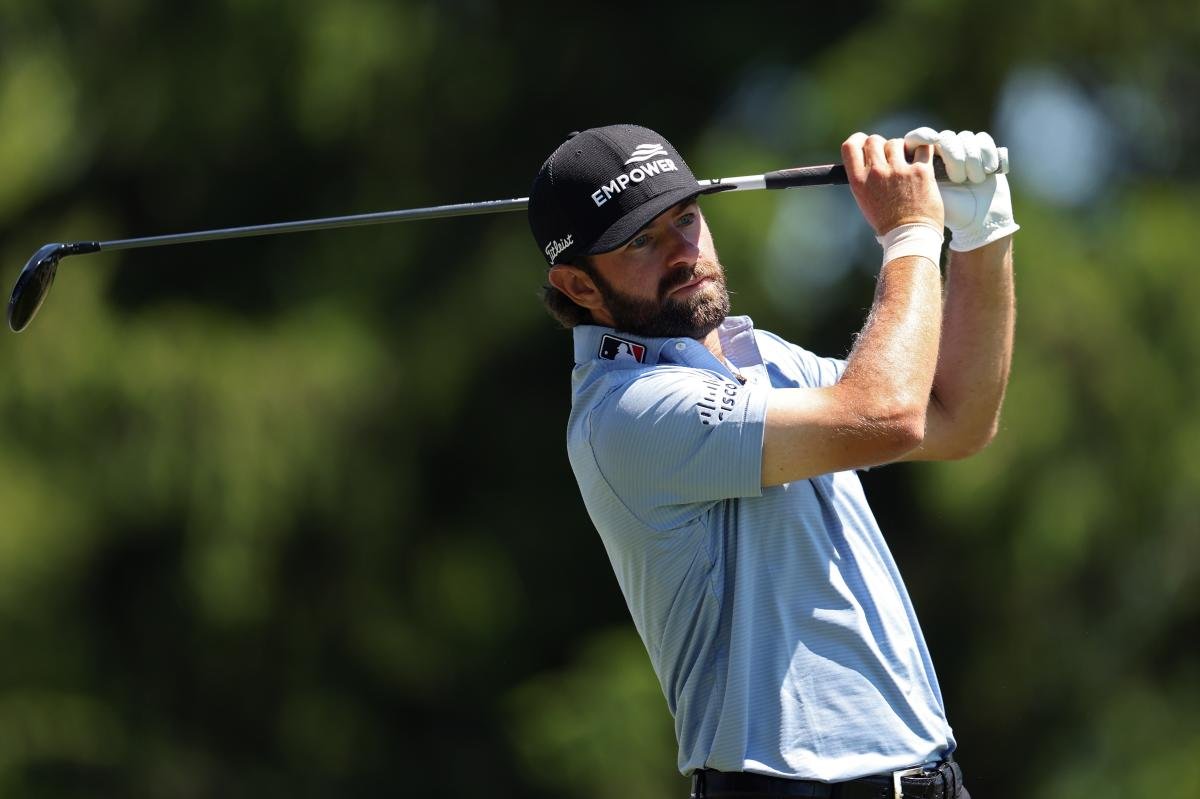
‘Worst I’ve hit it in a couple years’: Scottie Scheffler extends cut streak despite swing issues at the Memorial Tournament presented by Workday

‘Worst I’ve hit it in a couple years': Scottie Scheffler extends cut streak despite swing issues at the Memorial Tournament presented by Workday

2D AGO

3 Min Read

Latest

Scottie Scheffler on grinding through one of his toughest rounds in years

DUBLIN, Ohio — There was a palpable tension as

Scottie Scheffler navigated the back nine Friday, because for the first time in a long while, he wasn’t guaranteed a place on the weekend.

Scheffler sat 4-over par through 10 holes and was headed the wrong way. He made three consecutive bogeys at Muirfield Village, then parred the gettable par-5 11th. Suddenly, even-par golf the rest of the way would be required, and Scheffler felt terrible about his swing. Without a late flurry, Scheffler’s streak of 75 consecutive made cuts – the longest on the PGA TOUR – would end.

“I felt like I was going to shoot about 90 today,” he said.

Scheffler did three better, carding a trio of birdies over the next eight holes to keep himself around for the weekend and within striking distance of contention. Scheffler is attempting to join Tiger Woods as the only golfers to ever win three straight at the Memorial. His even-par 71 also avoided his first back-to-back over-par rounds since the U.S. Open nearly 12 months ago.

“That’s maybe some of the worst I’ve hit it in a couple years out there and I still managed to shoot even par around a golf course that requires you to strike the ball really well,” said Scheffler, whose round also included a shanked bunker shot at the fifth.

It’s been a frustrating few days at Muirfield Village for the world No. 1. He has navigated Jack’s place excellently over his career. Before winning back-to-back titles, Scheffler notched back-to-back third-place finishes in 2021 and 2023 (Scheffler didn’t play the Memorial in 2022). His worst finish came in his tournament debut, T22 in 2020.

Trending

Trending Up Articles

Scheffler took solace in the closing stretch, calling out good iron swings at 14, 15 and 16 that buoyed him when he was teetering on the edge of an early exit. The putter cooperated, too. He holed a 22-foot birdie on No. 15 and a 40-foot birdie on No. 16 to give himself some cushion.

“This tournament was one that definitely could have got away from me, but right now I’m only nine shots back and still have a chance going into the weekend,” Scheffler said. “With the conditions the way they are, you never really know what’s going to happen around this golf course and just getting inside the cut line you still have a chance.”

Scottie Scheffler on grinding through one of his toughest rounds in years

Scottie Scheffler on grinding through one of his toughest rounds in years

Scheffler holds the longest active made cut streak by a considerable margin. He will play his 76th consecutive weekend. Hideki Matsuyama holds the second-longest streak, with 25 made cuts in a row.

Several notable names were not able to turn it around in the same way. Jordan Spieth shot a gaudy 7-over 79 to drop all the way from 1-under to outside the cutline. The same goes for Andrew Novak, who began the day 1-under and also shot 79. Ben Griffin, who challenged Scheffler for last year’s title, shot 39 on the back nine to finish 7 over. Robert MacIntyre finished 7 over to miss his third cut of the year. Min Woo Lee played the last two holes in 3 over to miss the cut as well.

Source link
More: The Global Track

Corinthia Mes

Costco patio swing recalled after reports of injuries – NBC Chicago

Costco patio swing recalled after reports of injuries – NBC Chicago

Editor’s Note: The video in this story is from a previous report.

A popular piece of patio furniture sold at Costco is being recalled, with customers being warned to stop using the piece “immediately” and multiple injuries reported after parts broke off.

The recall notice, for the Agio-Menlo Woven Patio Swing, was issued by the Consumer Product Safety Commission May 14. Costco sent recall notices to members the same day.

According to the recall, the swing can detach from the frame while in use, posing a “risk of serious injury or death” from falling. As many as 18,500 units sold at Costco between Feb. 2026 and March 2026 were recalled.

The swings, from World Bright International, have a black metal frame, black metal swing arms, a fabric canopy and a brown padded wicker seat. They were exclusively sold at Costco stores, the notice said, with serial number 1934256.

Eight reports of swing seats detaching from the frames were reported, the recall notice said, resulting in eight reports of injury including impacts to the head and arms.

“You should stop using the swing immediately,” Costco’s notice said, with customers encouraged to contact World Bright for replacement hooks.

A safety notice recall posted to Agio brand website described the recall as voluntary.

“On behalf of ourselves and Costco, we want to thank you for your support and cooperation, and we sincerely apologize for any inconvenience this recall may cause,” Agio’s notice said.

Source link

Cameron Young’s rise reflected in stunning PGA Championship odds swing

Cameron Young’s rise reflected in stunning PGA Championship odds swing


A year ago, Cameron Young was largely an afterthought among golf’s elite.

Now, he might be the trendiest pick to win this weekend’s PGA Championship at Aronimink Golf Club.

In last year’s tournament, Young finished a ho-hum T-47 amid one of the most frustrating stretches of his career.

Oddsmakers took notice, with BetMGM Sportsbook pegging him as an 80/1 long shot to win the 2026 PGA Championship when the market opened.

But that’s when Young began to turn things around.

Through the end of last year, Young posted seven top-10 finishes, highlighted by a win at the Wyndham Championship and a T-4 finish at the U.S. Open.

Young has taken it to another level this season, winning THE PLAYERS Championship and the Cadillac Championship while adding a T-3 finish at the Masters and making the cut in all 10 of his starts.

He also shone in a losing effort for the United States in the Ryder Cup, going 3-1-0 in four matches and looking like one of the few Americans comfortable under that kind of pressure.

Vegas bookmakers have scrambled to adjust.

Cameron Young of the United States watches his shot from the 15th tee during a practice round prior to the PGA Championship at Aronimink Golf Club on May 11, 2026 in Newtown, Pennsylvania. Getty Images

Young is now down to 12/1 to win the PGA Championship — a stunning shift for the 29-year-old Westchester native.

He trails only Scottie Scheffler (+450) and Rory McIlroy (+900) at BetMGM.

Golf bettors have unsurprisingly flocked to him as well.


Get the lowdown on the Best USA Sports Betting Sites and Apps


Young has attracted the second-most money wagered and second-most tickets at BetMGM, trailing only Scheffler, the reigning PGA champion, who has held favorite status for the better part of a year.

The sudden rise has transformed Young from a forgotten long shot into one of the most heavily backed golfers in the field — and bettors are clearly betting his breakout is just getting started.


Why Trust New York Post Betting

Dylan Svoboda is a versatile writer and analyst across many sports. He’s particularly knowledgeable about the big three — MLB, the NFL and the NBA.


Source link

Junior Caminero has the fastest and flattest swing in baseball

Junior Caminero has the fastest and flattest swing in baseball

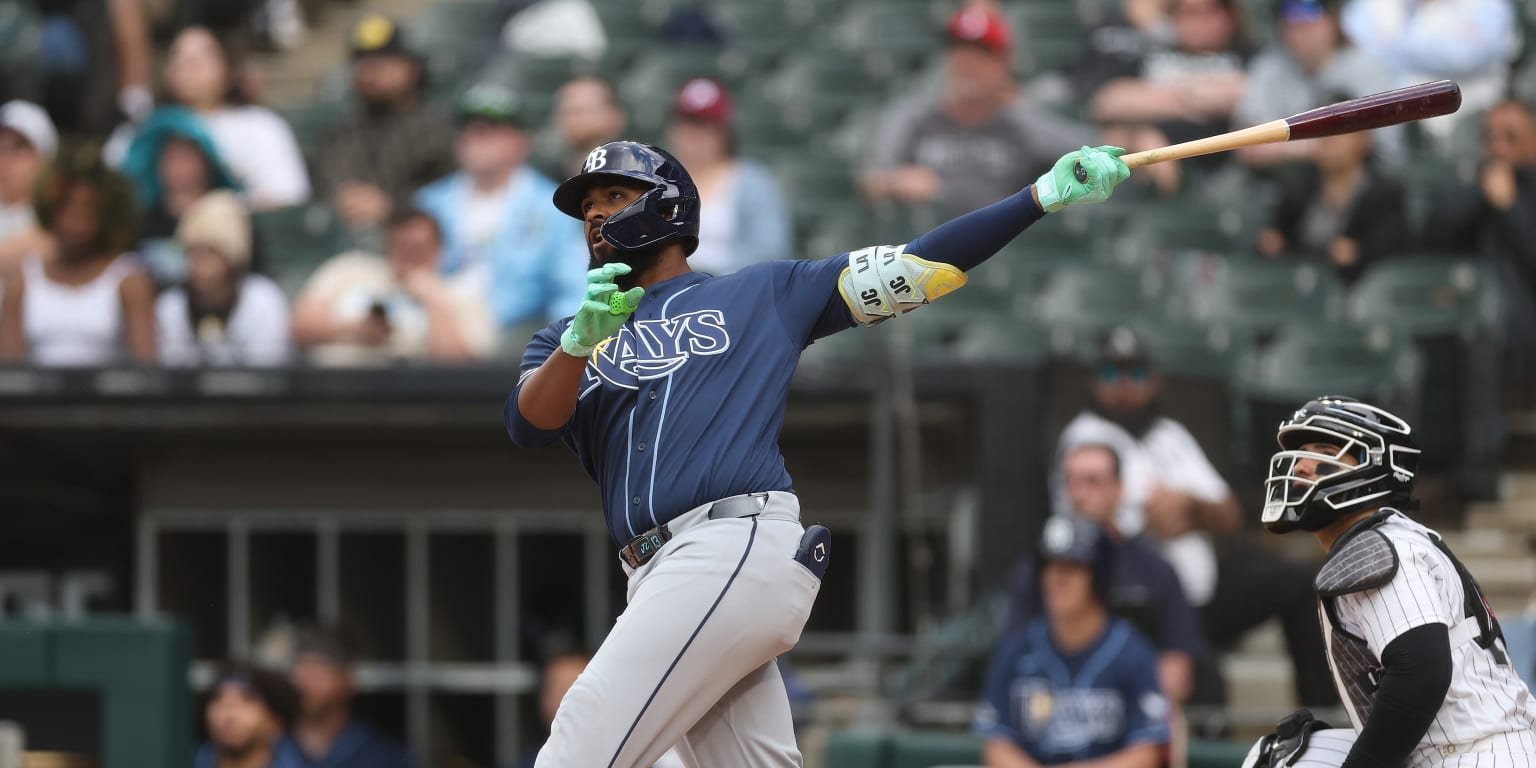
But the swing — the swing itself is just as unique. The Rays star has the most extreme swing in the Major Leagues.

Last season, Caminero had a fast swing and a flat swing. He hit 45 home runs.

This season, Caminero has THE fastest swing and THE flattest swing. How many homers will he hit now?

Caminero’s average bat speed this year is 79.9 mph. That ranks No. 1 out of all the Major League hitters who qualify for Statcast’s bat speed leaderboard, ahead of even giant sluggers like Giancarlo Stanton — a high bat speed, flat swing poster boy — and Oneil Cruz. This is where Caminero’s explosive power comes from.

But you should also watch the shape his swing takes to generate all that bat speed and connect for those monster home runs. The vertical tilt of Caminero’s swing path is just 22 degrees. That is the flattest swing path in the Majors among all qualifiers. (MLB swings range from about 20 to 50 degrees as the bat approaches the ball. Zero degrees would be a bat traveling perfectly parallel to the ground; 90 degrees would be a true golf swing.)

It’s all part of his plan at the plate: Caminero’s elite bat speed gives him his light-tower power potential, and a level swing path, in his mind, helps him square up the baseball.

Caminero’s swing was an outlier before. In 2025, he had a 78.5 mph bat speed and 26-degree swing path, which was the second-fastest and the ninth-flattest. But now he’s in a league of his own. He’s out-Stantoning Stanton.

With that swing, Caminero is on a 40-home run pace again in 2026. He has nine through the Rays’ first 36 games, and his overall offensive production is right in line with last year.

But where did such a unique swing come from?

Interestingly, the origin of Caminero’s fast-but-level swing traces back to none other than Albert Pujols.

Pujols was Caminero’s manager when he played for the Leones del Escogido in the Dominican Winter League a couple of years ago, and again with the Dominican Republic at the 2026 World Baseball Classic. And who better to talk hitting with than one of the greatest hitters of all time?

“I just want to be on plane with the pitch,” Caminero said this week through Rays interpreter Kevin Vera. “And that was one thing that I learned in the Dominican with Albert Pujols. He was telling me, ‘Hey, just get level with the pitch.’ Because the whole point is obviously to hit the ball in the air, but you don’t want to pop it up, you don’t want to fly it up. You want to elevate it [the right amount], so then you’re able to hit home runs.”

If you’ve ever seen Caminero hit a high fastball, you understand the benefit of keeping a level swing path like he does.

This season, he already has four homers off fastballs at or above the top edge of the strike zone, the most of any hitter. Often, those balls are crushed — like Caminero’s 111 mph, 450-foot bomb to dead center at The Trop off a 98 mph high heater from the Twins’ Taj Bradley.

The high fastball is an easy pitch to get under as a hitter, generating tons of whiffs and popups … unless you have a level swing like Caminero’s, and the elite bat speed to turn the heater around before it explodes past you. Pujols had the level swing to crush those pitches, too.

“It wasn’t necessarily a whole focal point of conversation, but it was something that he was like, ‘Hey, be conscious of this in your swing, and then slowly but surely add it,'” Caminero explained. “At times, I’ve tried to be a little bit more exaggerated and try to get under the ball, but that doesn’t always produce the results that I want. So again, the whole point of this is just be as level as possible and go from there.”

Now, there is some risk of flatter swings producing more ground balls, especially against pitch types like sinkers or breaking balls down in the zone that can get underneath the bat. Caminero knows this from experience — early last season, he was grounding into tons of double plays, and he ended up leading the Majors with 31 for the year.

But he also showed impressive adaptability against those pitches as the season went on. Caminero was able to adjust his swing to cover a wide range of pitch types and locations.

He doesn’t only hit high fastballs. Caminero can also crush breaking balls and offspeed pitches — even ones well below the strike zone. Since the start of last season, he’s hit 22 homers off breaking and offspeed pitches, sixth-most of any hitter. He’s hit 32 homers off fastballs … also sixth-most. No matter the pitch type and where it’s located, Caminero’s swing stays relatively flat compared to his fellow big league sluggers, and he still mashes.

Plus, whatever risk there is for ground balls with a flat swing path, there’s also a risk for uppercut swing paths, too. Those can leave a big hole to be exploited at the top of the zone, especially by high fastballs … Just ask someone like Riley Greene, who has the steepest swing path in the Majors and was attacked relentlessly with high fastballs down the stretch last season after his hot start.

And in the end, great swings come in all shapes and sizes. Swing path is more of a reflection of a hitter’s style rather than a purely “good” or “bad” number. There are plenty of great hitters with flatter swings, just like there are plenty of great hitters with steeper swings. Caminero might not want to be so extreme for the entire season, but he can have a flat swing and still be a great power hitter. He’s already proved that.

The Rays are a flat-swinging team. Actually, they’re the flattest-swinging team this season. It’s a signature of theirs. Besides Caminero, Yandy Díaz, Chandler Simpson, Jonny DeLuca, Richie Palacios and Nick Fortes all have swing paths flatter than 30 degrees. (Fortes would actually out-flatten Caminero if he had enough swings to qualify for the leaderboard, with an 18-degree swing tilt this season.) Heck, even former Rays stars like Randy Arozarena have flat swings.

Those flat swings work differently for the various Rays. Yandy, famously, is a high-hard hit, high-ground ball player, who can win a batting title when his swing timing is right but has pounded balls into the dirt his entire career. Simpson’s flat swing is geared toward putting the the ball in play where he can take advantage of his elite speed, as he slashes the ball up the middle and to the opposite field.

For Caminero, much more important than the overall swing path is the top-of-the-line bat speed — that is something he unquestionably wants to be elite at, since the faster he swings, the harder he can hit the ball — and also, what his barrel is doing at the point of contact with the baseball.

Any swing shape can produce a home run if the hitter’s timing is right. The barrel just needs to be traveling in the right direction at the moment it hits the ball — aka, at the optimal upward trajectory to produce a line drive or fly ball. That’s the hitter’s attack angle, and Caminero’s got a lot better as the 2025 season went on. He’s largely carried that forward into 2026.

However your bat got there, at the contact point, you don’t want it to be moving too steeply or too flat. Then you’ll mishit the baseball, whether it’s a popup or a grounder or just weak contact. Caminero thinks his flat bat path helps him get to the right attack angles.

“My whole approach with the swing is I just want to stay as level as possible,” Caminero said. “Because if I feel like I’m getting under the baseball, I’m just gonna miss it, plainly. I’m going to start to swing under it. So when I get on plane with the pitch, I want to obviously hit the sweet spot, or at least square up the ball, because then I elevate it, right? And if I don’t, [there’s also] the issue of rolling over on pitches and getting into double-play situations, just hitting groundouts.”

If a level swing path helps Caminero get the barrel of his bat to the right spot at the right time, then his flat swing is worth it.

“When I’m on plane, when I’m doing everything right, I know that’s when my bat speed is at its best,” Caminero said. “And that’s when I get the results that I want and I’m able to elevate the ball.”

MLB.com’s Adam Berry contributed reporting to this story.

Source link

Google’s taking a big swing at AI health with the Fitbit Air

Google’s taking a big swing at AI health with the Fitbit Air


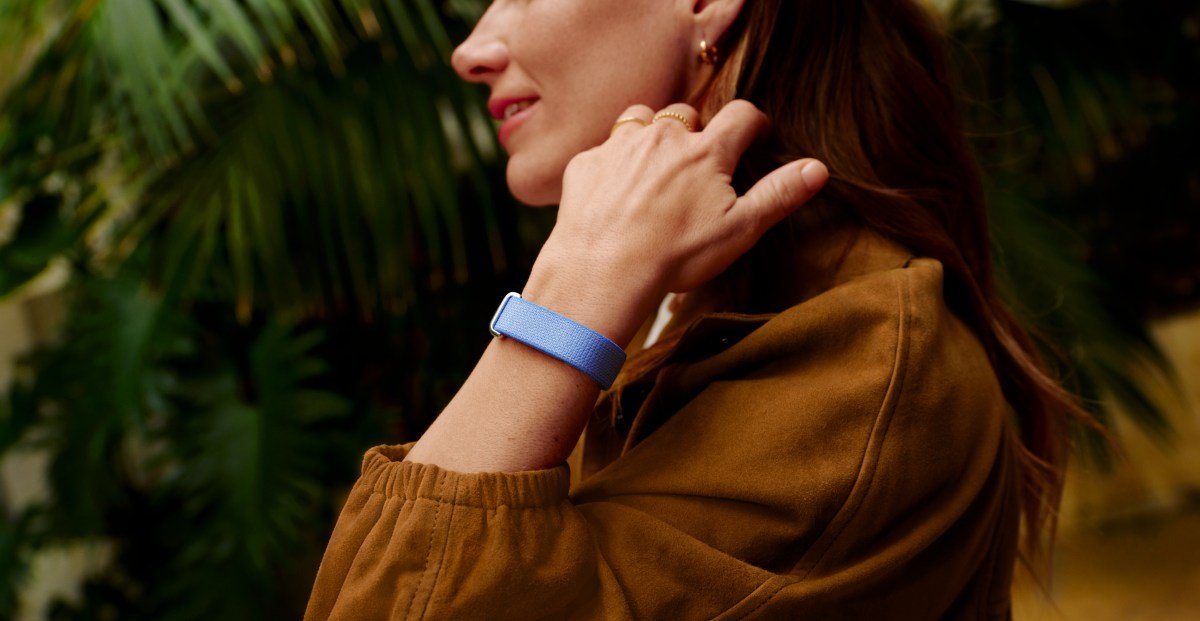
It’s a Whoop dupe. That was my first thought when I saw the new $99 Google Fitbit Air. You can hardly blame me. The band is screenless with a metallic fabric clasp. My eyes flickered between the Fitbit Air and my wrist, where I’m wearing a Whoop MG. Was I not seeing double?

But as my press briefing went on, my opinion started changing. The Air is sort of like the OG Fitbits that Whoop then duped once Fitbit went all in on smartwatches. Think back to 2012, when the Fitbit One could clip to your pants, be turned into a pendant, or dangle from a keychain. That device was mostly a pedometer, whereas the Air is more of a modern, modular sensor that can be popped out of one band and stuck into one of three others. But in many ways, this feels like a return to Fitbit’s roots — a simple band for casual tracking.

“The reality is right now, wearables have made huge advancements, but for a lot of people, they’re still either too complicated, too bulky, or too expensive,” Rishi Chandra, Google’s vice president of Health and Home, tells The Verge. “That’s where the Fitbit Air came in. We wanted something you could give to your kids and parents that they could just put on their arms. They don’t have to learn anything new.”

The sensor pops out of the band, allowing you to swap straps.
Image: Google

Compared to previous Fitbit trackers, the Air is 25 percent smaller than the Luxe and 50 percent smaller than the Inspire. It weighs a mere 12g with the band, and 5.2g without. There are no buttons, though there is an LED charging light and haptics for silent alarms. Sensor-wise, it’s not as high tech as the Pixel Watch, but it’s got the staples: an optical heart rate sensor, gyroscope, accelerometer, blood oxygen sensor, and skin temperature sensor for sleep tracking. You can dunk it in water up to 50 meters, and the battery lasts seven days on a single charge. That’s somewhat disappointing, but it was typical for old-school Fitbits, too. At least this one purportedly gets you one day of juice with a five-minute charge. It’ll also work concurrently with a Pixel Watch — meaning that if you’d prefer to wear the latter during the day and an Air for workouts and sleep, you can now. (Recently, Fitbit hasn’t supported multiple devices.)

But the Air is not a signal that Google’s reviving Fitbit as it was. This is Fitbit’s first hardware product in nearly four years, but it comes alongside the death of the Fitbit app. Starting May 19th, the Fitbit app and Android’s Health Connect app will be consolidated into the single Google Health app. The Fitbit Premium subscription? That’s also being rebranded as Google Health Premium, though the price won’t change. To top it all off, its AI-powered Health Coach is leaving beta and rolling out to the public.

This is hardly surprising. Since Google acquired Fitbit for $2.1 billion in 2021, it’s been slowly but surely integrating Fitbit into the overarching Google umbrella, much as it did with Nest. The transition hasn’t always been smooth. Longtime Fitbit users were enraged by multiple widespread outages, deprecated features like challenges, and a confused wearable lineup once the Pixel Watch was introduced. Then, in early 2024, Fitbit’s original leadership was laid off.

A list of premium versus base features. The base features include all metrics for activity, sleep tracking, health tracking, and health and wellness logging. The premium features generally include the AI-powered insights.

Here’s what you get with a subscription versus what you get for free.
Image: Google

“I know it will be hard for people. It was hard for us internally,” says Chandra, referring to the rebrand. “But as we think about the future, where the health app needs to go, the health app is not going to be specific to Fitbit hardware … We want to be a health coach to an Apple Watch user, too. That’s why we had to make the brand change.”

Another reason, Chandra says, is that the current health data market is entirely too fragmented. Before now, Google itself had two separate apps: Fitbit and Health Connect. Before that, it was the Google Fit app. Many wearable users have their data stored across a hodgepodge of apps, including Strava, Garmin, Peloton, etc. Their medical records are often stored on other systems. In some cases, health app data can be siloed depending on your phone’s operating system. Which is why, Chandra says, Google Health will be iOS compatible and eventually work with third-party wearables like Garmins, Whoops, and Oura. (To start, however, it’ll be limited to Pixel and Fitbit devices.) This platform-agnostic approach also harkens back to the Fitbit of yore. It’s just that this time, it’s under Google’s name.

Even so, the Google Health app won’t come as a shock to many Fitbit users. There’s been a public preview beta since October. In a briefing, Google said nearly 500,000 users had participated in the beta, and the company received over a million bits of feedback. Based on that feedback, Google says the final version will add back missing features (the preview did not include cycle tracking, for instance), more flexibility with the fitness coaching, a more customizable interface for highlighting metrics, a more accurate sleep algorithm, and a less chatty AI coach.

Renders of the Google Health app.

What the new Google Health app will look like. It rolls out May 19th.
Image: Google

“For us, this is not a ‘We’re launching this and see you in six months or a year, then hopefully we’ll update it,” Chandra says, emphasizing that the plan is to continue pushing out frequent updates based on feedback.

By bundling these three announcements, Chandra says Google is trying to write a distinct narrative. In a nutshell: Here’s a simple, affordable device for the average person that pairs with a consolidated health data platform, complete with a built-in AI coach. Buy in, and you’ll get the most streamlined, low-effort way to get personalized insights and take control of your health. In this case, you can get adaptive fitness plans, chat with the AI about your medical records, use your phone camera to log meals, and ask how your various health metrics relate to each other.

Google is far from the only wearable maker attempting this — and in a parallel universe, I’d bet that an independent Fitbit would be embarking on this road too. But, like Apple, Google is one of the only players that could make good on the data consolidation part of the equation. But the part that everyone’s currently stumbling on is the AI. I’ve tested nearly all the major AI health, fitness, and nutrition coaches. They are either hallucinatory dogshit or useless book reports. That’s not to mention data privacy fears regarding sensitive health information. (On that front, Google says it will continue to keep Fitbit data siloed from its ad business; AI model training is opt-in and turned off by default.)

Google, convince me this is better than regurgitated book reports.

Google, convince me this is better than regurgitated book reports.
Image: Google

“This is a very hard problem,” concedes Chandra when pushed on this. “The reason why we did the public preview is that we need to make sure we didn’t make big mistakes. The rigor here is absolutely critical … but we are going to make mistakes. We’ll try to clarify those mistakes when we can, and we’ll try to own up to them and keep improving the product as we go.”

It’s a big swing. Personalized health is the holy grail of the wearable and health industry right now. Every new wearable launch, optimized metric, and AI feature is hurtling toward this goal. I’m no fortune teller. I don’t know how Google’s health gambits will play out. What I do know — and Google will likely disagree with me — is that the old Fitbit era is definitely over.

Follow topics and authors from this story to see more like this in your personalized homepage feed and to receive email updates.


Source link

MAHA Swing Voters Are an Illusion

MAHA Swing Voters Are an Illusion


Updated at 7:11 a.m. ET on April 23, 2026

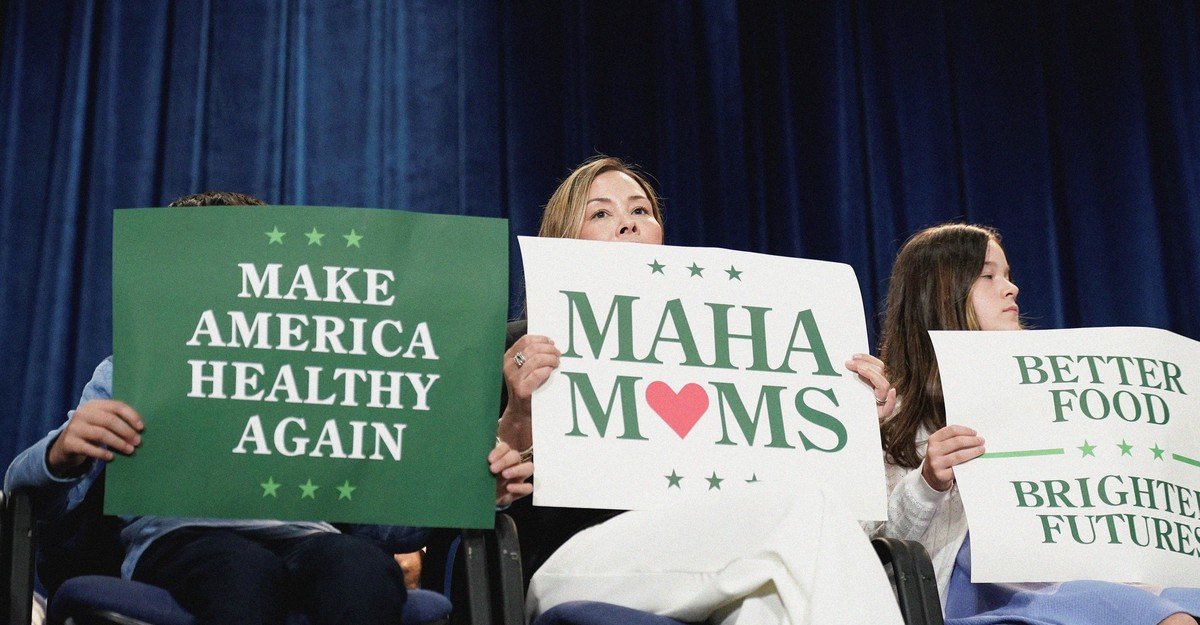
Earlier this month, MAHA moms went to the White House. Several key figures in the “Make America Healthy Again” movement gathered around a table in the Roosevelt Room to speak with Health Secretary Robert F. Kennedy Jr. and other top administration officials. The invitees—who included the health activist Kelly Ryerson, the wellness podcaster Alex Clark, and the nutritionist Courtney Swan—were all women. They’re influential among the loose coalition of Kennedy supporters known as MAHA moms, many of whom are worried about their children’s health. This was a chance for them to air their grievances with the Trump administration—which have grown in recent months. Afterward, they were ushered into the Oval Office to see President Trump, who, according to Ryerson, welcomed them as “my MAHA leaders.”

The alliance between MAHA and MAGA was always an unlikely one. Kennedy was a Democrat before his independent presidential run in 2023, and many of his priorities—such as encouraging healthy eating—have traditionally been the domain of the left. Lately, the partnership has started to fray. Core MAHA supporters were infuriated when Trump signed an executive order in February that could give liability protection to manufacturers of glyphosate, the weed killer used in Roundup that studies have linked to cancer. (Ryerson is so against the chemical that she goes by “Glyphosate Girl” on Instagram.) The movement has also been frustrated by the stalled nomination of perhaps the most famous MAHA mom, Casey Means, Trump’s pick for surgeon general, who has yet to receive a Senate confirmation vote. Means was also at the recent White House gathering, which appeared to be an attempt to smooth things over with MAHA before the midterms.

Not unlike the “silent majority” that pushed Richard Nixon to victory in 1972 or the Tea Party movement that ushered in the red wave during the 2010 midterms, MAHA moms have been billed as a significant factor in the upcoming election. MAHA is “central to our coalition,” Steve Bannon, Trump’s former chief strategist, told us. Without the movement’s support, he believes, there’s no chance that Republicans can prevail in November. The president seems to be on the same page: “I read an article today where they think Bobby is going to be really great for the Republican Party in the midterms,” Trump said during a Cabinet meeting in January, referring to the health secretary. “So, I have to be very careful that Bobby likes us.” In an email, the White House senior deputy press secretary Kush Desai told us that the administration is dedicated to delivering on the MAHA agenda. The gathering at the White House “was one of many productive engagements that the Administration has had and continues to have with the MAHA community,” he wrote.

These voters are politically desirable across party lines. Some of MAHA’s priorities—such as getting rid of petroleum-based food dyes or limiting pesticide use—are widely popular. About a third of independent parents, along with one in six Democratic parents, identify as supporters of the MAHA movement, according to a poll from last year. Many Democrats are also trying to win over disaffected MAHA moms.

The most prominent MAHA moms tend to be swing voters rather than Trump loyalists. Vani Hari, an activist known as the “Food Babe,” was a delegate at the Democratic National Convention in 2012 but is now a prominent MAHA influencer (she was invited to the White House meeting but couldn’t attend). Ryerson voted for Trump because of Kennedy. “I probably wouldn’t have voted otherwise,” she told us.

But Hari and Ryerson—both of whom were health activists long before MAHA came along—may not be representative of rank-and-file voters. For this story, we spoke with several MAHA supporters, including a documentarian who had worked on anti-vaccine films, moms with a parenting podcast, and an Instagram influencer who told us about her four-ingredient recipe for homemade Goldfish crackers. One of us chatted with more than a dozen attendees at CPAC, the annual Republican conference. Many were MAGA before they were MAHA, and said their midterm votes don’t hinge on health issues. Virtually none said they would realistically consider voting blue in November.

And then there is the question of numbers. To hear MAHA leaders tell it, their supporters constitute a small army. Tony Lyons, who runs MAHA PAC, the movement’s political arm, has said that there are millions of MAHA moms and, in a memo to GOP leaders, argued that embracing the movement is the way to “win big in the midterms.” Hari claimed on X in January that thousands of MAHA supporters have been calling state legislatures in recent months over concerns about legislation that would give pesticide makers immunity from lawsuits. (When we asked about that, she conceded that the number was more likely in the hundreds. After publication of this article, she said that she had responded too quickly and meant to say thousands—though she declined to produce any evidence for that number.)

In Tennessee, which considered a pesticide bill earlier this year, a lawmaker told us that she received “about 150 emails and around 50 calls to my office.” But in our reporting, we were unable to track down evidence suggesting that moms who will cast their votes based on their MAHA beliefs exist in such numbers that they could swing the midterms. MAHA “is not going to affect the aggregate, but it could affect various districts which are very close,” Bob Blendon, a Harvard professor who studies public opinion on health, told us.

The most prominent contest where MAHA has come into play so far isn’t even a seat that is realistically at odds of flipping from red to blue. MAHA PAC has pledged to spend $1 million to unseat Senator Bill Cassidy of Louisiana, who was the pivotal vote to advance RFK Jr.’s nomination as health secretary but has since publicly called him out on occasion. The group has endorsed another Republican, Julia Letlow, and health hasn’t been a defining issue in the race. Instead, both candidates have competed to prove that they are more loyal to Trump. (Trump has endorsed Letlow over Cassidy.)

Of course, a lot can change from now until November. American elections have been upended before by groups of voters who seemed elusive and seemingly came out of nowhere. The Tea Party, for example, was seen initially as diffuse—much like the modern MAHA movement—but the effort was actually well funded and well planned, Patrick Rafail, a professor at Tulane University who wrote a book on the movement, told us. “I don’t see a parallel for MAHA,” he said.

MAHA seems to be one of the few causes that unites people across the political spectrum. But broad appeal doesn’t necessarily translate at the ballot box.




Source link

Wildcats Set to Wrap Up Road Swing Monday Night at Arizona State

Wildcats Set to Wrap Up Road Swing Monday Night at Arizona State


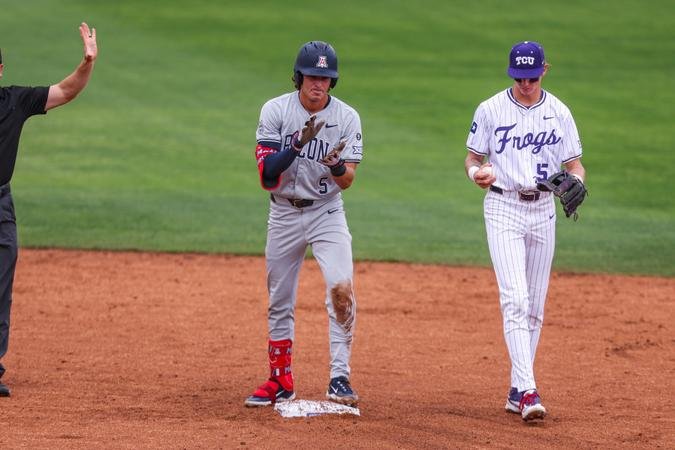
TUCSON, Ariz. – For the fifth time this season, the University of Arizona baseball team and Arizona State will meet on the diamond, as the Wildcats are set to travel to Phoenix to face the Sun Devils in a non-conference matchup at Phoenix Municipal Stadium.

Arizona is coming off one of its best weeks of the season, with the Wildcats going 3-1 with a run-rule victory over New Mexico State on Wednesday, followed by a road series victory over TCU after winning two of three games against the Horned Frogs.

Monday night’s contest is scheduled to start at 6:35 p.m. (MST) start, and will be available for viewing on ESPN+.

LEADING OFF:

  • The Arizona Wildcats will wrap up a four-game road stretch at Arizona State on Monday night.

  • Monday night’s contest will be broadcast on ESPN+.

  • The matchup will mark the 505th all-time meeting between Arizona and Arizona State, with the Wildcats holding a 266-237 advantage in the series.

  • Arizona and ASU have met four times previously this season, and the Sun Devils have won three of the four matchups.

  • Arizona is coming off an outstanding week, as they run-ruled New Mexico State on Wednesday, before winning two of three games on the road against TCU to claim their first Big 12 series win this season.

  • Tony Lira had an exceptional weekend, going 6-for-13 at the plate and he continues to pace Arizona offensively, leading the team in batting average (.261), hits (52), slugging percentage (.521), and on-base percentage (.442).

  • Mathis Meurant had a superb weekend for the Wildcats, as he went 4-for-10 with two doubles and two RBI.

  • Beau Sylvester enters Monday’s contest on a six-game hitting streak and he is batting .417 over the stretch.

  • True freshman Caleb Danzeisen ranks third in the Big 12 in BB% (21.5%) and he is second on the team in on-base percentage (.432) this season, while reaching base in 25 of 28 games this season. He stepped in to pinch-hit and delivered the game-winning RBI single against TCU on Saturday night.

  • Carson McEntire leads the Wildcats in home runs (7) and extra-base hits (15) this season.

SOME GAME THEMES: The Arizona Wildcats and Arizona State Sun Devils meet for the final time this season in a Monday night non-conference matchup at Phoenix Municipal Stadium in Phoenix, Arizona…Arizona and Arizona State have met four times previously this season, with ASU holding a 3-1 advantage in the season series…Arizona is coming off one its most impressive weeks of the season, as they went 3-1 with a run-rule victory over New Mexico State and a road series victory against Big 12 foes TCU…As a team, the Wildcats hit .270 last week, while the Arizona pitching staff boasted a 3.55 ERA with 31 strikeouts and just six walks…Tony Lira led the way for Arizona offensively last week, just as he has done all season, as the redshirt freshman went 7-for-15 (.467) with three RBI and two walks for an on-base percentage of (.529)…Lira continues to lead Arizona in a multitude of offensive statistical categories, including batting average (.361), slugging percentage (.521), on-base percentage (.442), hits (52), and runs (23)…Lira has recorded a hit in 20 of the past 24 games, and he has at least one hit in 26 of 35 contests this year, including collecting multiple hits in 19 games…Mathis Meurant had a breakout weekend for the Wildcats, hitting 4-for-10 at the plate with two doubles and two RBI to help Arizona earn a road series victory over TCU…Beau Sylvester has been superb for Arizona as of late, and he has recorded a hit in each of the past six games that he has played in, and his batting average has ascended to .307 which ranks as third-best on the team…Carson McEntire and Maddox Mihalakis are tied for the most RBI on the team (24), and McEntire leads the squad in home runs (7) and extra base hits (15) this season…True freshman Caleb Danzeisen ranks third in the conference in base-on-ball percentage (21.5%), and he is second on the team in on-base percentage (.432) this season…Danzeisen has reached base in 25 of 28 games this season, including reaching base multiple times in 16 contests…Danzeisen stepped in to pinch-hit with the game tied 2-2 in the top of the ninth in the series finale against TCU on Saturday night and came through with what proved to be the game-winning RBI single…Relief pitchers Garrett Hicks and Maclain Roberts have been stellar for the Wildcats, and Roberts has not allowed a run in his past four outings, while Hicks has not surrendered a run in his past five outings.…Arizona faces an Arizona State squad that enters the weekend with an overall record of 26-11…The Sun Devils are led by fifth-year head coach Willie Bloomquist who holds an overall record of 152-116 at the helm of the program…ASU has been immaculate at the plate season, as they rank third in the conference and sixth in the nation in batting average (.324)…Individually, Landon Hairston is first in the nation in home runs (23) and hits (68), while ranking eighth batting average (.453).

MEURANT AND SYLVESTER STEPPING UP: Seniors Beau Sylvester and Mathis Meurant have significantly elevated their play as of late, and they are each playing arguably the best baseball of their careers. Meurant is coming off a tremendous weekend in which he went 4-for-10 with two doubles and two RBI, while making a multitude of exceptional defensive plays at shortstop to help lead Arizona to a series victory over TCU. Sylvester is on a six-game hitting streak, and he has been superb since the start of Big 12 play, and he is 17-45 at the plate in 12 conference games. He had his best series of the year against ASU last weekend, going 7-for-11 while reaching base 9-13 times. Overall this season, he ranks third on the team in batting average (.307), and third in on-base percentage (.378).


Source link

Jordan Spieth’s DIY golf swing aid is unique

Jordan Spieth's DIY golf swing aid is unique


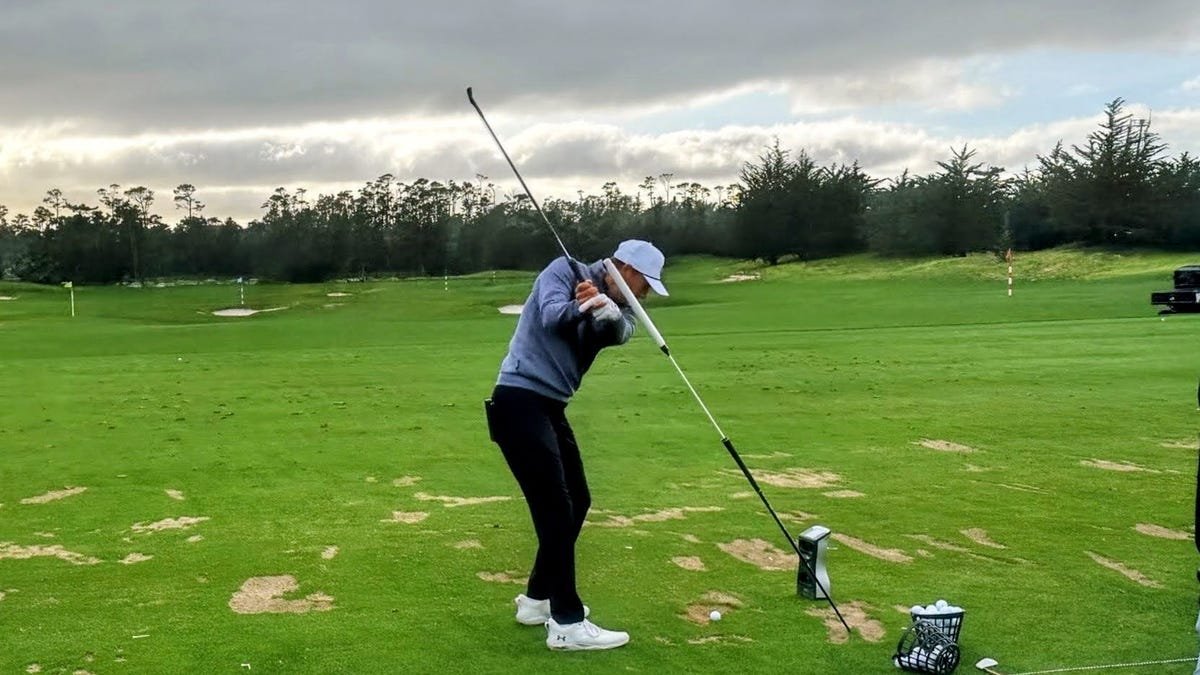
ORLANDO – Viktor Hovland isn’t the only one digging into a bag of tricks to work on his swing on the range at PGA Tour events. Jordan Spieth has his own DIY training aid that attracted eyeballs after the third round of the AT&T Pebble Beach Pro-Am.

Hovland has made waves with his pool floaties. Spieth said hold my beer and is using a jerry-rigged shaft and driving rod that looks as if it could do some bodily harm or at least draw blood if he isn’t careful.

NBC/Golf Channel commentators Notah Begay III and Arron Oberholser watched Spieth go through the drill post-round a few weeks ago. Oberholser noted that his wife, who played on the LPGA Tour, used to use a similar contraption back in the day, but he was never a fan of it.

“I was always afraid I was going to hit the stick and hurt myself,” Oberholser said.

On Tuesday, Spieth didn’t set up his training aid, but he did stop long enough to explain the purpose of it to Golfweek.

“I’m just trying to get my hands to settle deep,” he said at Bay Hill ahead of the Arnold Palmer Invitational, where he is in the field on a sponsor’s exemption. “It’s just a bad habit of my hands getting up, the club gets all out of whack, so my hands stay settled and on plane.”

Added Oberholser: “When he gets more arm depth, he can hit the shots he wants to hit. Where he has problems is that as he gets hip high, he ends up lifting instead of turning and isn’t able to get the hand depth that he wants.”

Spieth said that his longtime coach Cameron McCormack rigged it together a shaft and driving rod together and added a bit of foam so that if Spieth hits it, it doesn’t strike his wrist. 

“It’s getting closer,” said Spieth, who has three top-30 finishes in his first four starts this year, “and better.”

“When he put it in the slot, man, it was just a tight little fall to the left, like 2 yards,” Oberholser said. “It was really pretty.” 

Carl Lohren, longtime teaching pro and author of “One Move to Better Golf,” considers Spieth to be the most talented player in the game with an incredible set of hands around the green. He said of the drill: “It’s not goofy. It came out of Hogan’s book (Five Lessons: The Modern Fundamentals of Golf) and when he explains the plane of the swing, it’s coming on top of that ball up over his right shoulder and he’s just taking it back parallel with his hands,” he said. “It is better than what I’ve seen Spieth do because most of the things I’ve seen him work on are terrible. It’s more correct than anything I’ve seen him do. When he starts the hips and shoulders together, his hands want to go inside. But he forces them to stay out and comply with that correct plan. It’s not a bad drill, but he’s doing the right thing in the wrong way. A right thing done in a wrong way doesn’t equal right.”


Source link

Alex Eala braces for pivotal Sunshine Swing opener in Indian Wells

Alex Eala braces for pivotal Sunshine Swing opener in Indian Wells

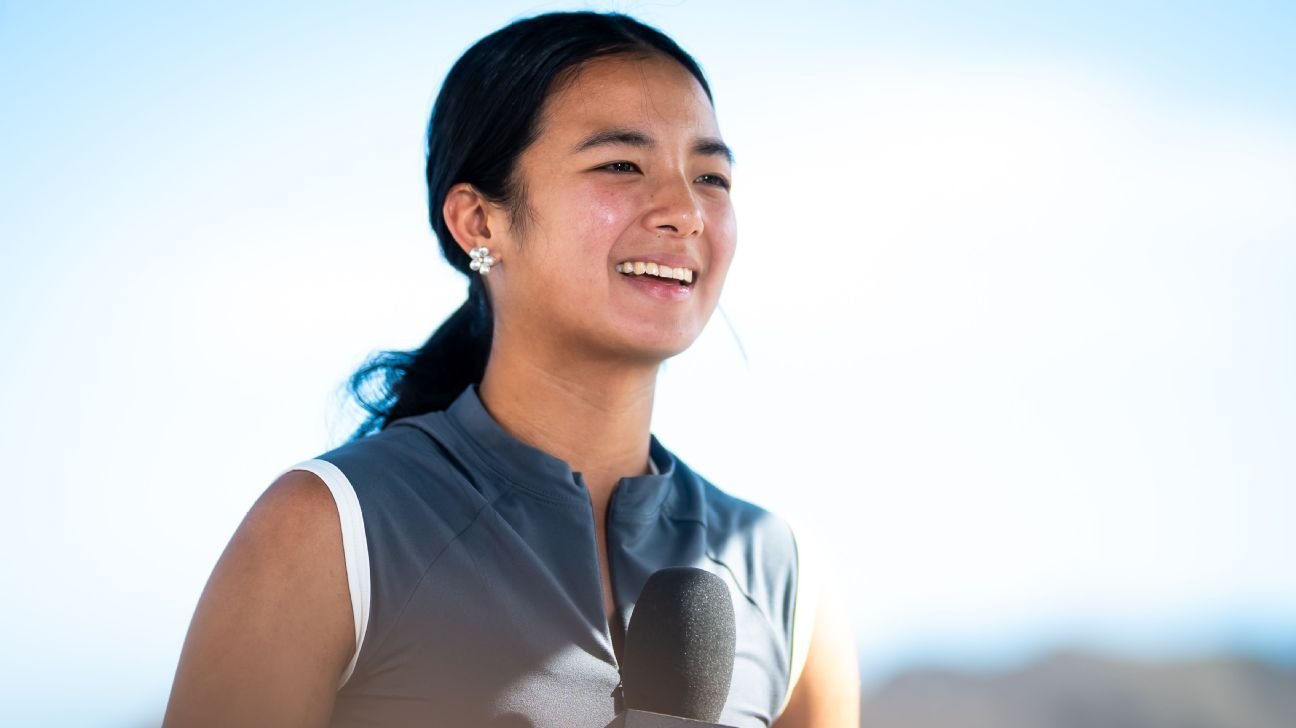
Fresh off a breakthrough run in the Middle East, Alex Eala now turns her focus to the bright lights of the Sunshine Swing — determined to sustain the momentum she built in Dubai.

The 20-year-old Filipina wrapped up her Middle East campaign in style, powering her way to the quarterfinals of the Dubai Duty Free Tennis Championships. That impressive showing in a WTA 1000 event propelled Eala to a career-high world No. 31 ranking — a historic leap that also secured her a seeded spot in her next big assignment.

Now, the stage shifts to the BNP Paribas Open in Indian Wells, one of the most grueling and talent-stacked stops on tour. For the first time in her young career, Eala cracked the cutoff to be seeded in a prestigious tournament, earning not just recognition but also a coveted first-round bye straight to the round of 64.

But the desert presents a different kind of test.

One major storyline in her projected path is a possible third-round showdown with world No. 4 Coco Gauff.

The American star dominated their recent meeting in Dubai, using her power and athleticism to shut down Eala’s rhythm. Should that rematch materialize in the California desert, it would offer the Filipina a chance at redemption and an opportunity to prove she can make the necessary adjustments against one of the sport’s brightest stars.

Yet even clearing that hurdle would not guarantee a smooth sailing onward journey.

Waiting in the wings could be another elite test in Jasmine Paolini in the quarterfinals, a top-10 player whom Eala defeated during the round of 32 of her inspired run in Dubai. That breakthrough win showcased her poise and tactical maturity, but replicating it on the slower, more physically taxing courts of Indian Wells would demand another level of discipline and execution.

All of this will unfold with the Miami Open fast approaching.

The Miami stop carries added weight for Eala, as she is defending significant ranking points from last year’s historic semifinal appearance. If she falls short of matching that run, a rankings dip becomes a real possibility.

That reality makes Indian Wells more than just the first leg of the Sunshine Swing, it is a critical buffer.

A strong showing in the desert would not only reinforce that her Dubai breakthrough was no fluke, but also provide breathing room ahead of a pressure-packed Miami outing.

For Eala, the mission is clear: build on her momentum, embrace the challenge of facing the elite, and turn this stretch of the season into a defining chapter of her young career.

And the good news, the whole country will once again be on her side.

Source link
See more https://theglobaltrack.com/

No. 10 Michigan State Wraps up Pacific Northwest Swing at Oregon on Tuesday Night

Fears_Jeremy Washington


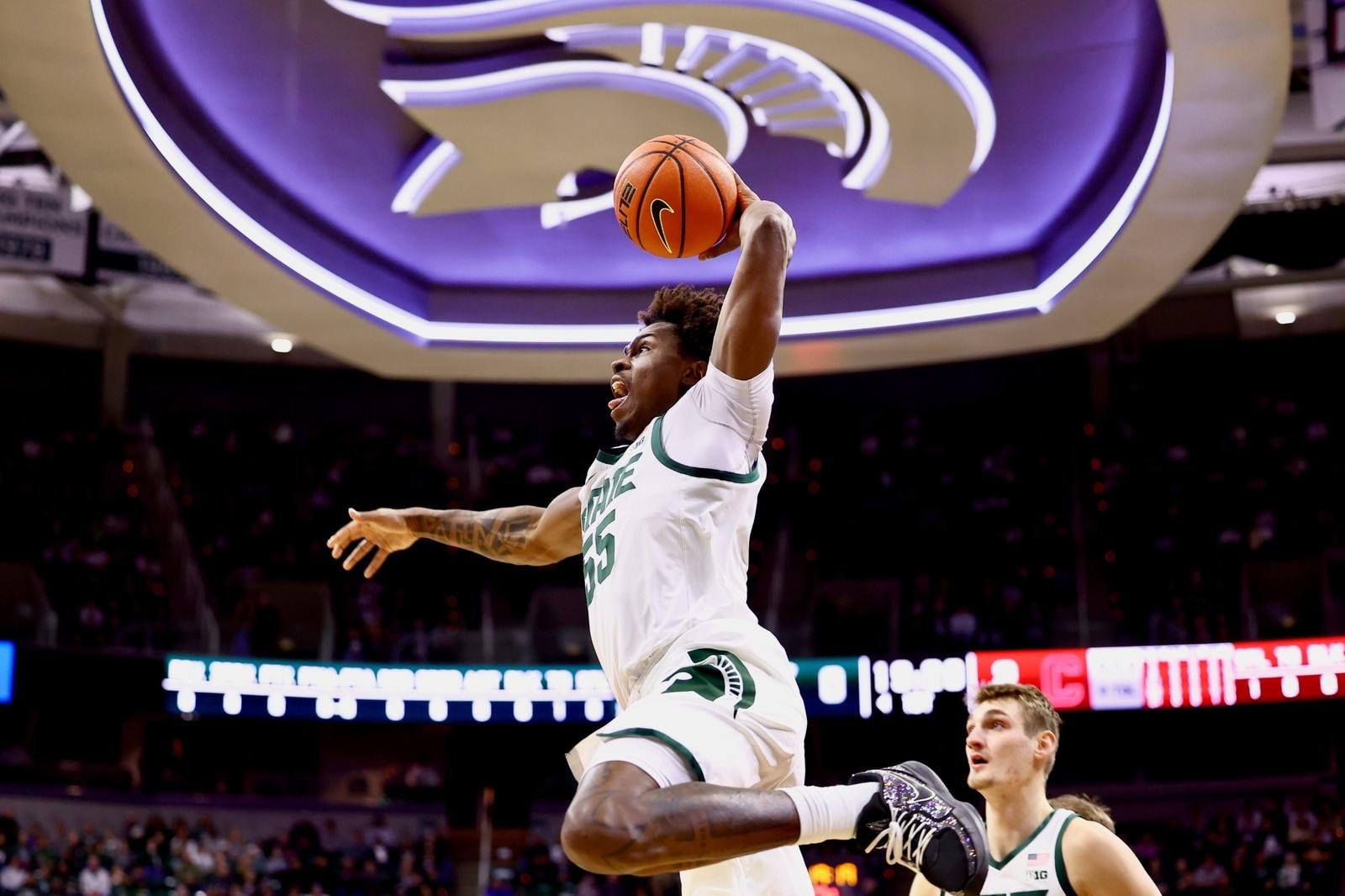
Eugene, Ore. – No. 10 Michigan State wraps a two-game swing through the Pacific Northwest on Tuesday, Jan. 20, visiting Oregon (9 p.m. ET, FS1). The Spartans opened their trip with an 80-63 win over Washington on Saturday in Seattle.

Saturday’s game will air live on FS1, with Connor Onion and Miles Simon calling all of the action. The Spartan Media Network radio call can be heard state-wide and on the web at MSUSpartans.com, with Will Tieman handling the play-by-play, Matt Steigenga serving as the color analyst and Zach Surdenik as the studio host. The game can also be heard on channels 131 or 196 on SiriusXM or on the SiriusXM app.

About the Spartans

  • Michigan State enters Tuesday’s game with a 16-2 overall record (6-1 Big Ten) and are coming off an 80-63 win at Washington on Saturday in Seattle.
  • The Spartans are No. 10 in the latest Associated Press Top 25 poll and the ESPN Coaches poll.
  • MSU is No. 12 in the NCAA Net Rankings and No. 10 per KenPom.
  • The Spartans are No. 13 in the country in assists (18.7 apg), with Jeremy Fears Jr. second in the country with 8.6 apg.
  • MSU ranks No. 2 in the country in rebound margin (+13.8) and Kohler is 2nd in the Big Ten, and No. 23 nationally, with 9.9 rpg.
  • The Spartans are No. 10 nationally in scoring defense (64.2 ppg) and ranks No. 1 nationally in adjusted defensive efficiency per KenPom.
  • Through 18 games, the Spartans have four players scoring in double figures, seven averaging at least 5.0 ppg and nine averaging at least 10.0 minutes.
  • Jaxon Kohler leads the team in scoring with 13.9 ppg and tops the team with 9.9 rpg (2nd B1G, #23 nationally) … Kohler, who became the first player in MSU history under Head Coach Izzo  to have five-straight double-doubles and ranks No. 8 nationally with 10 this season, has scored in double figures 17 times this year.
  • Jeremy Fears Jr., who leads the team with 30.6 minutes played, is second on the team with 13.1 ppg and is handing out 8.6 assists per game, second in Division I … His 155 total assists are No. 2 in the country.
  • Coen Carr, one of the most athletic players in all of college basketball, is third on the team with 11.0 ppg, third on the team with 5.-0 rpg and third with 1.5 apg in 28.1 mpg.
  • Carson Cooper, who had 16 points and a career-best 16 rebounds vs. Duke and scored a career-high 18 points in the win over Northwestern, is playing a career-high 25.3 minutes, is fourth on the team with 10.1 ppg and second with 7.2 rpg, ninth in the B1G … He has scored in doubled figures 10 times.
  • Kur Teng, who scored a career-high 15 points against Kentucky, is averaging 7.7 ppg and has scored in double figures in six of the last eight games; Cam Ward is sixth on the team with 5.6 ppg and fourth with 4.5 rpg and Divine Ugochukwu, who scored a career-high 23 points at Penn State, is averaging 5.1 ppg in 15.0 mpg.
  • Freshman Jordan Scott adds 4.4 ppg and 3.3 rpg in 16.8 mpg (6.3 ppg, 3.4 rpg in B1G), senior Trey Fort is tallying 4.3 ppg, and redshirt freshman Jesse McCulloch is averaging 3.2 ppg and 1.6 rpg.

Core Four

  • MSU Head Coach Tom Izzo has said since the start of the season that the success of the Spartans would largely depend on the team’s captains Cooper, Kohler, Carr and Fears.
  • Through 18 games, the team’s core four are averaging a combined 48.1 points per game and have accounted for 60.9 percent of the team’s points (866 of 1,423), 58.6 percent of the team’s rebounds (445 of 759) and 68.9 percent of the team’s assists (233 of 338).

About Oregon

  • Michigan State and Oregon will meet for the sixth time in program history on Tuesday night.
  • This is the second meeting between the teams as members of the Big Ten Conference and the first game for MSU in Eugene.
  • The Spartans have won the last three meetings, including Oregon’s first trip to the Breslin Center last year, 86-74, on Feb. 8, 2025.
  • The three previous meetings between the teams were tournaments in Oregon.
  • MSU posted a 74-70 win on Nov. 25, 2022 in the second round of the Phil Knight Invitational in Oregon.
  • Oregon’s last win in the series was an 87-82 decision on Dec. 27, 1969 in the Far West Classic in Portland, Ore.

Against the Ducks

  • Michigan State and Washington meet for the eighth time in program history on Saturday.
  • The Spartans lead the head-to-head series, 5-2, and have won the last five games in the series.
  • MSU won last year’s meeting, 88-54, at the Breslin Center in East Lansing.
  • The Spartans played the Huskies two other times under Head Coach Tom Izzo.
  • Michigan State beat Washington, 64-50, in the first round of the 1996 NIT at the end of Izzo’s first season as a head coach.
  • The Huskies won the first two meetings between the teams, a 45-52 decision in East Lansing in 1942 and a 71-69 victory in 1957 in Seattle.


Source link