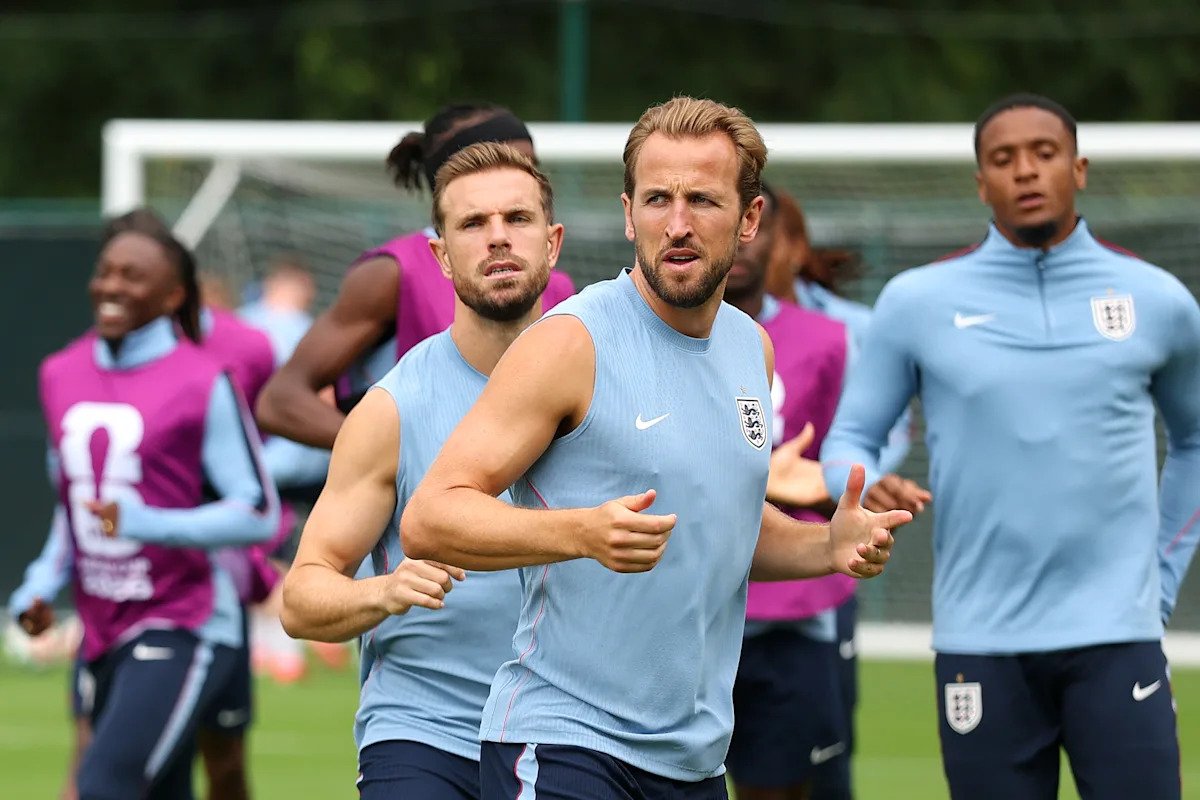
England‘s World Cup team hotel in Mexico City was discovered by Mexico fans, who greeted the Three Lions with a chorus of boos and chants of “Mexico!” when they arrived on Friday.
In hopes of avoiding the disturbances Ecuador experienced before facing Mexico in the Round of 32, security was increased outside of the hotel. Ecuador’s football federation had lodged a formal complaint with FIFA after a night full of noise by Mexican supporters.
Advertisement
Police officers and members of Mexico’s National Guard lined the entrance to England’s hotel as players arrived.
Several hundred fans gathered outside, with many booing the team bus and chanting “Mexico!” as England arrived. A smaller contingent of England supporters tried to answer back, but the atmosphere remained more spirited than confrontational, according to the BBC’s Will Grant. Afterward, some Mexican fans told the BBC that England and its supporters were welcome in Mexico City.
“I won’t be happy if it wakes me up. I’ll be honest,” said England midfielder Morgan Rogers about possible noise while the team sleeps. “We’ll see how it goes but we’ll deal with it as best as possible. It’s just another obstacle to overcome but we’re ready.”
Advertisement
Extra security was also brought in after four people died during late-night street celebrations after Mexico’s win over Ecuador. Emergency teams had tended to three unconscious people at different locations around the Paseo de la Reforma, which is the main avenue where giant screens have been set up for fans in the city to gather and watch games.
England faces Mexico on Sunday night in the Round of 16 at Estadio Azteca. The 8 p.m. ET kickoff time was reportedly close to being moved due to thunderstorms and heavy rain expected in the area during the afternoon. Both teams expressed confusion on Friday over whether the change was really happening, with The Times reporting that the English FA spent Friday trying to clarify if the game was actually being rescheduled.
Playing at Estadio Azteca has helped Mexico historically. El Tri have lost only twice in their last 89 matches there, winning 70 and drawing 17. They are also unbeaten in all 10 World Cup matches they have played at the stadium, including three during this tournament.
Mexico’s last loss at Estadio Azteca happened in September 2013 when it was beaten by the United States 2-0 during qualifying for the 2014 World Cup.
Steve Carell didn’t just become a comedian. He became a conscience. From ‘The Office’ to ‘The 40-Year-Old Virgin’ to ‘Anchorman’ to ‘Little Miss Sunshine’ to ‘The Big Short’ to ‘Beautiful Boy. ‘ He has been in some of the funniest and most emotionally resonant films and television shows of the last three decades. He has been nominated for the Academy Award. He has won the Golden Globe. He has been one of the most beloved comic actors in Hollywood for decades. He did broad comedy. He had dry wit. He did heartbreak. He did drama. He transitioned from sketch television to sitcom to film to prestige drama without ever losing the quality that made people love him in the first place. A fundamental decency. A refusal to get laughs at someone else’s expense. And through all of it, he held to a philosophy about comedy that is rarer than it should be. Thus, he once said, “I don’t like comedy where people are making fun of other people. I think you can find the humour in a situation without being mean-spirited or cruel.”
Quote of the day by SteveCarell
“I don’t like comedy where people are making fun of other people. I think you can find the humour in a situation without being mean-spirited or cruel.”Steve Carell shared this during a major press tour interview in July 2010 while promoting his comedy film ‘Dinner for Schmucks.’ The timing of the quote was not accidental. It was a direct response to what journalists kept asking him. Because ‘Dinner for Schmucks’ is built around one of the cruellest premises in mainstream comedy. Corporate executives host a dinner where each guest must bring the biggest fool they can find, purely so everyone can laugh at them in secret. Carell played Barry Speck, the eccentric, naive target of the joke, a man who spends his days meticulously crafting elaborate art dioramas using taxidermied mice. A character designed, on paper, to be ridiculous. Designed to be mocked. Journalists wanted to know how he felt about that. And his answer revealed everything about how he approaches his craft. He said his goal was to play Barry with total sincerity, sweetness, and dignity. Not to wink at the audience. Not to signal that he knew Barry was absurd. But to play him as a fully real human being whose passion deserved to be celebrated, not ridiculed. He didn’t want audiences laughing at Barry. He wanted them to laugh with him.
What does it actually mean?
Steve Carell is drawing a line that exists in comedy but rarely gets talked about directly. The line between laughing at someone and laughing with them. Between humour that connects and humour that excludes. Between comedy that finds the absurdity in a situation and comedy that finds a person to humiliate.Most people have felt both sides of that line. Everyone knows what it feels like to laugh at something genuinely funny, where the humour comes from the strangeness of life, from the gap between expectation and reality, from the universal awkwardness of being human. And everyone knows what it feels like when the laughter is aimed at a person. When someone is the joke rather than in on it. It feels different. It leaves a different residue.Carell is saying he has no interest in the second kind. And that’s a meaningful creative position, not just a moral one, because the easiest form of comedy has always been mockery. Finding someone strange or weak or different and pointing at them. It requires almost no craft. The audience laughs because they feel superior. But that laugh is cheap, and it fades quickly.The harder thing, the thing Carell has built his entire career on, is finding humour that doesn’t require a victim. Comedy that comes from situation, from character, from the recognisable chaos of ordinary life. Michael Scott in ‘The Office’ is one of the greatest comic characters in television history, and he works precisely because Carell never played him as simply a fool to be laughed at. He played him as a desperately lonely man whose flaws were enormous but whose need for love and connection was completely real. The audience laughed at the situations he created, but they also felt for him. Both things at once. That’s the harder trick. That’s the one worth doing.Barry Speck in ‘Dinner for Schmucks’ operates on the same principle. A lesser actor plays Barry as a joke. Carell played him as a person. And that small but fundamental choice is the difference between a film that makes you feel vaguely uncomfortable about your own laughter and one that earns every smile it gets.
Who is Steve Carell?
Steve Carell was born on August 16, 1962, in Concord, Massachusetts, and grew up to become one of the most versatile and respected comedic actors of his generation. He studied history at Denison University in Ohio before pursuing acting, eventually joining ‘The Second City’ comedy theatre in Chicago, where he honed the improvisational instincts that would define his early career.He broke into wider television consciousness as a correspondent on ‘The Daily Show with Jon Stewart‘ before landing the role that changed everything. His portrayal of the painfully oblivious regional manager Michael Scott in the American version of ‘The Office’ ran for seven seasons and became one of the defining performances in the history of American television comedy. He won the Golden Globe for the role and was nominated for the Emmy multiple times.His film career has been equally remarkable. He starred in ‘The 40-Year-Old Virgin,’ ‘Anchorman: The Legend of Ron Burgundy,’ ‘Little Miss Sunshine,’ ‘Dan in Real Life,’ ‘Get Smart,’ ‘Crazy, Stupid, Love,’ ‘The Big Short,’ for which he received widespread critical acclaim, and ‘Beautiful Boy,’ in which he delivered a devastating dramatic performance as a father watching his son battle addiction. He received his Academy Award nomination for ‘Foxcatcher’ in 2014, playing the deeply unsettling John du Pont in a performance so transformative that audiences struggled to recognise him.Through all of it, the thread has remained consistent. A commitment to finding the humanity in every character he plays. A refusal to sacrifice dignity for an easy laugh. A belief that the funniest thing you can do is be completely, vulnerably, sincerely human. Not cruel. Never cruel.
Source link
More: https://theglobaltrack.com/
https://corinthiames.com.br/
Freeman facilitated a special moment for his opponent on the Colorado Rockies, Kyle Karros, after the third baseman reached base on a line drive up the middle.
May 25, 2026; Los Angeles, California, USA; Colorado Rockies third baseman Kyle Karros (12) reacts at first base after hitting a single against the Los Angeles Dodgers in the third inning at Dodger Stadium. Mandatory Credit: Jayne Kamin-Oncea-Imagn Images
Once Karros was on first base, Freeman kindly pointed out where the broadcast booth is located at Dodger Stadium.
Advertisement
Why? Because Karros’ father, Eric Karros, was broadcasting the game for SportsNet LA.
The moment brought a chuckle out of both Freeman and the younger Karros.
Eric Karros’ legacy as a Dodger
The elder Karros, a UCLA Bruin, spent 12 of his 14 Major League Baseball seasons with the Boys in Blue.
During that time, he was named the National League Rookie of the Year in 1992 and won a Silver Slugger Award in 1995.
In 1995, he also finished top five in MVP voting.
1996, Atlanta, GA, USA; FILE PHOTO; Los Angeles Dodgers first baseman Eric Karros (23) in action at the plate against the Atlanta Braves at Fulton County Stadium during the 1996 season. Mandatory Credit: RVR Photos-USA TODAY Sports
The Dodgers traded Karros to the Chicago Cubs in December 2002, with Karros and Grudzielanek being swapped for Todd Hundley and Chad Hermansen.
Advertisement
Karros played for the Cubs in 2003 and the Oakland Athletics in 2004, but he remains a part of Dodgers history.
How will Freddie Freeman be remembered as a Dodger?
Freeman, 36, has made his own mark on Dodgers history.
Oct 27, 2025; Los Angeles, California, USA; Los Angeles Dodgers first baseman Freddie Freeman (5) celebrates after hitting a walk off home run against the Toronto Blue Jays in the eighteenth inning during game three of the 2025 MLB World Series at Dodger Stadium. Mandatory Credit: Jayne Kamin-Oncea-Imagn Images
The future Hall of Famer has nearly 2,500 hits, including two walk-off home runs in the World Series.
The Kardashians‘ star Khloé Kardashian proved, yet again, that she’s not so different than the rest of us.
On her podcast, Khloé in Wonderland, the multi-millionaire dished on what she’s currently watching. In addition to murder docs (again, relatable AF), Khloé is Keeping Up With Bravo TV.
“I started watching Real Housewives of Rhode Island. These girls are so funny. It’s hysterical.”
Khloé clocked the authenticity of the cast. “This show, you can tell they were definitely friends prior to this. Sometimes they do shows and you can tell they don’t really know each other off camera, or don’t have a lot of history with each other. This show, you can tell they have a history with one another. And for that, I really like it. I like that the synergy is there.”
“I like most of the housewives,” added Khloé before moving onto another popular Bravo TV show. “I’m watching Summer House. That’s just like crazy drama. Can’t wait for the reunion.”
Speaking of Summer House, Paige DeSorbo is Keeping Up With Khloé’s product line. The Giggly Squad co-host, alongside fellow SH alum Hannah Berner, said one of Khloe’s scents is “one of the best perfumes I’ve ever smelled.” Later, Paige learned she was spraying Khloé’s hair mist, not perfume … oops!
Still, Khloé loved Paige and Hannah’s banter and featured a clip of Giggly Squad’s pod in her Instagram carousel. Paige slipped into the comments. “Okay, so we’re best friends.” Khloé responded, “Pretty much.”
Khloé is “Gehls gehls of the week,” declared Hannah. Khloe accepted the honor. “Bayyyybyyy.”
Let us know what you think of Khloé Kardashian’s Bravo TV takes below.
Source link
See more: https://theglobaltrack.com/
https://corinthiames.com.br/
The term was coined by Rick Pitino when he was coaching the Celtics during a trying time and had his fill of public criticism.
“These sports talk shows,’’ he said, “are fueled by the fellowship of the miserable.’’
There will be a similar gathering at Wrigley Field this weekend, but it has nothing to do with “Mully and Haugh,” “Spiegel and Holmes” or “Waddle and Silvy.”
It has everything to do with the Cubs and Astros, two teams who come into this series sharing similar tales of woe.
“We’re in a funk right now, and it’s up to us to change it,’’ Cubs manager Craig Counsell said.
“I think right now we’re struggling a little bit,’’ Astros slugger Yordan Alvarez told reporters.
The Cubs have lost nine of their last 11 games since April 9 to fall out of the first-place perch they had been holding since the first day of the month. They enter the weekend in second place, 1 1/2 games behind the Brewers, who took three straight from them this week.
The Astros are 4-8 since the same date and are now 11 games under .500, in fourth place in the AL West.
The Cubs have scored three runs or fewer in nine games in this stretch and have been outscored 59-31. They’re batting a collective .182 and have been outhomered 20-7.
The Astros are batting .186 over the same stretch and are averaging just 1.9 runs a game while being outscored 52-23.
According to the app Wrigley Winds, the wind will be blowing in for all three games, news that offers no relief to these slumping teams.
Alex Bregman, who is batting .286 in this stretch, is the only Cubs player in double digits in hits with 12. Pete Crow-Armstrong and Ian Happ both have four hits in their last 37 at-bats. Dansby Swanson is 5-for-34. Moises Ballesteros is 1-for-18. Matt Shaw, in limited play, is hitless in 14 at-bats.
On the pitching side, in their last two full turns through the rotation, Shota Imanaga is the only Cubs starter with an outing longer than five innings. He went seven innings, allowing two runs, in a 4-1 loss to the Braves, then went just 4 1/3 innings Monday night against the Brewers, allowing eight runs in a 9-3 loss.
On Wednesday night, Edward Cabrera was lifted after throwing one pitch in the fourth inning because of a blister on the middle finger of his pitching hand, an issue that had previously plagued him in Miami.
The Cubs should know by Friday whether he can make his next start. If he can, Counsell might elect to give Imanaga a sixth day of rest and slot Ben Brown, who would be working on regular rest, on Sunday. Jameson Taillon, who gave up five home runs to the White Sox in five innings in his last start, is scheduled to face the Astros on Friday, with Colin Rea pitching Saturday.
The Astros, who are already missing Cy Young Award finalist Hunter Brown and Cristian Javier to shoulder strains, lost another member of their rotation this week when they put Lance McCullers on the injured list with shoulder inflammation. Right-hander Spencer Arrighetti, who was the team’s rookie of the year in 2024, missed five months last season with a fractured thumb sustained when he was hit by a batted ball in batting practice. He has been the team’s best pitcher this season, going 5-1 with a 1.50 ERA. He’s scheduled to pitch Friday.
After that, the Astros are scheduled to go with a converted reliever, Kai-Wei Teng, on Saturday, with Peter Lambert, who spent the last two seasons pitching in Japan, on tap for Sunday.
Care to hear a prediction? This is the weekend the Cubs will collectively remember who they are and snap out of it. As ugly as it has been, 11 games is a small slice of 162, and it’s not exactly a distant memory when the Cubs were winning 20 of 23, 10-game winning streaks bookending three defeats.
“I believe in this group,’’ said Bregman, who said his swing felt as good as it has all season Thursday and feels a breakout coming.
Bregman, coincidentally enough, so far has numbers that roughly parallel those of Kyle Tucker, the guy whose production he was ticketed to replace when Tucker signed with the Dodgers. Tucker is hitting .251, Bregman .249. Both have hit four home runs. Tucker has knocked in 24 runs, Bregman 16. Tucker has a .749 OPS, Bregman .682.
Neither player has yet to approach the levels expected of them by their new employers, but Bregman said his fast start last season with the Red Sox was an anomaly, and his personal hitting coach, Jason Columbus, said the same. Columbus said it’s usually around now that Bregman begins to heat up. They’ve identified, he said, the mechanical flaw in Bregman’s swing, and you’ll soon see the difference.
It certainly isn’t for a lack of effort. Columbus flies in for every home game and meets with Bregman daily, usually reviewing video together. Columbus goes home with Bregman after the game, which they review. Bregman also gets worked on by his personal physical therapist.
And what does Reagan Bregman, Alex’s wife, think about Columbus’ omnipresence?
Bregman smiled. “She’s in for the grind, too,’’ he said.
No one has had a more grueling grind of late than Pete-Crow Armstrong, who acknowledged that the notoriety that followed last Sunday’s pop-off at The Patio, a profane exchange that led to MLB fining him $5,000, has taken its toll. Crow-Armstrong made what he called “genuinely laughable” errors in each of the last two games of the Brewers series.
“I haven’t contributed to any games where I’ve given people a chance to feel any sort of good way about what I’m doing out there,’’ he said Wednesday night.
“Results don’t show, but I feel really good in the box. I’m still proud of my at-bats. I’m still showing up every day. So the way that I work and the way that everybody else in here works, individual stuff is going to turn around.’’
Bet on it: Tour de France favorite a key in some of my multi-sport parlays, which can be both fun and lucrative
In the streaming era, viewers still tune to broadcast TV. And it’s not about having an antenna. A vast majority of those who watched on WCIU did so through a pay-TV service, where the channel is part of a basic package.
One of the best compliments NHL players can get is that they can play with anybody.
Ask around the Vegas Golden Knights’ locker room and William Karlsson gets that label placed on him more than anyone. It’s been that way for nine years.
That’s why it wasn’t a surprise to see Karlsson, after missing six months with a lower-body injury, jump back into the lineup in the second round against the Anaheim Ducks and make an immediate impact.
Which is why it wasn’t shocking that the Knights’ best line in the series was Karlsson centering Brett Howden and Mitch Marner through four-plus games. And it’s a line that could be a difference maker in the Western Conference Final against the Colorado Avalanche.
Karlsson missed 68 games in the regular season and all of the first round against Utah. He hadn’t skated once with Marner this year. He played with Howden twice.
“I knew a little but about Will throughout coming here,” Marner said. “I didn’t know as much as people were telling me about him. It was big for us at the start of the season, and losing him was a big hit for our team, as well.”
Putting the pieces together
The one benefit coach John Tortorella had with Karlsson coming back is he had options. He tried Karlsson with Tomas Hertl and Keegan Kolesar the first five periods. That didn’t work.
In the third period of Game 2, Tortorella moved Karlsson with Howden and Marner. It elevated Karlsson back to a top-six role. It also moved Marner back to his traditional right-wing spot.
It freed up Marner to return more to that playmaking role while also easing up the burden of being the responsible man down the middle.
Karlsson isn’t a puck-dominant center. He knows when to get his teammates the puck and get out of the way. When you have a linemate like Marner, it’s easier to do that.
“He’s very vocal out there, so he makes it easy for you,” Karlsson said. “I always know where he is, so that’s a great part of his game. A great player, and easy to play with.”
Marner had nine of his 11 points in the series in Games 3-6. Howden had three goals and an assist. Karlsson had three assists.
The Knights want to play with speed and aggression. Sometimes, that’s good. Other times, it can be catastrophic.
The mindset changes with three responsible skaters that can turn defense into offense. Karlsson and Marner are two of the best 200-foot players in the league. Howden had to become sound defensively to carve out his role as an offensive threat.
“It’s been really easy to play with him. He makes a lot of great plays. He seems like he’s always in a great spot defensively with his stick and his feet,” Marner said. “He makes it easy on our (defensemen) to break out pucks.”
Reading off each other
That mindset leads to moments like Marner’s highlight-reel goal in the opening minutes of Game 6 on Thursday in Anaheim.
Howden chipped the puck to the corner for Shea Theodore to start a quick breakout. Karlsson took the puck and saw Marner streaking down the middle.
Marner took the risk knowing there’s plenty of open ice, and knowing he had Ducks defenseman Jackson LaCombe draped over him. Marner made a slight hesitation at center ice to create separation for Karlsson to put the puck on his stick.
Marner, of course, did the rest for what’s been the goal of the playoffs to this point.
“I was just trying to read the play,” Marner said. “As soon as I saw it go to Shea’s stick, I thought he could hit Karl, which he did. From there, I just tried to find open ice and cut through the middle. Karl made a great pass to me.”
Howden’s goal in Game 4 was another example. Karlsson, moments after hopping over the boards, took the wall pass from Marner and chipped it to the corner. Karlsson won the race, took a hit from Anaheim’s Jacob Trouba and found Howden in front.
— Vegas Golden Knights (@GoldenKnights) May 11, 2026
Building the trust
It’s helped that Marner and Howden have chemistry as the playoffs have rolled on. Howden has three of the Knights’ four short-handed goals of the playoffs. Marner has had the primary assist on all of them.
Each time, it has been Howden finding the soft spot in the defense after Marner made the play. Game 6 was no different with Howden drawing attention from both Anaheim defensemen, leaving Howden alone on the weak side.
“As soon as I see him have the puck, I seen that he had time and space. I just tried building up some speed,” Howden said. “I thought he was going to kick it out to me, and he didn’t. When he has the puck on his stick, I just try to get to the net and find some space.”
— Vegas Golden Knights (@GoldenKnights) May 15, 2026
It’s not like the analytics were dominant. The three were outshot 25-17 while on the ice and shot attempts were 46-36 in favor of the Ducks.
But the Knights had a 2-0 edge in goals, an 11-9 advantage in high-danger chances and 20-16 in scoring chances, according to Natural Stat Trick. They did their job in the areas that mattered.
If the Knights have an advantage that Colorado didn’t see its first two rounds, it’s a line that can control play at both ends of the ice.
“It’s just been clicking so far, but we’ve got to keep going,” Karlsson said.
Subnautica 2’s alien ocean is one of the most breathtaking ones in gaming, and it is packed with a variety of different and unique creatures. The creatures range from mildly annoying ones to those that are outright lethal. Coming at the top of the food chain are the Leviathans, which are essentially colossal sea monsters that prowl the deepest and darkest corners of the map. They are a massive threat, and encountering them can be quite difficult. Here is everything we currently know about every confirmed Leviathan in Subnautica 2.
All Subnautica 2 Leviathans
There are currently three confirmed Leviathans in Subnautica 2: the Collector Leviathan, the Shiver Leviathan, and the World Tree. It is expected that more of them will be added as the game receives further updates through Early Access. Listed below are further specifics about each of the aforementioned Leviathans in Subnautica 2:
Shiver Leviathan
The Shiver Leviathan appears to be a massive fish, and it possesses a protruding bone skull and pointed fins built for stabbing. The particular creatures are pretty deadly, and encountering them could end in instant death.Keep in mind that the Shiver Leviathan in Subnautica 2 always hunts in packs. The male ones are typically smaller in size when compared to the female ones. Speaking of their location, you can end up finding them in the Void, which is an area in early access where building is not permitted. Upon entering their territory, they will border you from all sides and take you down.
Collector Leviathan
The Collector Leviathan is another Leviathan that you can end up finding in Subnautica 2. It is basically an octopus-shaped deep-sea monster, and the largest known fish that you can end up finding inside the game. The creature is quite dangerous and will begin chasing you immediately.Coming to Collector Leviathan’s location in Subnautica 2, you can end up finding them in the Outer Bounds and Sparse Plains biomes, where they roam alone. Despite their solitary nature, they are pretty aggressive, so you must approach them carefully.
World Tree
As of the early access, the World Tree is the final one, and it is a titan-class Leviathan. It is likely Subnautica 2’s largest creature overall, and you can end up learning more about the same once you are done completing the game’s story.Given that the World Tree is dormant, it doesn’t pose a threat and won’t harm you. Based on the story, you can find it across the map, and the developers will likely make it available in future updates. This was all you needed to know about the different Leviathans that you can find in Subnautica 2.
When you buy through links on our articles, Future and its syndication partners may earn a commission.
The first substantial patch post-Lord of Hated rolls out on Diablo 4 in a couple of days, and Blizzard’s revealed the long, long list of changes. Besides a cavalcade of minor bug fixes, we’ve got a number of quality-of-life improvements and tweaks across many aspects of the game, including to Talismans, War Plans, and plenty more.
An immediate stand-out in the patch notes is actually buried towards the bottom, in the endgame section. If you’ve been having real problems with the Burning Butcher, it turns out the odds were stacked against you. He’s been debuffed substantially; he now has considerably less health, and one of his abilities has been toned down.
Advertisement
Advertisement
He won’t suddenly exit if you’re in stealth anymore, either. On the Talisman side of things, charms now have a distinct sound and minimap icon to make finding them considerably more straightforward. For something slightly more obtuse, a “useless unique item” can’t be transmuted anymore.
A problem where players were respawning in out-of-bounds areas has been remedied, something that no doubt inspired some extremely passionate feedback, and an issue involving repeating and overlapping NPC dialogue after you re-enter a room a number of times. My personal highlight is the change to a puzzle in the Path of Riddles that pointed to “Destruction” instead of “Corruption,” tripping players up.
For War Plans, an infinite farming exploit in Nemesis Boss Lairs has been sewn up, and some unintended rewards are once again gated off as required. Many of the classes get their own sets of specific alterations and fixes, and there’s a slew of other changes.
It’s a solid slate that should make playing that much smoother for all involved. It goes live on May 13 – Butchers beware.
These two are both having what could turn into career-best seasons. Rybakina has won a Slam and risen to No. 2; Svitolina has won a title, put up a 26-7 record, and re-entered the Top 10. Rybakina’s run was not unexpected, considering that she’s still just 26, and she closed 2025 with a title run at the WTA Finals. Svitolina’s surge, though, has been a surprise. At 31, after three seasons outside the Top 20, and a mental break late last year, her best days appeared to be behind her.
They’ve played seven times, and Rybakina has won four of those matches, including their most recent, in the Indian Wells semifinals in March. But Svitolina has won two of three on clay, and that semi at IW was a close two-setter. She’s probably a more natural clay-courter than Rybakina, and is capable of an upset here.
But just as it is for Pegula when she faces Swiatek, this is an uphill battle for Svitolina. She has committed to a more aggressive game style in 2026, and it has worked against most opponents. But to win the power-baseline battle against Rybakina, she might have to throw caution aside and red line her game. Even if she does that successfully, Rybakina will always have a chance to equalize with her serve. Winner: Rybakina
President Donald Trump and his Justice Department have spent the last two years hunting for consequential election fraud that does not exist. Everything Trump has done after losing the 2020 election to former President Joe Biden serves as sufficient proof that he cares little about election integrity, but a drugs-for-votes scandal in Puerto Rico is the latest proof of just how phony those claims are.
Federal prosecutors had been building an election fraud case on the island, ProPublica reported Tuesday. And even though the scheme reportedly involved both fraud and drug trafficking, which the president also has claimed to hate, the investigation was squashed. Sources suspect that was a move to protect Puerto Rico’s Republican governor, Jenniffer González-Colón, people familiar with the investigation told ProPublica. The pro-statehood Republican publicly supported Trump during her 2024 gubernatorial campaign and during the 2020 presidential race, she was a visible member of “Latinos for Trump.”
The pro-statehood Republican was a visible member of “Latinos for Trump.”
As ProPublica reported, prosecutors filed “an indictment charging 34 inmates and associates with crimes including drug distribution resulting in at least four overdose deaths, money laundering and possessing a firearm,” but the outlet found that none of the voting-related counts were included.
“Before the election, it was definitely full steam ahead,” one person close to the case told ProPublica about the DOJ’s investigation into the drugs-for-votes allegations. “After the election, that all changed.”
The Biden administration was still in charge then, but those familiar with the investigation told ProPublica they suspect that politics drove the decision to drop the fraud charges.
According to ProPublica, those prosecutors had built a case against a prison gang known as Los Tiburones, or the Sharks, for selling and trading drugs to incarcerated voters in exchange for votes for González-Colón. Puerto Rico is one of the few jurisdictions in the United States where people who are incarcerated are allowed to vote, and Los Tiburones reportedly took advantage of that by threatening violence and selectively withholding drugs from addicted inmates who did not comply. Four people reportedly fatally overdosed after using the drugs Los Tiburones provided. Not only had prosecutors “gathered solid evidence of election fraud implicating both inmates and staff,” sources familiar with the investigation told ProPublica that prosecutors were also looking into whether González-Colón or her campaign played a role.
NEW: Investigators found that leaders of a prison gang in Puerto Rico were selling inmates drugs in exchange for voting for Gov. Jenniffer González-Colón, a longtime Republican.After Trump’s election, prosecutors were told not to pursue charges.
González-Colón’s pro-statehood New Progressive Party won 83% of the inmate vote, according to ProPublica’s tally of data from Puerto Rico’s State Elections Commission.
González-Colón declined to speak to ProPublica before it published its story, but in response to its publication, and without singling out anything ProPublica got wrong, she issued a statement calling the reporting “defamatory” and “a clear political attack designed to mislead the public and damage my reputation.” She also wrote that “any supposed federal investigation, if one exists, predates my administration,” which was a remarkably absurd thing to say. The question is whether there was a drugs-for-vote scheme that may have helped her win office.
But coach Rod Brind’Amour isn’t satisfied with his team’s play.
“There’s another level we’re going to have to get to, and it’s there for us,” Brind’Amour said Tuesday. “I think that’s kind of the takeaway. We’re getting by, we’re finding ways to get a win. It wasn’t a bad game by any stretch, but I think there’s another level we’re going to have to find.”
Philadelphia hosts Carolina for Game 3 of their second-round playoff series Thursday. Carolina leads the series 2-0 after Monday’s 3-2 come-from-behind overtime win. It was the first game in which the Hurricanes have trailed this postseason, which began with a four-game sweep of Ottawa.
The most obvious for improvement is with the Hurricanes’ top regular-season scorers. While the second line of Taylor Hall, Jackson Blake and Logan Stankoven has been exceptional — 11 goals and 13 assists in six games, including Hall’s game-winner on Monday — Carolina is still looking for more from its top line.
Seth Jarvis, the team’s top goal scorer in the regular season, got his first of the postseason in Game 2 after a midgame switch to a line with Nikolaj Ehlers and Jordan Staal.
“We know how much he cares,” Brind’Amour said. “He wants to be the difference every game, every shift. There was probably a little weight I’m hoping lifted off him to just go out and just keep playing because we know how valuable he is to us. So hopefully that springboards him a little bit and gets him feeling good about his game.”
Ehlers, second on the team in regular season points (71), also scored his first goal of the postseason in Game 2.
Jarvis had been playing with Sebastian Aho and Andrei Svechnikov, a line that’s been struggling offensively in the postseason. Aho, the team’s leader in points, has three goals, including two empty netters, and no assists in the playoffs. Svechnikov has no goals and one assist in the postseason after scoring 31 goals in the regular season.
Brind’Amour said assistant coach Jeff Daniels pushed for the change, swapping Jarvis with Jordan Martinook, midgame after they’d discussed it beforehand.
“Jeff said we’ve got to do it now,” Brind’Amour said.
It worked, though Brind’Amour was quick to point out that it doesn’t always happen that way.
The Hurricanes had seven players with 20 or more goals in the regular season. That’ll be the way they attempt to navigate 10 more postseason wins.
“We’ve got to rely on everybody,” Brind’Amour said. “We knew that coming in. That’s how we operate. It’s not oh, that guy’s going to be the difference, it could be anyone.”
Brind’Amour said defenseman Alexander Nikishin, who has missed the first two games of the series after suffering a concussion in Game 4 against Ottawa, has been cleared to play in Game 3 against Philadelphia.
Hurricanes postseason scoring leaders
Taylor Hall 9 points (3 goals, 6 assists)
Jackson Blake 8 points (2 goals, 6 assists)
Logan Stankoven 7 points (6 goals, 1 assist)
Seth Jarvis 4 points (1 goal, 3 assists)
K’Andre Miller 4 points (4 assists)
Nikolaj Ehlers 3 points (1 goal, 2 assists)
Sebastian Aho 3 points (3 goals)
Hurricanes regular-season scoring leaders
Sebastian Aho 80 points (27 goals, 53 assists)
Nikolaj Ehlers 71 points (26 goals, 45 assists)
Andrei Svechnikov 70 points (31 goals, 39 assists)
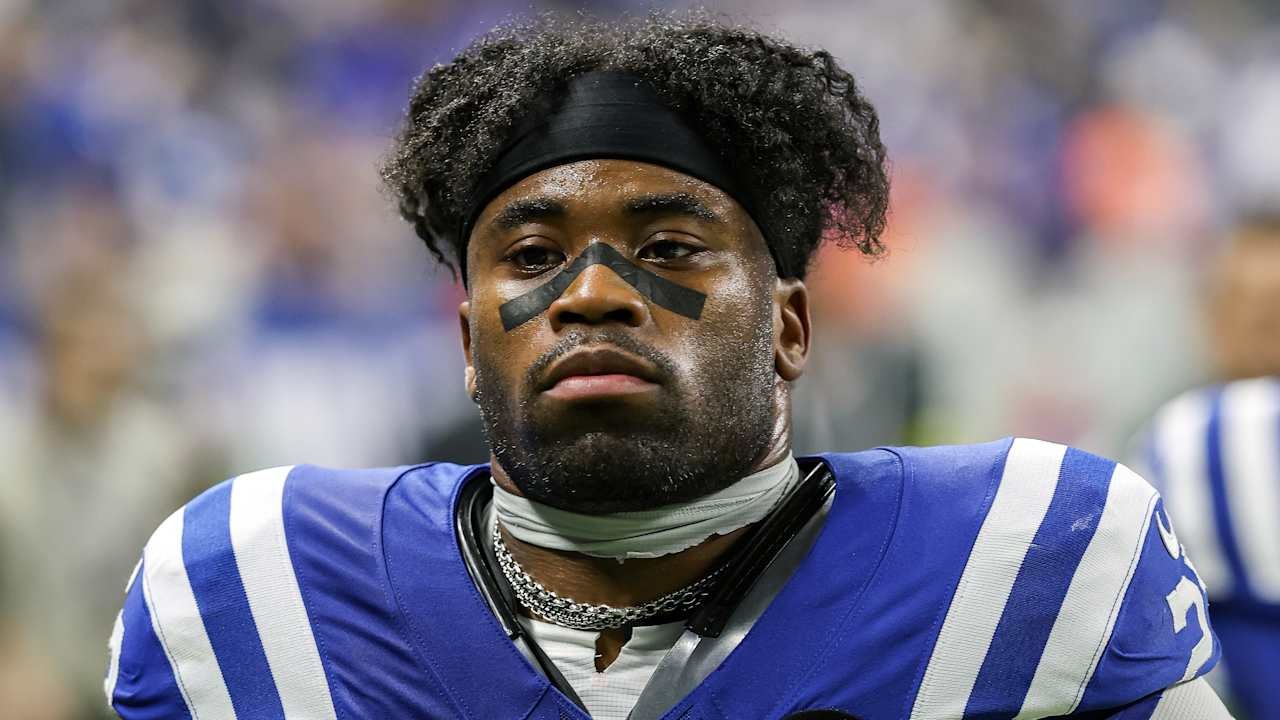
Moore was a key part of Indianapolis’ defense under former coordinator Gus Bradley, signing a three-year, $30 million contract with the Colts following a 2023 campaign that saw the veteran record 93 tackles, three interceptions and six passes defensed in 16 games. He followed that up with a similarly productive showing in 2024 (78 tackles, three interceptions, seven passes defensed) but said goodbye to Bradley after the Colts’ defense regressed to a 29th-place finish in 2024.
After one season under new DC Lou Anarumo, Moore decided it was time to find a new NFL home. The soon-to-be 31-year-old will have the freedom to do so after Thursday’s roster move.
The German submarine captain saw his target’s silhouette against the evening sky off the coast of southern England and gave the command to fire a single torpedo.
It was the last anyone would see of the US Coast Guard Cutter Tampa and its 131 crew members for more than 107 years.
Three minutes after that German torpedo struck the vessel amidships, the Tampa was on the bottom of the Atlantic with all crew lost, the largest naval loss for US forces during World War I.
On Wednesday, the Coast Guard announced a team of British divers had located the wreck of the Tampa last weekend at a depth of 300 feet (91 meters) some 50 miles (80 kilometers) off the Cornwall coast.
The wreckage was found by the British Gasperados Dive Team, a volunteer technical-diving team that worked with historians and researchers to find wrecks around the UK, according to its Facebook page.
The team had been looking for the Tampa since 2023.
“This discovery is the result of three years of research and exploration. TAMPA is of huge importance to the United States and the relatives of everyone who died that day. Their final resting place is known at last,” dive team leader Steve Mortimer said in a Facebook post.
“Finding TAMPA didn’t just happen last weekend. This was the tenth trip to dive possible targets and everyone – whether skipper, crew, researcher, liaison or diver – played a part. We’re still buzzing. We did it!” another Facebook post said.
The Coast Guard said it provided the group with records and data to confirm the wreck was the Tampa.
“This included the archival images of the deck fittings, ship’s wheel, bell, weaponry and archival images of the Tampa,” William Thiesen, Coast Guard Atlantic area historian, said in the statement.
On September 17, 1918, the ship began convoy duty in the Atlantic waters. But on September 26, the Tampa’s captain requested permission to leave the convoy it was escorting as his ship was running dangerously low on coal to power its boilers and needed to refuel.
Commanders granted the captain’s request, and the ship headed to a port in Wales at full speed around 4 p.m.
Around 8:15 p.m., it was spotted by the German sub UB-41 which fired a lone torpedo. The blast from the torpedo was followed by a secondary explosion, caused by either coal dust igniting or depth charges aboard the Tampa detonating, according to the Coast Guard history.
A plane sent out to search for the ship when it did not arrive at its destination found pieces of its wreckage the next day.
Aboard were 111 Coast Guardsmen, four US Navy sailors, and 16 Britons, including Royal Navy personnel and civilians.
The Coast Guardsmen came from all walks of life and regions of the US and included immigrants from Russia and Norway. Eleven of the lost crew were Black according to a Coast Guard history of the ship. They were the first minority Coast Guardsmen killed in combat.
“When the Tampa was lost with all hands in 1918, it left an enduring grief in our service,” Coast Guard commandant Adm. Kevin Lunday said in a statement. “Locating the wreck connects us to their sacrifice and reminds us that devotion to duty endures.”
The Coast Guard said it is developing plans to explore the wreck further using autonomous systems and robotics.
Early last year, the investigative journalist Jodi Kantor was asked to give the commencement address to students at Columbia University in New York. The place was in chaos – amid continuing pro-Palestinian protests students were expelled, or arrested and detained by immigration officials, while President Trump had ordered a $400m withdrawal of federal funding (which was later reinstated as part of a settlement with the administration). Kantor was “horrified” to see what had happened at Columbia – her alma mater, where she was sacked from her first journalism job at the student paper– “a place and campus I loved, a place that stands for discussion and ideas and progress. I said: ‘I’ll do it if I can speak to the students first.’”
She spoke to several. They didn’t want to talk about Israel or Gaza, or Trump, or what was happening at the university and its implications for free speech. “They said: ‘Our class, despite all of its political differences, is united in anxiety over one question. When everything feels so broken, how do we start? How do we find our life’s work in this environment?’”
These questions, she says, “seized me” and that commencement address inspired her book, How to Start, written in the early mornings before she’d go to her job as a reporter at the New York Times. It’s a short and punchy read, full of practical and wise advice aimed at young people, but which anyone from midlife career switchers to those who suspect they’re on the wrong path might find helpful.
Kantor at a Women in Film event in 2022. Photograph: Emma McIntyre/Getty Images for WIF
It came out of a period of transition in Kantor’s own life. Around the same time, Kantor was diagnosed with breast cancer and successfully treated; her daughter left for college; and she turned 50. “Those all happened in a flash. Like, tick-tock, do it now, don’t wait.” She was surprised to find herself in the middle of writing an advice book – this is a journalist who exposed the sexual assault allegations against film producer Harvey Weinstein, and for the past few years has been investigating the US supreme court – but she felt called to do it. “If there are five young people in the universe who would be helped by this book, I want to act on that.”
Although she flinches a little – in the book, and in person – about making it too much about her, Kantor says her cancer diagnosis encouraged her to write this book, to meander away from her serious newspaper reporting and “connect to readers on a different level. I feel like the subtext of my journalism is always, like, we can find answers, and I wanted to make that text.”
Kantor couldn’t stop thinking about the Columbia students, a generation she describes as “battered”, and how different their early working life would be to hers. It wasn’t unfamiliar territory; Kantor’s older daughter is 20 (she has another, who is 10). “She and her friends were asking the same questions. The dining table where I’m sitting,” she says – we’re talking over Zoom, Kantor at home in Brooklyn – “is a counselling spot for my daughter’s friends.”
As a reporter, employment had largely been Kantor’s beat. Her Weinstein reporting, with her colleague Megan Twohey, kickstarted the global #MeToo movement – she and Twohey, along with Ronan Farrow, shared the Pulitzer prize – but even that, she points out, was “about work, and it was about entry-level work”. (Many of the women who were assaulted were vulnerable partly because they were at early stages in their careers.)
Megan Twohey (left) and Jodi Kantor in 2022. Photograph: Ann Presley/Hollywood Reporter/Getty Images
After their Weinstein investigation, Kantor and Twohey were invited to many university campuses to speak. “What I saw year after year was that the fear and the cynicism were rising. Even though starting your career is a time of struggle, it’s also a time of ambition, experimentation and optimism, and I saw that change in social attitudes. I saw dread, anxiety. Even students who were at very prestigious universities did not feel equipped.” Wider culture changed, too, she points out. “You can even see it in the TV shows – we went from Parks and Recreation and The Office, which, even though they showed slightly dysfunctional work environments, still showed colleagues as family. And now we have Severance, which is this very dark take on work.”
Isn’t the employment landscape dark, though? How can a young person, perhaps freshly hatched from university, battle the forces of global economics and the AI onslaught, while questioning the futility of a “career” amid the prospect of nuclear war and environmental collapse? Kantor has done much reporting on brutal modern work practices, such as Amazon’s close monitoring of employees and its scrutiny of the performance of some of those who had experienced life-threatening illnesses. How do we avoid accepting that this is the future of work?
“I think the question is: what agency do we have for the future? There is a constant stream of negative news, whether through the media or people’s group chats, about how hard it is to get a job, to get a good job, the fear that classic entry-level jobs are going to be obliterated by AI. We can’t change that environment, but we can say to young people: you’re not a statistic. It’s important to educate yourself in what’s going on, but those news reports aren’t sentences, you’re still the author of your own life. Let’s at least try to put together an escape plan from what other people are telling you is inevitable.” She hopes, she says, it doesn’t sound “Pollyannaish. I wrote it as a counterweight to what I believe has become a dominant and damaging set of messages.”
It is not a book for quiet quitters, though Kantor understands their impulse. “There are a lot of people who just want to do the minimum, dissociate emotionally, leave at 5pm and your real life begins. I get that. That is, in many ways, a rational response to our current circumstances.” She smiles. “Those people are not my people. This book is for people who want to fight for a shot at their ambitions.”
In Kantor’s view, the two main challenges to a fulfilling work life are working out what you want to do, and then working out how to do it. For the first, she suggests getting out your notebook and observing. “I know it sounds like a cheesy journalling exercise, but as you go about your life, your classes, your after-school job, your extracurricular activities, think: what tasks do I enjoy and feel drawn to? Which do I really hate? What kinds of people am I gravitating to? Everyone’s feeling a lot of anxiety and negativity. The problem is those are not terribly good guides. They’re deceptive. How many times has each of us freaked out about something, only for it to end up fine? Also, you don’t want your life’s compass to be dread.” Positive emotions, she thinks, “tend to be reliable in terms of pushing you in the right direction”.
Kantor in Brooklyn. Photograph: Maria Spann/The Guardian
In a cost-of-living crisis, burdened by huge student debt, and with home ownership a distant dream for many young people, clinging to financial stability is a rational response. “I get it,” says Kantor. “However, the problem with that is you don’t really get anywhere in life without taking on some risk. So, while I would never judge anyone who feels as if they have to make every last dollar, I want them to understand the trade-offs, and ask some questions to lead them to think about the upside of taking on some risk as well.”
In our societies, there is “an assumption that’s crept in that the pursuit of riches should be everybody’s aim. I don’t think that’s true.” In Kantor’s book, one of the happiest people who followed their dream career is a modestly earning historian. “Do I want young people to struggle and not be able to live someplace decent, or pay for their children’s clothing? Of course not. One of the primary goals of working is to protect yourself financially. But I want to make a distinction, to say that goal is very different [from] deciding that the way you’re going to structure all of your hours is in pursuit of the largest possible house.”
In terms of creating a dream career, much of Kantor’s advice revolves around making human connections, as a way of bypassing faceless and depressing AI recruitment systems. Applying for a job has always been daunting, but now it’s increasingly lonely, too. Kantor makes no claim to know what the future of employment will look like, but she puts a lot of faith into the ideas of craft (the skills that will always belong to you, not a company) and need (what the rest of us are willing to buy from you, or what society will benefit from), “which I believe, even in a bad environment, will maximise chances of happiness and success.”
Kantor grew up in Staten Island, and later New Jersey, where her mother stayed at home with the children and her father was an estate agent. Kantor’s grandparents were Holocaust survivors. She was born 30 years, almost to the day, after they had been liberated from camps in 1945, the first grandchild in the family.
Carey Mulligan and Zoe Kazan in the 2022 film She Said (2022), which was based on the investigative work of Kantor and Twohey. Photograph: Landmark Media/Alamy
“I was raised with an almost crushing sense of responsibility, but also a lot of meaning.” She takes a long pause. “In retrospect, the questions of investigative journalism were all around me. I lived in a world of Holocaust survivors – I thought everybody’s grandparents were Holocaust survivors. How could this thing have happened? Who enabled it? Why didn’t anybody stop it? What was the system? Also: who speaks and who doesn’t? Because there are two kinds of Holocaust survivors. There are the kind who are unable to speak about what happened and are completely closed-up, and then there are the talkers. My grandfather was the first kind. He was quite haunted and had trouble speaking about his experiences.”
Her grandmother, Hana, who died three years ago at the age of 99, was the opposite. “For the majority of my lifetime, I’ve been in conversation with somebody who spoke very openly about what she had gone through. What I saw was that the talkers were much better off in the long-term, without question.” Her grandmother had a huge impact on Kantor’s outlook. “It was an amazing experience of recovery, because I saw my grandmother become the happiest person I knew, and so it made me kind of a permanent optimist – I was watching, on a day-to-day or weekly basis, a genocide victim find her way back to life and really thrive into old age.”
As a child, when the New York Times arrived every day, Kantor devoured it: “It was like a message from another world.” But it never occurred to her that she could become a journalist. After Columbia, where she studied history, Kantor went to Harvard Law School. If it was a big deal to get a place at Harvard, it was an even bigger deal to drop out, but she just couldn’t ignore her desire to pursue journalism. She got a job at the online magazine Slate, then joined the New York Times as arts editor, before becoming a reporter.
In investigative journalism, Kantor found something that fulfilled the sense of responsibility she has felt since childhood. “I’m very close with a lot of children and grandchildren of Holocaust survivors. There’s an enormous bond. You grow up with survivor guilt, like: ‘Why did my family live?’ You grow up with a real responsibility to …” She pauses. “I think what others could easily mistake as ambition is really a desire to make good on what I’ve been given, and have a fruitful and responsible use of this amazing chance at life, that I somehow got away with.”
What is it like to be a New York Times journalist in the era of Trump? “There’s tremendous meaning,” says Kantor. “There’s so much purpose.” For the past four years her work has focused on illuminating the US supreme court. “It was long considered in journalism a locked box, and what my colleagues and I are trying to do is build a new system of covering the court. How do you scrutinise the supreme court justices? What does it mean to hold this much power for 20 or 30 years at a time with no accountability? What does it do to you? How partisan are they really? Why did they decide to award President Trump such sweeping immunity?”
Kantor loves her work and wants us to find work we love, too. She isn’t promising it will be easy, especially now, but she wants us to believe it’s achievable. “If you give up your search for satisfaction at the outset of your journey, the likelihood that you’re ever going to get there is very small – you have put happiness further out of reach. Don’t give up before you start.”
How to Start by Jodi Kantor (Bloomsbury, £14.99). To support the Guardian, order your copy at guardianbookshop.com. Delivery charges may apply