
Newsletter Subscribe
Enter your email address below and subscribe to our newsletter
Enter your email address below and subscribe to our newsletter


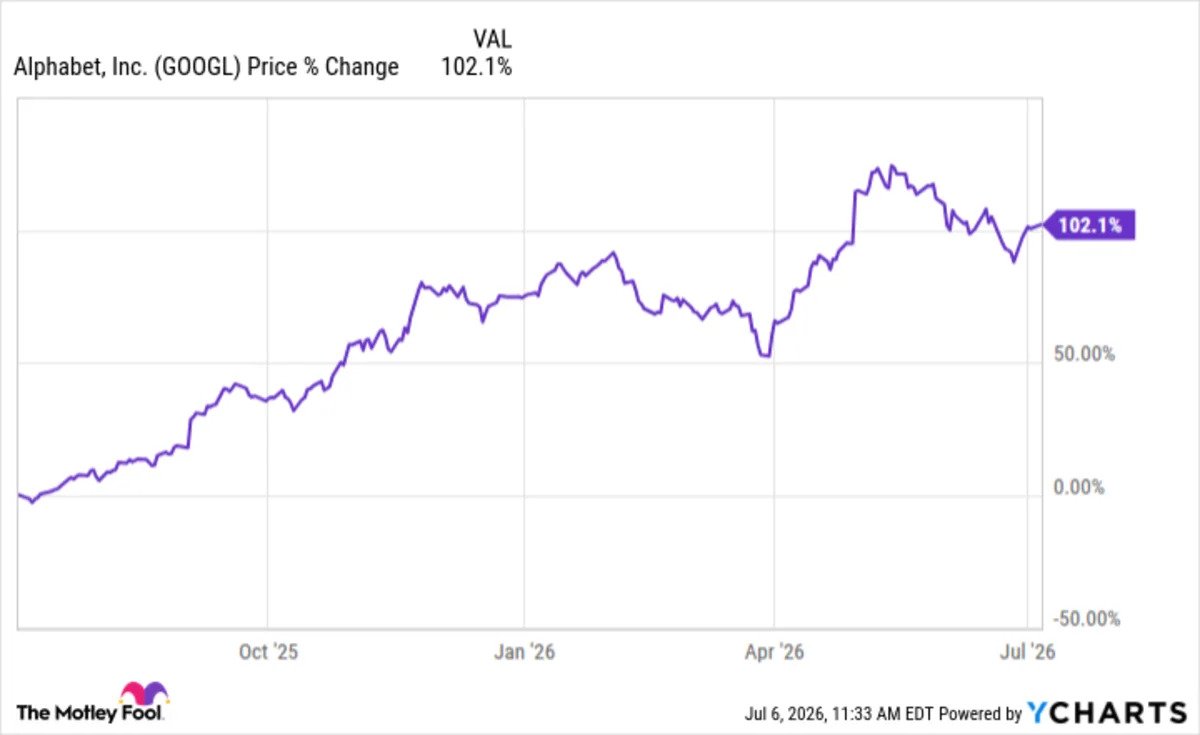
Last month, Alphabet (NASDAQ: GOOGL) (NASDAQ: GOOG) announced an $80 billion equity capital raise to fund its aggressive artificial intelligence (AI)-related ambition. Part of that was a $10 billion private placement with Berkshire Hathaway (NYSE: BRKA) (NYSE: BRKB). This comes after the conglomerate initiated a position in Alphabet in the third quarter of 2025 and added even more shares in the first quarter of 2026, making the tech leader one of its largest holdings.
Greg Abel, the successor to Warren Buffett at the helm of Berkshire Hathaway, is clearly very bullish on Alphabet’s future, and so far, it has paid off. Alphabet’s shares have roughly doubled over the past 12 months (since the start of the third quarter of 2025, when Berkshire Hathaway first bought the company’s shares).
Missed Nvidia in 2009? This Rare Signal Is Flashing Again. In 2009, a “Double Down” signal flashed for a little-known chipmaker called Nvidia. For the first time in years, that same “Total Conviction” signal is flashing for a company 1/100th the size of Nvidia. Continue »
But in line with Buffett’s philosophy, Abel and his team likely intend to hold the stock for a long time. Is that a good idea?

Alphabet is a leader across several industries. It dominates digital advertising thanks to its famous search engine, Google, and its video-sharing platform, YouTube, which has also made it one of the top players in the streaming industry. The company’s Google Cloud division is also one of the Big Three in that market. The good thing about Alphabet’s business is that every major industry where it operates arguably still has miles of growth left — these aren’t niches that are slowing down and will eventually become irrelevant. Digital advertising, for instance, is on a solid northward trajectory driven by several factors, including the ongoing shift to online commerce.
It’s worth pointing out that in the U.S., e-commerce accounted for just 16.9% of retail transactions in the first quarter. This number will almost certainly grow by leaps and bounds over the next decade and beyond — leading to an increased demand for digital ads. Also, Alphabet is unlikely to lose its lead. Its search engine benefits from a wide moat due to network effects: increased usage provides it with more data to refine and improve, which, in turn, boosts search volume. And while some thought the rise of AI chatbots would disrupt Alphabet’s search dominance, the company has actually improved its search engine with AI.
Source link
See more: The Global Track